EndBadGovernance: Your Recent Appeal Is Adding Salt To Injury, PDP Chieftain To Tinubu
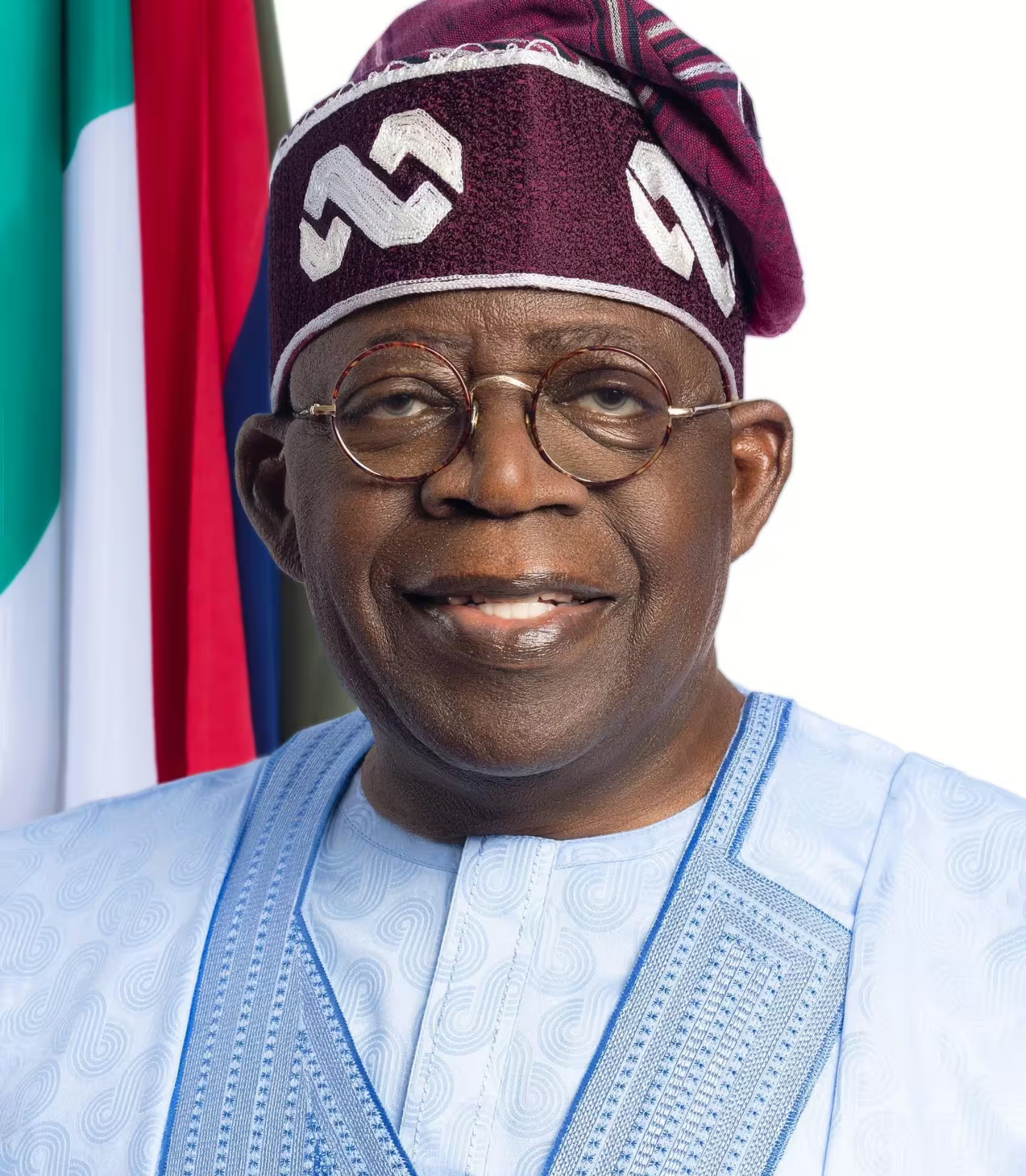
In recent political developments in Nigeria, the discourse around governance quality has intensified. President Bola Tinubu’s recent public appeal, urging Nigerians to exercise patience amid current challenges and to focus on long-term goals, has been met with sharp criticism from opposition figures. Dr. Adetokunbo Pearse, a key chieftain of the Peoples Democratic Party (PDP) and convener of Reset Lagos PDP, has openly faulted the President’s message, labeling it as an insensitive response that exacerbates the difficulties faced by citizens. This article provides a comprehensive analysis of Dr. Pearse’s critique, the broader political context, and what it means for Nigeria’s governance landscape.
Context of President Tinubu’s Recent Appeal
President Bola Tinubu recently addressed the Nigerian public, calling for patience amidst current economic and social challenges. His message emphasized the need to look beyond temporary hardships and focus on the bigger picture of national development and reform. This appeal was intended to rally public support and foster unity during a period marked by inflation, security concerns, and infrastructural deficits.
The appeal came at a time when Nigerians are grappling with high living costs, unemployment, and insecurity. Many citizens have expressed frustration with the pace of government interventions and the perceived ineffectiveness of policies aimed at alleviating these issues. Tinubu’s message sought to remind Nigerians that meaningful progress often requires enduring short-term sacrifices.
However, the timing and tone of the appeal have drawn mixed reactions. While some view it as a necessary call for collective resilience, others see it as dismissive of the immediate hardships faced by ordinary Nigerians. This divide sets the stage for opposition voices, including that of Dr. Adetokunbo Pearse, to respond critically.
Who is Dr. Adetokunbo Pearse? Understanding the PDP Chieftain’s Background
Dr. Adetokunbo Pearse is a notable figure within the Peoples Democratic Party (PDP), Nigeria’s main opposition party. He is widely respected for his political activism and his role as the convener of Reset Lagos PDP, a movement focused on revitalizing the party’s strategies and engagement in Lagos State. Pearse is known for his vocal criticism of the ruling administration and advocacy for good governance.
His background as a political analyst and strategist provides him with a platform to articulate detailed critiques of government policies and leadership approaches. Pearse’s interventions often highlight governance deficits, corruption, and the need for accountability, making him a significant voice in Nigeria’s political discourse.
Given his position and influence within the PDP, Pearse’s recent condemnation of President Tinubu’s appeal carries substantial weight. It reflects broader opposition concerns about the current administration’s handling of Nigeria’s challenges and resonates with citizens frustrated by ongoing socio-economic difficulties.
Analysis of Pearse’s Criticism: ‘Adding Salt to Injury’
Dr. Pearse described President Tinubu’s call for patience as ‘adding salt to injury,’ a metaphor indicating that the appeal worsens an already painful situation. This phrase captures the sentiment that the President’s message was not only inadequate but also insensitive to the lived realities of many Nigerians.
According to Pearse, rather than offering tangible solutions or acknowledging the severity of the issues, the President’s appeal appears dismissive. It risks alienating citizens who feel neglected and unheard, thereby deepening public discontent and skepticism towards the administration.
Pearse’s critique suggests that leadership requires more than hopeful rhetoric; it demands concrete actions that directly address citizens’ hardships. The failure to do so, he argues, undermines trust in governance and fuels political instability.
Broader Implications for Nigerian Governance
The exchange between President Tinubu and Dr. Pearse highlights ongoing tensions in Nigeria’s governance environment. Citizens increasingly demand accountability, transparency, and effective policy implementation from their leaders. When appeals for patience are perceived as a stalling tactic, it exacerbates frustrations.
Good governance in Nigeria faces challenges such as corruption, inadequate infrastructure, and security threats. The public’s patience is finite, and political leaders must balance managing expectations with delivering results. Pearse’s comments underscore the urgency for the government to demonstrate progress rather than rely primarily on messaging.
This dynamic also affects Nigeria’s democratic processes. Opposition voices like Pearse’s play a critical role in holding the administration accountable and ensuring that governance remains responsive to the people’s needs. The dialogue between ruling and opposition parties is essential for strengthening Nigeria’s political system.
Public Reaction and Media Coverage
Following the President’s appeal and Pearse’s response, Nigerian media outlets have amplified the debate, reflecting a divided public opinion. Some media narratives emphasize the need for patience and national unity, while others highlight the demand for immediate government action and reform.
Social media platforms have become a battleground for these contrasting views, with citizens expressing both support and criticism of the government’s approach. The hashtag #EndBadGovernance has gained traction, symbolizing widespread dissatisfaction with current leadership and calls for systemic change.
The media’s role in framing this discourse is crucial. Balanced coverage that presents multiple perspectives helps inform the public and encourages constructive dialogue. The ongoing debate reveals the complexities of managing public expectations in a challenging socio-political context.
The Role of Opposition Parties in Nigeria’s Political Landscape
Opposition parties like the PDP serve as vital checks on government power in Nigeria’s democracy. They provide alternative policy ideas, critique government shortcomings, and mobilize public opinion. Dr. Pearse’s vocal criticism exemplifies the opposition’s function in advocating for better governance standards.
Effective opposition engagement contributes to political accountability and transparency. By challenging the ruling party’s narratives and policies, opposition leaders keep governance debates alive and encourage responsiveness from those in power.
However, the opposition must balance criticism with constructive proposals. Pearse’s Reset Lagos PDP initiative aims to reposition the party as a credible alternative by focusing on policy development and grassroots engagement, signaling a strategic approach to political participation.
Path Forward: Addressing Governance Challenges in Nigeria
To move beyond rhetoric, Nigeria’s leadership must prioritize tangible actions that improve citizens’ quality of life. This includes addressing economic hardships, enhancing security, and investing in infrastructure development with transparency and efficiency.
Engaging citizens meaningfully and incorporating their feedback into policy decisions can rebuild trust. The government should also communicate progress clearly and honestly, avoiding messages that may be perceived as dismissive or patronizing.
Collaboration between the ruling party, opposition, civil society, and the private sector is essential for sustainable development. Constructive dialogue and shared commitment to ending poor governance practices will be key to Nigeria’s future stability and prosperity.
Conclusion
The political exchange between President Bola Tinubu and PDP chieftain Dr. Adetokunbo Pearse reflects deep-seated challenges within Nigeria’s governance framework. While calls for patience are understandable in the context of long-term nation-building, they must be matched with visible, impactful actions that alleviate citizens’ immediate concerns. Pearse’s critique serves as a reminder that leadership requires empathy, accountability, and responsiveness. For Nigeria to progress, all stakeholders—including government, opposition, and the public—must engage constructively to end bad governance and foster a more inclusive, effective political environment.
Discover more from FINIMA
Subscribe to get the latest posts sent to your email.
0 Comments