Delta State Governor Opens Red Cross Int’l Youth Camp
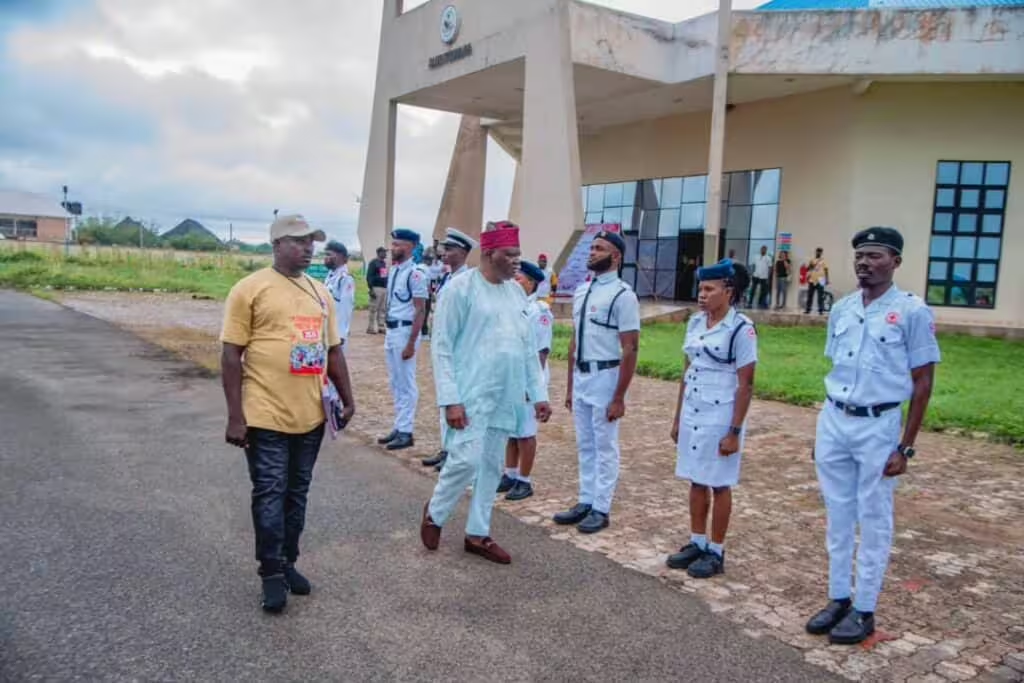
The 18th edition of the Nigerian Red Cross Society’s International Youth Camp was officially inaugurated by the Delta State Governor, Elder Sheriff Oborevwori, at the Federal Road Safety Corps (FRSC) Training School in Agbor, Delta State. This prestigious event attracts young Red Cross volunteers from across Nigeria, aiming to enhance their skills in humanitarian services, leadership, and community development. The camp serves as a platform for nurturing future leaders and fostering a culture of volunteerism among Nigerian youth. Governor Oborevwori’s presence underscored the importance of youth empowerment and humanitarian engagement in Delta State and beyond.
Overview of the 18th Nigerian Red Cross International Youth Camp
The Nigerian Red Cross Society’s International Youth Camp is an annual gathering designed to bring together young volunteers from across the nation to share knowledge, build skills, and promote humanitarian values. The 18th edition, hosted in Agbor, Delta State, marks a significant milestone in the society’s commitment to youth development and community service. The camp's location at the FRSC Training School provides an ideal environment for training and practical demonstrations.
Participants engage in a variety of activities including first aid training, disaster preparedness workshops, leadership seminars, and community outreach programs. These activities are aimed at equipping the youth with the necessary tools to respond effectively to emergencies and to foster a spirit of volunteerism. The camp also encourages cultural exchange among participants, promoting unity and understanding across Nigeria’s diverse ethnic groups.
This year’s camp is especially notable for its focus on integrating technology and innovation into humanitarian efforts. Workshops on digital communication, social media advocacy, and data management were introduced to help young volunteers leverage modern tools in their service delivery. This approach reflects the Nigerian Red Cross Society’s adaptive strategies in addressing contemporary challenges.
Governor Elder Sheriff Oborevwori’s Role and Vision
Governor Elder Sheriff Oborevwori, who officially declared the camp open, emphasized the critical role of young people in nation-building and humanitarian service. Represented by a senior official at the event, the Governor highlighted the Delta State government’s commitment to supporting initiatives that empower youth and enhance social welfare. His administration’s backing of the camp aligns with broader developmental goals centered on education, health, and community resilience.
In his remarks, Governor Oborevwori acknowledged the Nigerian Red Cross Society’s contributions to emergency response and community development across the country. He encouraged the young participants to harness the opportunities provided by the camp to develop leadership skills and a strong sense of civic responsibility. The Governor also pledged to facilitate collaboration between the state government and the Red Cross to expand youth engagement programs in Delta State.
The Governor’s vision includes creating an enabling environment where young people can thrive as agents of positive change. By supporting the International Youth Camp, his administration seeks to nurture a generation of volunteers capable of addressing social challenges through innovation, compassion, and resilience.
Significance of Hosting the Camp at the FRSC Training School, Agbor
The choice of the Federal Road Safety Corps Training School in Agbor as the venue for the camp is strategic. The facility is well-equipped to provide comprehensive training in safety protocols, emergency response, and disaster management. Its infrastructure supports both theoretical and practical learning, making it an ideal location for a youth camp focused on humanitarian skills.
Hosting the camp in Agbor also highlights Delta State’s growing prominence as a center for youth development and capacity building. The location provides participants with access to quality training resources and a conducive environment for networking and collaboration. It also brings economic benefits to the local community through increased activity and visibility.
Furthermore, the partnership between the Nigerian Red Cross Society and the FRSC underscores the importance of inter-agency cooperation in enhancing disaster preparedness and response. This collaboration enriches the training experience for participants by combining expertise from both organizations.
Activities and Workshops Conducted During the Camp
The camp featured a diverse range of workshops designed to improve the knowledge and skills of participants. Key activities included first aid and emergency medical response training, which equipped attendees with lifesaving techniques applicable in various crisis situations. These sessions were led by experienced instructors and included practical simulations.
Disaster preparedness and management workshops were also central to the camp’s agenda. Young volunteers learned about risk assessment, community mobilization, and effective communication strategies during emergencies. These sessions aimed to empower participants to become proactive agents in disaster risk reduction within their communities.
Leadership development was another focal point, with seminars on team building, conflict resolution, and project management. These workshops encouraged participants to cultivate leadership qualities that would enhance their roles both within the Red Cross and in their wider communities. Additionally, sessions on humanitarian principles and ethics reinforced the values underpinning the Red Cross movement.
Youth Empowerment and Volunteerism in Delta State
Delta State’s hosting of the International Youth Camp aligns with its broader commitment to youth empowerment and volunteerism. The state government has implemented various programs aimed at equipping young people with skills and opportunities to contribute meaningfully to society. The Red Cross camp complements these efforts by providing specialized training in humanitarian service.
Volunteerism is increasingly recognized in Delta State as a critical driver of social development. By encouraging youth participation in organizations like the Nigerian Red Cross Society, the state fosters a culture of civic engagement and community support. This not only benefits vulnerable populations but also nurtures leadership and social responsibility among young people.
The camp serves as a platform for young volunteers to network and collaborate, strengthening the volunteer base in Delta State. It also provides visibility to the important work of youth in humanitarian efforts, inspiring more young people to get involved and make a difference.
Impact of the International Youth Camp on Participants and Communities
The International Youth Camp has a profound impact on both participants and their home communities. For the youth involved, the camp offers a unique opportunity to acquire practical skills, build confidence, and develop leadership capabilities. Many participants report increased motivation and a stronger commitment to humanitarian causes following their camp experience.
Communities benefit when these trained volunteers return equipped with enhanced skills and knowledge. They become key resources in emergency preparedness, health education, and community mobilization. This multiplier effect strengthens local resilience and improves the overall capacity to respond to crises.
Moreover, the camp fosters a sense of national unity and solidarity among participants from diverse backgrounds. By promoting shared values and collaborative efforts, it contributes to social cohesion and peacebuilding within Nigerian society.
Future Prospects and Sustainability of the Youth Camp Initiative
Looking ahead, the Nigerian Red Cross Society plans to expand the scope and reach of the International Youth Camp. There is a focus on incorporating more advanced training modules, including mental health first aid and climate change adaptation strategies. These additions will better prepare youth volunteers to tackle emerging humanitarian challenges.
Sustainability is a key consideration, with efforts underway to secure long-term funding and partnerships. Collaboration with government agencies, private sector stakeholders, and international organizations will be crucial in maintaining and enhancing the camp’s impact. The involvement of Delta State government is a positive step towards institutional support.
The camp’s success also depends on continuous engagement with alumni and integrating their feedback into program design. By building a strong network of trained youth volunteers, the Nigerian Red Cross Society aims to create a sustainable movement that drives humanitarian action across Nigeria.
Collaborations and Partnerships Enhancing the Camp’s Success
The success of the 18th Nigerian Red Cross International Youth Camp is underpinned by strategic collaborations with key stakeholders. Partnerships with the Federal Road Safety Corps, Delta State government, and various NGOs have provided critical resources and expertise. These collaborations ensure comprehensive training and a well-organized camp experience.
Private sector involvement has also played a role, with some companies sponsoring equipment, materials, and logistics. Such corporate social responsibility initiatives highlight the importance of multi-sectoral engagement in youth development and humanitarian work.
International partnerships with the global Red Cross and Red Crescent Movement bring additional support and knowledge-sharing opportunities. These relationships help align the camp’s activities with global humanitarian standards and best practices, enhancing the quality and relevance of the training provided.
Conclusion
The inauguration of the 18th Nigerian Red Cross International Youth Camp by Delta State Governor Elder Sheriff Oborevwori marks a significant advancement in youth humanitarian engagement in Nigeria. By providing young volunteers with comprehensive training in emergency response, leadership, and community service, the camp nurtures a generation equipped to address current and future challenges. The strategic location in Agbor and robust partnerships enhance the camp’s effectiveness and sustainability. As Delta State continues to support such initiatives, the impact on youth empowerment and community resilience is set to grow, fostering a culture of volunteerism and social responsibility across the nation.
Discover more from FINIMA
Subscribe to get the latest posts sent to your email.
0 Comments