Nigeria aims to strengthen its collaboration with the UN to advance food security
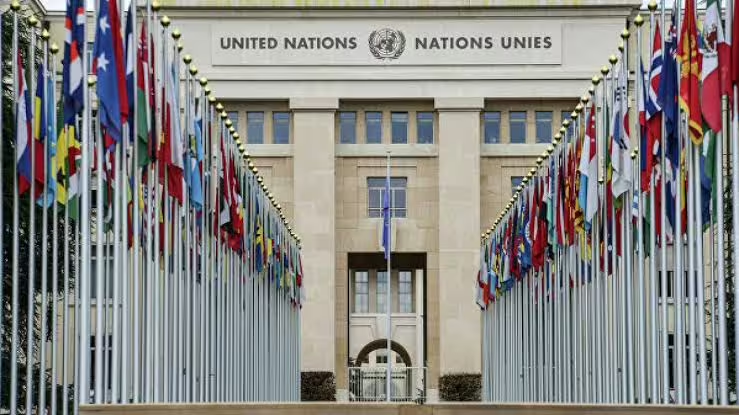
Food security remains a critical challenge for Nigeria, Africa’s most populous nation, where millions face hunger and malnutrition despite vast agricultural potential. Recognizing the urgency, Nigeria is actively seeking to strengthen its collaboration with the United Nations (UN) to advance sustainable agricultural development and enhance food security. This renewed partnership aims to leverage UN expertise, resources, and programs to address Nigeria’s complex food security landscape, which is influenced by internal conflicts, climate change, and global disruptions. This article delves into the evolving Nigeria-UN collaboration, the country’s food security strategies, and the multifaceted efforts underway to build resilient food systems.
The Importance of Nigeria-UN Collaboration in Food Security
Nigeria’s growing population and increasing food demand present significant challenges to achieving food security. The government recognizes that sustainable solutions require international cooperation, and the United Nations offers critical technical expertise and financial support through specialized agencies such as the Food and Agriculture Organization (FAO), International Fund for Agricultural Development (IFAD), and United Nations Development Programme (UNDP).
The partnership between Nigeria and the UN has historically focused on strengthening agricultural productivity, rural livelihoods, and food system resilience. This collaboration is vital in mobilizing resources, knowledge transfer, and implementing programs tailored to Nigeria’s unique socio-economic and environmental contexts.
Recent engagements, including the visit of UN Deputy Secretary-General Dr. Amina Mohammed, have emphasized the need to deepen this partnership. By aligning Nigeria’s national priorities with the UN’s sustainable development goals (SDGs), particularly SDG 2 on zero hunger, the collaboration aims to create a comprehensive framework to combat food insecurity.
Nigeria’s National Food Security Strategy and the Renewed Hope Agenda
Under President Bola Ahmed Tinubu’s administration, the Renewed Hope Agenda prioritizes food security alongside economic growth, job creation, and poverty reduction. This strategic framework emphasizes sustainable agricultural development as a cornerstone for national stability and prosperity.
The Ministry of Agriculture and Food Security, led by Abubakar Kyari, plays a pivotal role in implementing policies that support agricultural value chains, enhance food production, and improve rural livelihoods. The ministry actively collaborates with UN agencies to ensure that programs are aligned with both national goals and international best practices.
Key initiatives such as the Value Chain Development Programme and the Livelihood Improvement Family Enterprises Project in the Niger Delta are designed to boost agricultural productivity and provide sustainable income sources for rural communities. These programs exemplify Nigeria’s commitment to addressing food security through inclusive and targeted interventions.
Addressing Complex Food Security Challenges in Nigeria
Nigeria’s food security crisis is multifaceted, driven by internal displacement, security challenges, climate change impacts, and global economic disruptions. Conflicts in regions like the Northeast exacerbate food shortages by displacing farmers and disrupting agricultural activities.
The COVID-19 pandemic and the war in Ukraine have further strained global food supply chains, affecting Nigeria’s access to key agricultural inputs and food imports. These external shocks compound domestic vulnerabilities, requiring coordinated responses that integrate humanitarian aid with long-term development planning.
The Nigerian government, in collaboration with the UN, acknowledges that resolving food insecurity will demand sustained efforts, adequate funding, and multisectoral cooperation. Addressing displacement and security is crucial to restoring agricultural productivity and ensuring access to food for vulnerable populations.
The Role of UN Agencies in Enhancing Nigeria’s Food Systems
UN agencies bring vital expertise and resources to Nigeria’s food security efforts. The FAO supports sustainable farming practices, climate-smart agriculture, and capacity building for smallholder farmers, which are essential for increasing productivity and resilience.
IFAD focuses on rural development by financing projects that empower small-scale farmers and improve access to markets and financial services. These interventions help reduce poverty and strengthen food systems at the grassroots level.
The UNDP contributes by promoting policy coherence, governance reforms, and innovation in agricultural technologies. Its support enables Nigeria to develop integrated strategies that align food security with broader development objectives, ensuring a holistic approach to tackling hunger.
Innovations and Technology in Nigeria’s Agricultural Sector
Technological innovation is increasingly recognized as a critical component in advancing Nigeria’s food security agenda. From improved seed varieties to digital platforms for market information, technology can enhance productivity and reduce post-harvest losses.
However, the debate around biotechnology and genetically modified organisms (GMOs) remains sensitive. Nigerian authorities and UN representatives emphasize the importance of balancing innovation with the protection of indigenous agricultural systems and biodiversity.
Collaborative efforts aim to introduce safe and appropriate technologies that can increase crop yields, improve pest resistance, and promote sustainable land management. These innovations, combined with training and extension services, empower farmers to adapt to changing environmental conditions.
Multi-Level Coordination for Effective Food Security Responses
Effective food security interventions require coordination across all levels of government—from federal to local—and active engagement with non-governmental organizations, private sector actors, and community stakeholders.
The UN advocates for a participatory approach that ensures policies and programs are responsive to local needs and conditions. This inclusive strategy enhances ownership and sustainability of food security initiatives.
Nigeria’s government is working to strengthen institutional frameworks and improve data collection systems to better monitor food security indicators and respond rapidly to emerging crises. Cross-sector collaboration is fundamental to building resilient food systems capable of withstanding shocks.
Future Prospects and the Path Forward for Nigeria and the UN
Looking ahead, Nigeria’s collaboration with the UN is poised to deepen, with an emphasis on scaling up successful programs and mobilizing additional resources. The partnership will focus on integrating climate adaptation, nutrition, and social protection into agricultural development strategies.
Sustained political commitment and international support will be essential to overcome structural barriers such as inadequate infrastructure, limited access to finance, and persistent insecurity in key agricultural regions.
The shared vision is to transform Nigeria’s food systems into inclusive, sustainable, and resilient networks that can ensure food availability, accessibility, and utilization for all citizens. This goal aligns with global efforts to eradicate hunger and promote sustainable development by 2030.
Conclusion
Nigeria’s ambition to strengthen collaboration with the United Nations marks a significant step toward overcoming its persistent food security challenges. By leveraging UN expertise, aligning national strategies with global development goals, and fostering innovation and multi-stakeholder cooperation, Nigeria is laying the groundwork for a more resilient and sustainable food system. While the road ahead involves navigating complex socio-economic and environmental hurdles, the reinforced partnership offers a promising path to ensure that all Nigerians have reliable access to nutritious food, thereby contributing to national stability and prosperity.
Originally reported by nigeriannewsdirect.com. Adapted for our readers.
Discover more from FINIMA
Subscribe to get the latest posts sent to your email.
0 Comments