Finima Chronicles Unveiled: Aseme Alabo Engr (Dr)Dagogo Lambert Brown Launches The Making of New Finima, The Birth of NLNG
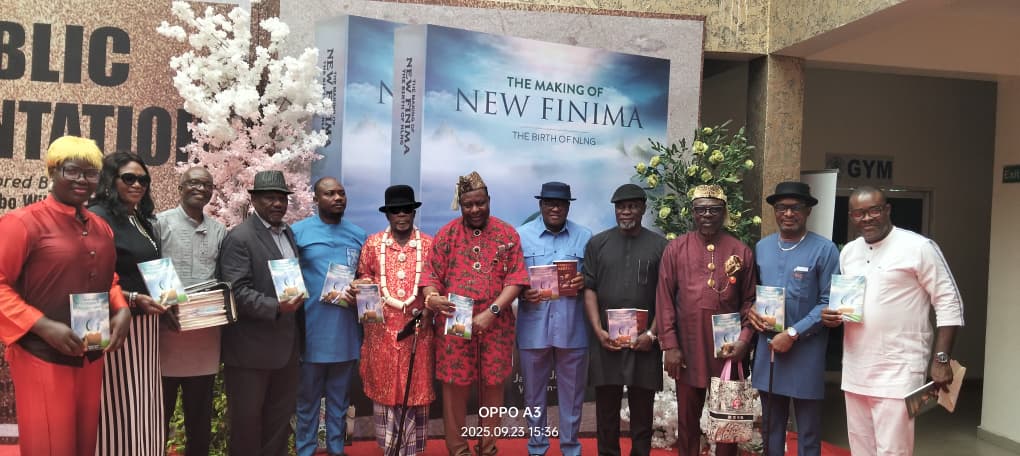
On September 23, 2025, a landmark event unfolded in the Bonny Local Government Area of Rivers State, Nigeria, as His Royal Highness Engr. (Dr) Dagogo Lambert Brown, FNSE, FAIPA, MSPE, publicly presented his authoritative work titled The Making of New Finima, The Birth of NLNG. This book captures the intricate narrative of Finima’s transformation from a traditional Ijaw community into the host of Nigeria’s flagship liquefied natural gas (LNG) enterprise. The launch drew traditional rulers, industry veterans, historians, and community stakeholders together to reflect on the multifaceted journey that shaped modern Finima and Nigeria’s energy landscape. This article delves deeply into the historic presentation, the book’s rich content, and the broader implications for Nigeria’s energy sector and host communities.
The Historic Launch: A Gathering of Heritage and Industry
The launch of The Making of New Finima, The Birth of NLNG was more than a book presentation; it was a historic convergence of tradition, industry, and community legacy. Held in Finima, the event attracted an array of dignitaries, including traditional leaders, former NLNG executives, historians, and local stakeholders. Their presence underscored the collective significance of the narrative—one that entwines cultural heritage with industrial progress.
His Royal Highness Engr. (Dr) Dagogo Lambert Brown, the author and Amadabo of Finima, delivered an insightful address that captured the community’s journey through decades of transformation. The launch served as a platform to honor the resilience of Finima’s people, especially those who endured the relocation from Old Finima, and to acknowledge the collaborative efforts that birthed one of Africa’s most consequential energy projects.
The occasion was also a moment of reflection and forward-looking responsibility. Speakers emphasized the importance of preserving Finima’s voice amid rapid industrialization, advocating for sustainable development models that balance economic growth with social equity.
From Old Finima to New Finima: A Community Transformed
The narrative of Finima’s relocation is central to the book’s historical account. Old Finima, a centuries-old Ijaw settlement, was situated in a mangrove-rich environment where fishing, farming, and riverine livelihoods thrived. However, the establishment of NLNG necessitated a planned relocation to a reclaimed area now known as New Finima, a process fraught with challenges and complex negotiations.
This transition involved large-scale environmental reclamation and the delicate balancing of corporate, governmental, and community interests. The book documents the meticulous inspections and leadership guidance, notably by the late Amadabo Chief Israel Idamieibi A. Brown and other elders, which helped navigate the relocation with cultural sensitivity and strategic foresight.
The move fundamentally altered the social fabric and economic activities of the community. Traditional occupations became harder to sustain due to environmental changes, underscoring the human cost of industrial progress. Engr. (Dr) Brown’s account offers a candid exploration of these realities, stressing the need for development that anticipates such impacts and provides adequate compensation and support.
The Birth of Nigeria LNG: Industrial Ambition Meets Community
Nigeria LNG Limited (NLNG) emerged as a transformative project in Nigeria’s energy sector, marking the country’s entry into the global liquefied natural gas market. The book chronicles the decade-long planning and construction phase that culminated in the first LNG train’s production in 1999, a milestone that reshaped Bonny’s economic landscape.
NLNG’s establishment brought significant infrastructural development, job creation, and international attention to the region. However, it also introduced challenges related to environmental stewardship, community engagement, and equitable resource sharing. Engr. (Dr) Brown’s narrative provides an insider’s perspective on these complexities, highlighting the interplay between corporate objectives and community welfare.
The project’s success is attributed to collaborative governance, technical expertise, and the commitment of both local and international stakeholders. The book pays tribute to pioneers like JJ Williams West and George Wilcox, whose operational leadership bridged historic efforts with ongoing industrial realities.
Documenting the Human Cost: Voices from the Community
A poignant theme permeating the book is the human dimension of Finima’s transformation. The relocation and industrialization disrupted traditional lifestyles, affecting fishing, farming, and cultural practices intrinsic to the Ijaw identity. The book captures firsthand testimonies and archival records that reveal these social upheavals with empathy and clarity.
Engr. (Dr) Brown highlights stories of resilience and adaptation, while also calling attention to gaps in compensation and support mechanisms. These narratives serve as a crucial reminder that development must be inclusive, prioritizing the welfare of host communities who bear the brunt of industrial expansion.
By documenting these experiences, the book becomes a tool for advocacy and learning, urging policymakers, corporate social responsibility teams, and the wider public to adopt development models that are socially responsible and culturally respectful.
Preserving Institutional Memory: Bridging Past and Present
The presentation also celebrated the invaluable role of institutional memory in sustaining Nigeria’s energy heritage. Former NLNG managers and technical experts shared insights that connected the historical record with operational challenges and achievements.
This bridging of experiences underscores the importance of preserving knowledge not only through documents but also through lived experiences. Engr. (Dr) Brown’s book acts as an archival repository that complements oral histories and personal accounts, ensuring that lessons from Finima’s journey inform future endeavors.
Such preservation is critical in an industry marked by rapid technological change and evolving governance structures. The book’s detailed recounting offers a blueprint for managing complex projects with sensitivity to both technical demands and community dynamics.
Environmental and Economic Impacts: Balancing Progress with Sustainability
The transformation of Finima involved significant environmental interventions, including mangrove reclamation and coastal modifications. These changes had profound ecological effects, influencing biodiversity and local livelihoods dependent on natural resources.
Engr. (Dr) Brown’s narrative critically examines these environmental impacts alongside NLNG’s economic contributions. While the project has generated employment and infrastructural growth, it also prompts ongoing debates about sustainable development practices in the Niger Delta region.
The book advocates for strengthened environmental stewardship and community-inclusive policies to mitigate adverse effects. It highlights initiatives by NLNG aimed at environmental protection but stresses the need for continuous improvement and transparent engagement with host communities.
Lessons for Policymakers and Industry Stakeholders
The Making of New Finima, The Birth of NLNG serves as a vital resource for policymakers and industry players involved in extractive industries. Its detailed documentation of community relocation, project planning, and social dynamics offers practical lessons on managing large-scale industrial projects responsibly.
The book underscores the importance of early and continuous community consultation, fair compensation, and cultural sensitivity. It also highlights the necessity for multi-stakeholder collaboration to balance corporate goals with social and environmental considerations.
For corporate social responsibility teams, the volume provides case studies and strategies to enhance community relations and foster sustainable development. Scholars and governance experts will find the book’s archival depth invaluable for research and policy formulation.
A Vision for the Future: Honoring Heritage While Embracing Development
Engr. (Dr) Dagogo Lambert Brown’s work is not only a historical account but a visionary call to action. It urges the community, government, and industry to honor Finima’s rich heritage while embracing the opportunities and responsibilities that come with development.
The book advocates for models that ensure host communities are active partners in growth, benefiting equitably from resources and infrastructure. It promotes environmental sustainability, cultural preservation, and social justice as pillars for future projects.
By launching this seminal work, Engr. (Dr) Brown has cemented a legacy that bridges past struggles with future aspirations, inspiring stakeholders to forge a path of inclusive, respectful, and sustainable development in Nigeria’s energy sector.
Conclusion
The unveiling of The Making of New Finima, The Birth of NLNG by Engr. (Dr) Dagogo Lambert Brown is a landmark moment in documenting Nigeria’s energy history and Finima’s community journey. The book provides a nuanced, detailed exploration of the social, environmental, and industrial forces that shaped New Finima and Nigeria’s LNG sector. By honoring past sacrifices and advocating for sustainable, inclusive development, this work challenges all stakeholders to foster a future where progress respects heritage and uplifts communities. As Nigeria continues to navigate its energy ambitions, Engr. (Dr) Brown’s chronicle remains an essential guide and inspiration.
Discover more from FINIMA
Subscribe to get the latest posts sent to your email.
0 Comments