Skip to content Skip to left sidebar Skip to right sidebar Skip to footer

Tag: Nigerian

Page 2 of 4
1 2 3 4

Breaking News: Buoye Omuso Brown Major Royal House of Finima Donates Land to FRSC for Community Development

Friday, 16 May 2025

Written by Engr. Tamunofiniarisa Brown

Finima, Rivers State— In a momentous act of leadership and community commitment, the Buoye Omuso Brown Major Royal House of Finima, one of the five founding Duawari of the ancient Bonny Local Government Area (L.G.A.), donated five strategically situated plots of land along Agadappa Road, popularly known as Workers Village, to the Federal Road Safety Corps (FRSC) on Friday, 16 May 2025. The land, totalling approximately 0.45 hectares, was officially handed over in a well-attended commissioning ceremony presided over by FRSC Sector Commander Iyange Umoh and witnessed by a host of dignitaries, chiefs, traditional authorities, security agencies, and community members. Notably absent from the ceremony were representatives of the local government, a detail that underscored the Royal House’s longstanding commitment to direct stewardship of Finima’s developmental agenda.

The event, marked by a spirit of collaboration and commitment to societal enhancement, brought together a host of dignitaries, including His Royal Highness Aseme Alabo Engr (Dr) Dagogo Lambert Brown, Kongo XVII, the Amadabo of Finima. Also present were the Asaawo chairman, Warisenibo Igbiwari Prince Brown, and other Alapu (chiefs) of the Buoye Omuso Brown Group of Houses. The attendance of the Nigerian Army, the National Drug Law Enforcement Agency (NDLEA), and local police representatives added a layer of governmental support to the proceedings, even as local government officials were notably absent.
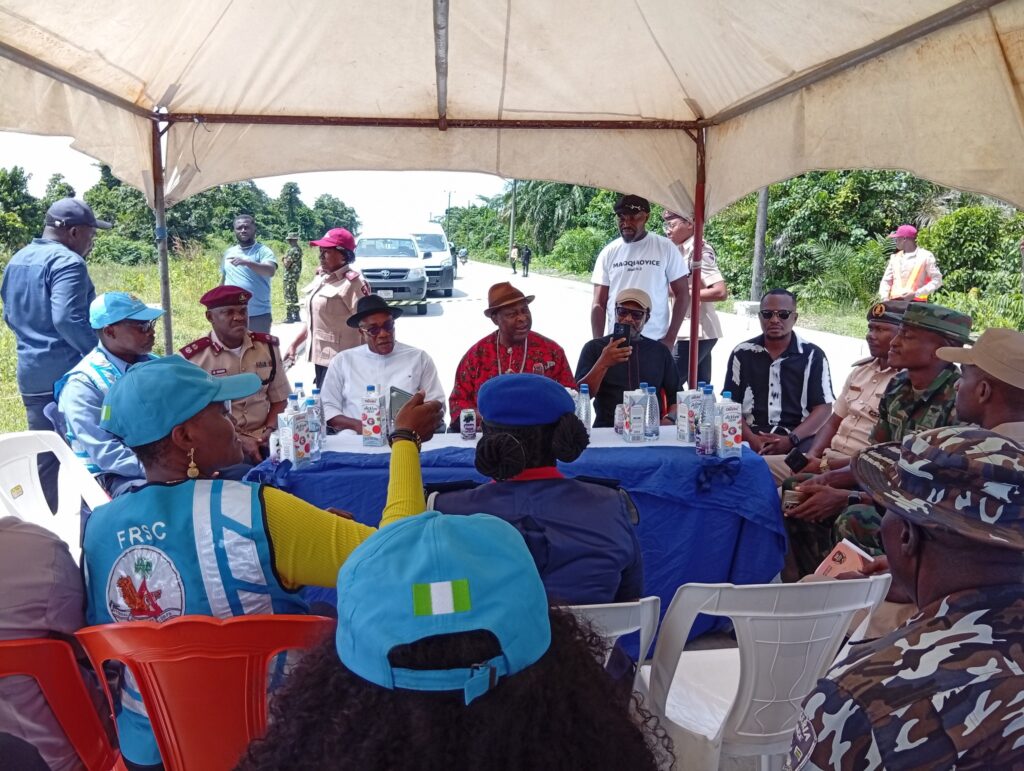
Commander Iyange Umoh, in his opening address, expressed deep appreciation to the Royal House for what he described as a profound act of generosity and civic responsibility. “This is a tremendous show of goodwill and an embodiment of community spirit. The land will provide a crucial space for the establishment of facilities aimed at enhancing road safety, which is essential for the development of Finima and the Local Government Area at large,” he said. He emphasised that with the new facilities, the FRSC expects to significantly reduce accident response times and improve safety standards across the region. The proposed structures to be developed on the land include a full FRSC sector command office, driver education and training facilities, an emergency response centre, and a community-based road safety education hub.

His Royal Highness Engr. (Dr) Dagogo Lambert Brown, in his remarks, reflected on the historical responsibility of the Royal House as custodians of the land and the people. “Today marks another chapter in our relentless commitment to not only preserve but also enhance the living standards in our community. By partnering with the FRSC, we are taking a stand in protecting our people and ensuring that they are better equipped to navigate the challenges of road usage,” the Amadabo said. He described the collaboration with the FRSC as a strategic alliance that aligns with the House’s enduring mission to balance heritage with development.

Warisenibo Igbiwari Prince Brown, the Asaawo Chairman, affirmed the decision of the Royal House to ensure that the construction phase would prioritise the use of local contractors and labour, creating both employment and skills-development opportunities within the Finima community. “The donation of this land goes beyond bureaucracy; it speaks volumes about leadership that is willing to make sacrifices for the betterment of its people,” he said. He also reiterated that the initiative would strengthen the socio-economic fabric of the community through engagement with local businesses, vendors, and services that will emerge around the new FRSC facility.

The strategic location of the land along Agadappa Road adds to its significance. This corridor is a vital transport link used daily by commercial and private vehicles, as well as pedestrians, linking Finima to other parts of Bonny Island and beyond. It has long suffered from traffic congestion, poor signage, insufficient regulatory presence, and frequent accidents. Residents and community leaders have often voiced their concerns regarding the condition and safety of the route, pointing out a lack of awareness around road safety protocols and minimal law enforcement visibility. The new FRSC command centre is expected to address these challenges directly, bringing a sustained regulatory presence to the area and reinforcing public education on road safety practices.

The wider community greeted the development with a wave of optimism and appreciation. Local residents, many of whom were present at the ceremony, praised the move and expressed their support. “It fills my heart with joy knowing that there are people out there who care about our well-being,” said one attendee. Another noted, “This development should serve as a template for future collaborations between community leadership and the government. It reflects the proactive steps that our royal house is willing to take in safeguarding our people. We need more of such initiatives across different sectors.”

The presence of the Nigerian Army, NDLEA, and Nigeria Police at the event signalled a broader commitment to inter-agency collaboration in ensuring the holistic safety and security of Finima’s residents. With their involvement, the vision for the FRSC command goes beyond just traffic management. Awareness campaigns, educational programs, drug and alcohol prevention training, and safety drills aimed at vulnerable road users such as pedestrians and cyclists are already being discussed as part of an integrated public safety agenda.

Despite the event’s high profile, the absence of local government officials did not go unnoticed. It highlighted a persisting disconnect between traditional institutions and elected administrative structures. Organisers from the Royal House reiterated their commitment to self-determined development, noting that they had deliberately chosen to work directly with federal and security agencies, in line with a historical precedent that upholds traditional autonomy in matters of land stewardship and community advancement. This autonomy has often been tested and defended through both legal channels and community consensus, reinforcing the Royal House’s status as a central pillar of Finima’s social and political fabric.

The potential impact of this donation extends well beyond the immediate scope of road safety. Once completed—an outcome targeted for the final quarter of 2025—the new FRSC command centre is projected to become a hub for training, coordination, and public engagement. Preliminary planning documents suggest that the complex will also serve as a base for community outreach initiatives, including road safety awareness drives in schools, market spaces, and religious institutions. It will provide a venue for FRSC-led workshops, townhall sessions, and safety inspections, thereby embedding public education into everyday life.

In addition to reducing accident rates and increasing enforcement efficiency, the project is expected to stimulate economic growth. Ancillary services such as vehicle maintenance shops, food vendors, and small-scale retail operations are likely to emerge around the facility. It is estimated that more than 150 jobs will be created through the construction phase alone, with additional permanent roles available once the centre is operational. Local entrepreneurs have already begun exploring opportunities to service the incoming demand that the command centre will generate.
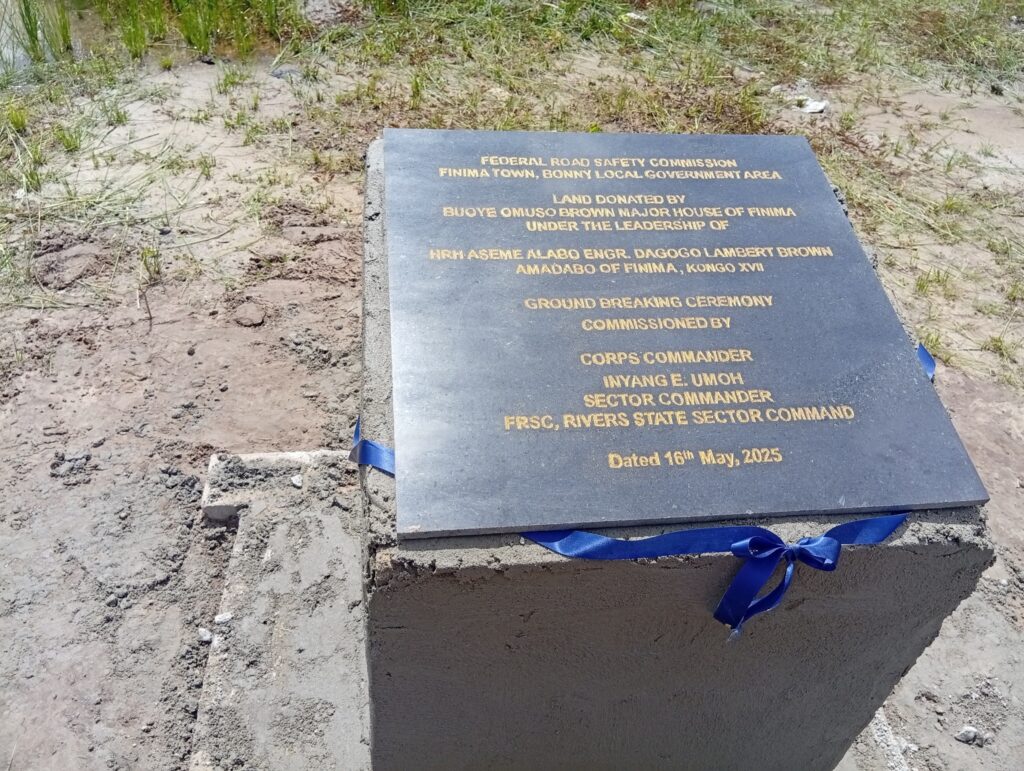
As the formalities ended, Commander Umoh and the Amadabo jointly unveiled a commemorative plaque, symbolising the handover of the deed of conveyance of the land to FRSC. Photographs captured the moment, with the Royal regalia and FRSC uniforms intermingling—a striking visual testament to the harmonious union of tradition and modern governance. Attendees dispersed with a palpable sense of optimism, discussing the prospect of community-driven safety campaigns, road-safety workshops in schools, and regular “Safety Days” aimed at instilling best practices among youth and commercial drivers.

The FRSC has outlined a phased implementation timeline, beginning with land surveys and design tendering in June 2025, followed by construction throughout the third quarter of the year. The official opening ceremony is scheduled for October 2025 and will feature keynote addresses from the Corps Marshal, the Amadabo, and other dignitaries. Throughout this period, monthly community briefings will be co-hosted by the FRSC and the Royal House, ensuring transparency, accountability, and continued community involvement.

Looking ahead, the collaboration between the FRSC and the Buoye Omuso Brown Major Royal House is seen as a benchmark for how traditional institutions can catalyse contemporary development. In an era where community safety, accountability, and proactive governance are more critical than ever, this initiative stands out for its clarity of vision and impact. By leveraging its heritage and influence, the Royal House has once again positioned itself as a beacon of leadership and a custodian of progress.

This donation, while rooted in tradition, is firmly directed at the future. It represents a convergence of cultural responsibility and national interest—a gesture that elevates the collective safety of a community while laying the groundwork for more collaborative frameworks between traditional authorities and federal institutions. As the dust settles from the ceremony, what remains is not just land handed over but a powerful message: that when vision meets action and leadership meets purpose, transformation is inevitable.

Transforming Nigerian agriculture through the tech ecosystem, By Shuaib S. Agaka

Transforming Nigerian agriculture through the tech ecosystem, By Shuaib S. Agaka

Culture

To drive the successful integration of digital solutions in Nigerian agriculture, it is imperative that all stakeholders; government agencies, technology providers, and the farming community collaborate and support this transformation. Government agencies should prioritise funding and policy support that fosters technological innovation, such as grants, subsidies, and infrastructure development.

The Director General of National Information Technology Development Agency (NITDA), Kashifu Inuwa has recently highlighted the game-changing potential of emerging technologies like AI, IoT, and blockchain in transforming Nigeria’s agricultural sector.

Mr Kashifu disclosed this recently during the launching of the Survey on Digitisation of Supply-Chain in Small-Scale Nigerian Farms Project, a collaborative effort between AGROVESTO, NITDA, Office for Nigerian Digital Innovation (ONDI), Japan International Cooperation Agency (JICA), and Federal Ministry of Agriculture and Food Security (FMAFS).

The DG, represented at the event by Engineer Salisu Kaka, emphasised that these innovations can revolutionise farming practices, enhance food security, and address the longstanding challenges faced by Nigerian farmers.

The initiative aims to harness the power of technology to drive sustainable agricultural growth and improve the livelihoods of small-scale farmers in Nigeria.

Culture Dangote Refinery

Small-scale farming is a vital component of Nigeria’s agricultural landscape, playing a central role in the nation’s economy and food security. This sector is the backbone of millions of rural households, providing employment and sustenance. Small-scale farmers contribute significantly to food production, growing a variety of crops and raising livestock that meet local dietary needs and support domestic markets. Their contributions are crucial for ensuring food availability and stability, especially in regions where large-scale commercial farming is less prevalent.

Despite their importance, small-scale farmers in Nigeria face numerous challenges, that can be easily solved using technological solutions. Even though technological solutions offer overwhelming benefits, however, there are a few problems associated with the adoption of these technological solutions by the farmers, and these call for an address for the growth of the national economy.

Article Page with Financial Support Promotion

Culture Nigerians need credible journalism. Help us report it.

PREMIUM TIMES delivers fact-based journalism for Nigerians, by Nigerians — and our community of supporters, the readers who donate, make our work possible. Help us bring you and millions of others in-depth, meticulously researched news and information.

It’s essential to acknowledge that news production incurs expenses, and we take pride in never placing our stories behind a prohibitive paywall.

Will you support our newsroom with a modest donation to help maintain our commitment to free, accessible news?

One of these arguments is the high initial cost of technological tools. Implementing advanced tools such as precision agriculture systems, data analytics platforms, and automated machinery, can require substantial financial investment. For many small-scale farmers, these costs seem huge, especially when budgets are tight and immediate returns on investment are uncertain.

However, it should be highlighted that while the initial costs of digital tools can be significant, it is important to consider the long-term savings and return on investment they offer. Digital technologies can lead to increased efficiency, higher yields, and reduced waste, all of which contribute to greater profitability over time. The improvements in productivity and efficiency can quickly offset the initial expenditure.

Moreover, various funding and support programmes are available to help offset the costs of adopting digital technologies. Government grants, subsidies, and low-interest loans are often offered to encourage technological innovation in agriculture. International organisations and non-profits also provide financial assistance and technical support to small-scale farmers. These resources can help ease the financial burden and make the transition to digital tools more feasible.

Another way to mitigate high costs is through collaborative models such as farmer cooperatives. By pooling resources, small-scale farmers can collectively invest in digital tools and share the benefits. This approach not only reduces individual costs but also fosters knowledge sharing and collective problem-solving. Cooperatives can also negotiate better deals and access bulk-purchasing discounts, further lowering the financial impact.

It should be noted that the long-term benefits of digital technologies often outweigh the initial costs. The increased efficiency, reduced waste, and better market access that digital tools provide can lead to substantial economic gains. When viewed as an investment in future productivity and profitability, the initial expense becomes a manageable and worthwhile investment.

Culture Audience Survey

Another argument against the adoption of digital technologies in agriculture is that many farmers may struggle to use technologies effectively due to limited technological literacy.

To address technological literacy issues, it is crucial to invest in comprehensive training and support programmes. The programmes should be tailored to the specific needs of farmers, providing hands-on instruction and practical guidance on using digital tools. Effective training can help farmers build confidence and competence in using new technologies, making the transition smoother and more successful.

Numerous successful digital literacy initiatives provide a model for overcoming this barrier. For instance, organisations like Digital Green and various agricultural extension services have implemented training programmes that effectively educate farmers on using technology. These programmes often include workshops, field demonstrations, and ongoing support, helping farmers to integrate digital tools into their operations successfully.

In addition, community-based support networks and peer-to-peer learning can also enhance technological literacy. By fostering a culture of collaboration and knowledge sharing among farmers, these networks can facilitate the exchange of practical tips and troubleshooting advice. Experienced users can mentor others, helping to spread technological proficiency and build confidence across the farming community.

Another concern is that infrastructure challenges, such as limited internet and electricity access in rural areas, are significant barriers to the adoption of digital technologies in agriculture. Many rural regions in Nigeria face unreliable electricity and poor internet connectivity, which can make it difficult for farmers to use digital tools effectively.

Despite these challenges, there have been notable improvements in infrastructure that support digital adoption. Mobile-based applications that function well with lower connectivity levels can offer valuable services, even in areas with limited internet access.

Also, solar-powered solutions are also emerging as a practical answer to electricity challenges in rural areas. Solar panels and battery storage systems provide a reliable and sustainable source of power, enabling farmers to use digital tools and technologies, regardless of local grid reliability.

Importantly, partnerships between technology providers, government agencies, and local communities can help address infrastructure challenges. Collaborative efforts can lead to the development of tailored solutions that meet the specific needs of rural areas. By working together, stakeholders can create innovative approaches to overcoming infrastructure barriers and supporting digital adoption in agriculture.

To drive the successful integration of digital solutions in Nigerian agriculture, it is imperative that all stakeholders; government agencies, technology providers, and the farming community collaborate and support this transformation. Government agencies should prioritise funding and policy support that fosters technological innovation, such as grants, subsidies, and infrastructure development. By creating favourable conditions for digital adoption, the government can facilitate a smoother transition for farmers. Technology providers, on the other hand, need to focus on developing user-friendly, affordable solutions tailored to the needs of small-scale farmers. Their role also involves providing comprehensive training and support to ensure that farmers can effectively utilise these tools.

Additionally, the farming community must be proactive in embracing digital solutions and participating in training programmes. Farmers should engage with available resources and advocate for the tools and support they need to enhance their operations. By building partnerships and sharing knowledge, farmers can collectively advance digital adoption and benefit from improved productivity and market access. Encouraging open dialogue and cooperation among these stakeholders will be crucial for overcoming barriers and realising the full potential of digital transformation in agriculture.

Shuaib S. Agaka, a tech journalist, writes from Kano.


Support PREMIUM TIMES’ journalism of integrity and credibility

At Premium Times, we firmly believe in the importance of high-quality journalism. Recognizing that not everyone can afford costly news subscriptions, we are dedicated to delivering meticulously researched, fact-checked news that remains freely accessible to all.

Whether you turn to Premium Times for daily updates, in-depth investigations into pressing national issues, or entertaining trending stories, we value your readership.

It’s essential to acknowledge that news production incurs expenses, and we take pride in never placing our stories behind a prohibitive paywall.

Would you consider supporting us with a modest contribution on a monthly basis to help maintain our commitment to free, accessible news?

Make Contribution


TEXT AD: Call Willie – +2348098788999


Culture PT Mag Campaign AD

%%

Transforming Nigerian Agriculture through Tech Ecosystem

Transforming Nigerian Agriculture through Tech Ecosystem

Culture

Culture DG NITDA Mal Kashifu Inwa
DG NITDA Mal Kashifu Inwa

Transforming Nigerian Agriculture through Tech Ecosystem
By Shuaib S. Agaka

The Director General of National Information Technology Development Agency (NITDA), Kashifu Inuwa has recently highlighted the game-changing potential of emerging technologies like AI, IoT, and blockchain in transforming Nigeria’s agricultural sector.

Mr. Kashifu disclosed this recently during the launching of the Survey on Digitization of Supply-Chain in Small-Scale Nigerian Farms Project, a collaborative effort between AGROVESTO, NITDA, Office for Nigerian Digital Innovation (ONDI), Japan International Cooperation Agency (JICA), and Federal Ministry of Agriculture and Food Security (FMAFS).

The DG, represented by Engr. Salisu Kaka, emphasized that these innovations can revolutionize farming practices, enhance food security, and address long-standing challenges faced by Nigerian farmers.

The initiative aims to harness the power of technology to drive sustainable agricultural growth and improve the livelihoods of small-scale farmers in Nigeria.

Small-scale farming is a vital component of Nigeria’s agricultural landscape, playing a central role in the nation’s economy and food security. This sector is the backbone for millions of rural households, providing employment and sustenance. Small-scale farmers contribute significantly to food production, growing a variety of crops and raising livestock that meet local dietary needs and support domestic markets. Their contributions are crucial for ensuring food availability and stability, especially in regions where large-scale commercial farming is less prevalent.

Despite their importance, small-scale farmers in Nigeria face numerous challenges, that can be easily solved using technological solutions. Even though technological solutions offer overwhelming benefits, however, there are a few problems associated with the adoption of these technological solutions by the farmers, and these call for an address for the growth of the national economy.

One of these arguments is the high initial cost of technological tools. Implementing advanced tools such as precision agriculture systems, data analytics platforms, and automated machinery can require substantial financial investment. For many small-scale farmers, these costs seem huge, especially when budgets are tight and immediate returns on investment are uncertain.

However, it should be highlighted that while the initial costs of digital tools can be significant, it is important to consider the long-term savings and return on investment they offer. Digital technologies can lead to increased efficiency, higher yields, and reduced waste, all of which contribute to greater profitability over time. The improvements in productivity and efficiency can quickly offset the initial expenditure.

Moreover, various funding and support programs are available to help offset the costs of adopting digital technologies. Government grants, subsidies, and low-interest loans are often offered to encourage technological innovation in agriculture. International organizations and non-profits also provide financial assistance and technical support to small-scale farmers. These resources can help ease the financial burden and make the transition to digital tools more feasible.

Another way to mitigate high costs is through collaborative models such as farmer cooperatives. By pooling resources, small-scale farmers can collectively invest in digital tools and share the benefits. This approach not only reduces individual costs but also fosters knowledge sharing and collective problem-solving. Cooperatives can also negotiate better deals and access bulk-purchasing discounts, further lowering the financial impact.

It should be noted that the long-term benefits of digital technologies often outweigh the initial costs. The increased efficiency, reduced waste, and better market access that digital tools provide can lead to substantial economic gains. When viewed as an investment in future productivity and profitability, the initial expense becomes a manageable and worthwhile investment.

Read Also:

Another argument against the adoption of digital technologies in agriculture is that many farmers may struggle to use technologies effectively due to limited technological literacy.

To address technological literacy issues, it is crucial to invest in comprehensive training and support programs. The programs should be tailored to the specific needs of farmers, providing hands-on instruction and practical guidance on using digital tools. Effective training can help farmers build confidence and competence in using new technologies, making the transition smoother and more successful.

Numerous successful digital literacy initiatives provide a model for overcoming this barrier. For instance, organizations like Digital Green and various agricultural extension services have implemented training programs that effectively educate farmers on using technology. These programs often include workshops, field demonstrations, and ongoing support, helping farmers to integrate digital tools into their operations successfully.

Additionally, community-based support networks and peer-to-peer learning can also enhance technological literacy. By fostering a culture of collaboration and knowledge sharing among farmers, these networks can facilitate the exchange of practical tips and troubleshooting advice. Experienced users can mentor others, helping to spread technological proficiency and build confidence across the farming community.

Another concern is that infrastructure challenges, such as limited internet and electricity access in rural areas, are significant barriers to the adoption of digital technologies in agriculture. Many rural regions in Nigeria face unreliable electricity and poor internet connectivity, which can make it difficult for farmers to use digital tools effectively.

Despite these challenges, there have been notable improvements in infrastructure that support digital adoption. Mobile-based applications that function well with lower connectivity levels can offer valuable services even in areas with limited internet access.

Also, solar-powered solutions are also emerging as a practical answer to electricity challenges in rural areas. Solar panels and battery storage systems provide a reliable and sustainable source of power, enabling farmers to use digital tools and technologies regardless of local grid reliability.

Importantly, partnerships between technology providers, government agencies, and local communities can help address infrastructure challenges. Collaborative efforts can lead to the development of tailored solutions that meet the specific needs of rural areas. By working together, stakeholders can create innovative approaches to overcoming infrastructure barriers and supporting digital adoption in agriculture.

To drive the successful integration of digital solutions in Nigerian agriculture, it is imperative that all stakeholders; government agencies, technology providers, and the farming community collaborate and support this transformation. Government agencies should prioritize funding and policy support that fosters technological innovation, such as grants, subsidies, and infrastructure development. By creating favorable conditions for digital adoption, the government can facilitate a smoother transition for farmers. Technology providers, on the other hand, need to focus on developing user-friendly, affordable solutions tailored to the needs of small-scale farmers. Their role also involves providing comprehensive training and support to ensure that farmers can effectively utilize these tools.

Additionally, the farming community must be proactive in embracing digital solutions and participating in training programs. Farmers should engage with available resources and advocate for the tools and support they need to enhance their operations. By building partnerships and sharing knowledge, farmers can collectively advance digital adoption and benefit from improved productivity and market access. Encouraging open dialogue and cooperation among these stakeholders will be crucial for overcoming barriers and realizing the full potential of digital transformation in agriculture.

Shuaib S. Agaka is Tech Journalist and writes from PRNigeria Centre Kano

Kidnapped School Children

Yauri FGC Students, Kebbi (Freed)

The last victims released spent 707 days from June 17, 2021 – May 25, 2023


Baptist School Students, Kaduna (Freed)

Spent 850 Day from July 5, 2022 to November 2, 2023


Tegina Islamiya Pupils, Niger (Freed)

Spent 88 days from May 30, 2021 – August 26, 2021


Report By: PRNigeria.com

%%

Page 2 of 4
1 2 3 4