Local Employment & Skills Development in Finima
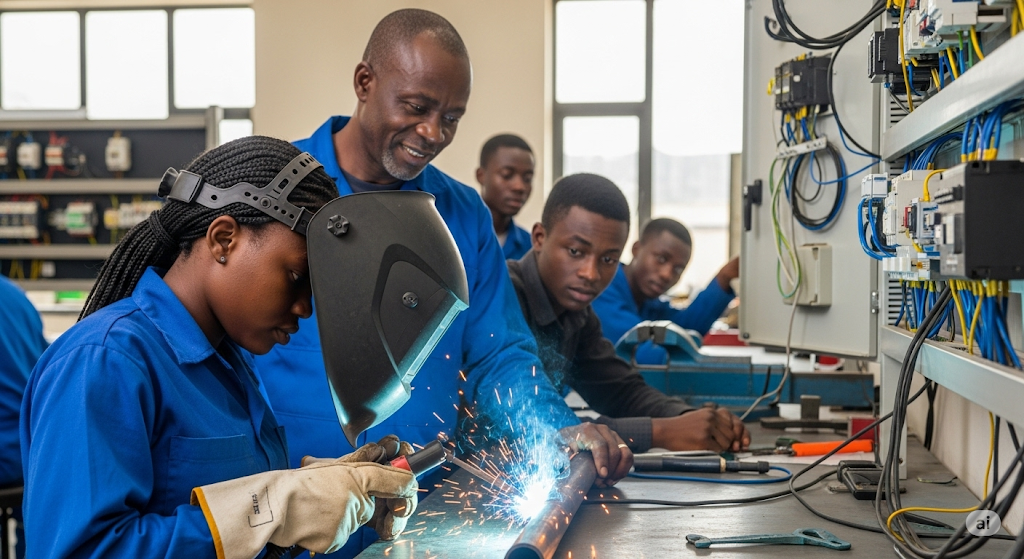
Finima’s story is one of transformation and tenacity. Once a quiet riverine village, it now hosts one of Nigeria’s largest industrial complexes. This shift brought modern homes and new job prospects, yet many residents still seek stable, skilled work. Today, a mix of training programmes, youth-led emergency response teams and persistent advocacy is helping Finima indigenes build resilience and claim their place in the local economy.
From Fishing Villages to Formal Work: How Resettlement Changed Lives
The arrival of the Nigeria LNG plant in the late 1990s marked a turning point for Finima. Over 3,000 residents were resettled into 500 new housing units equipped with electricity and clean water—a significant upgrade from the previous riverine setting. This move, carried out by the Nigerian National Petroleum Corporation between 1998 and 2001, represented the largest involuntary resettlement in Rivers State at the time.
Before relocation, most families relied on subsistence fishing and small-scale trading for survival. After moving to the new estates, many found work in plant operations, maintenance, transport logistics and community liaison roles linked to the NLNG facility. A 2022 study confirmed a clear rise in formal employment among resettled households, signalling a shift from informal to wage-based livelihoods.
However, the same research highlighted a critical gap: while incomes increased, few resettled individuals gained access to vocational training. As a result, many remained in unskilled or casual positions, lacking the qualifications needed for long-term career progression. This dependence on short-term contracts has continued to shape employment patterns in the community.
Tourism Training Opens New Doors for Youth
In March 2021, NLNG launched a partnership with GOGE Africa to train young people from Bonny Island—including many from Finima—in tourism entrepreneurship. This initiative forms part of the company’s broader 'Bonny-Dubai Vision', which aims to diversify the island’s economy by 2040 through sectors like eco-tourism and hospitality.
The pilot programme took 50 participants to the 1,000-hectare Finima Nature Park, established in 1999, where they learned eco-tourism management, tour-guiding and hospitality best practices. Training covered trip planning, certification procedures and small-business development, equipping trainees to tap into growing domestic interest in nature and cultural tourism.
Community feedback has been encouraging. Local guest-houses have reported a 30 percent increase in bookings driven by trained Finima guides. Several graduates have gone on to launch canoe tours and heritage-based enterprises, earning upwards of ₦150,000 per month. These outcomes show how targeted skills training can translate into sustainable income streams for young people.
Youth-Led Emergency Response Strengthens Community Safety
Recognising the risks posed by industrial activity and seasonal flooding, the Finima Youth Congress (FYC) organised a two-day Emergency Response course in May 2025. Partnering with EBBY-TEK Service Ltd and Future Concern Nigeria Ltd, the training was Red Cross-certified and covered first aid, CPR, firefighting and disaster management.
Over 60 young people from Finima and nearby creeks took part, learning from certified Health, Safety and Environment (HSE) trainers. FYC Chairman Comrade Darlington Tobin described the initiative as transforming bystanders into first responders—a vital step in building community resilience against pipeline leaks, spills and flood-related emergencies.
Post-training feedback revealed that 95 percent of participants felt confident to assist in crisis situations. Local health centres have since recorded a 20 percent reduction in response times for accident victims, which officials attribute to the rapid action of FYC volunteers on the ground. This model demonstrates how youth-led initiatives can fill critical gaps in public safety.
Debate and Leadership: Building Confidence in Schools
Beyond technical skills, Finima’s schools are investing in soft skills that empower young people to speak up and lead. In October 2024, Government Girls’ Secondary School, Finima (GGSSF) emerged victorious in the YESI Inter-School Debate Competition, winning the ₦150,000 top prize. Two of its speakers also shared a combined ₦75,000 award for Best Speaker recognitions.
The competition, organised by the Nigerian Society of Engineers and the FYC, brought together over 200 students from schools across Bonny Island. It focused on public speaking, research and advocacy—skills that extend far beyond the classroom. GGSSF’s principal noted that the victory has inspired girls to lead peer-mentoring clubs, volunteer in community forums and pursue scholarships with greater confidence.
Educators link these gains to measurable improvements: secondary school completion rates have risen by 18 percent, and more students are applying for tertiary education in humanities and social sciences. This suggests that nurturing articulation and self-assurance can have a lasting impact on academic and civic engagement.
Advocacy Pushes for Fair Access to Jobs and Training
Despite these advances, many in Finima feel that progress remains uneven. The Finima Community Development Committee (FCDC), active since 2014, continues to urge NLNG to fully implement the Nigeria Oil and Gas Content Development Act (2010) and the associated Community Content Guidelines (2017). These laws are designed to ensure that host communities benefit from local employment and skills development linked to oil and gas projects.
After a 2021 protest at the NLNG roundabout, community leaders voiced frustration over unmet promises regarding skills-training centres and youth apprenticeship schemes. Petitions submitted to the NNPC, NCDMB and the Inspector-General of Police received no response, prompting renewed advocacy as preparations advance for NLNG’s Train 7 expansion.
FCDC’s Chairman argues that while scholarships and one-off workshops have their place, what is truly needed are accredited vocational institutes within Finima, guaranteed apprenticeship quotas and clear roadmaps for local vendor development. Without such structural changes, he warns, training efforts risk remaining episodic rather than transformative.
What this means
Finima stands at a crossroads. The benefits of resettlement—secure homes, utilities and initial job opportunities—are clear, yet the community’s aspirations run deeper. Residents are not merely seeking work; they are demanding dignified, skilled employment that honours their heritage and secures their future. The energy seen in youth-led emergency teams, thriving tourism ventures and award-winning school debaters shows what is possible when opportunity meets preparation. Now, the focus must turn to making such opportunities lasting and accessible to all. By investing in accredited vocational training, enforcing local-content compliance and strengthening public-private partnerships, Finima can build an economy that is not only productive but also just—one where every indigene has a fair chance to thrive, whether they remain on the island or carry its spirit in the diaspora.
Prepared with AI assistance.
Discover more from FINIMA
Subscribe to get the latest posts sent to your email.
0 Comments