Breaking News: NLC President Joe Ajaero Arrives at Police Headquarters for Terrorism Probe.
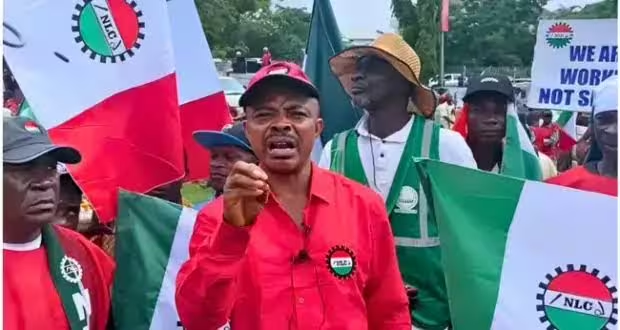
In a significant development that has captured national attention, Joe Ajaero, the President of the Nigeria Labour Congress (NLC), arrived at the Intelligence Response Team (IRT) headquarters to comply with a police summons. The investigation centers around allegations of terrorism financing, cybercrime, subversion, criminal conspiracy, and treasonable felony. This article delves deeply into the circumstances leading to Ajaero’s summons, the implications of his appearance, and what this means for Nigeria’s labor movement and broader socio-political landscape.
Background of the Summons: Understanding the Allegations
Last week, the Nigeria Police Force issued a summons to Joe Ajaero, requesting his presence at the Intelligence Response Team (IRT) headquarters. The summons is connected to serious allegations including terrorism financing, cybercrime, subversion, criminal conspiracy, and treasonable felony. Such charges carry severe legal consequences and have sparked widespread public interest and debate.
The IRT, a specialized division within the Force Intelligence Bureau, is tasked with investigating complex crimes related to national security. Its involvement indicates the gravity of the accusations against Ajaero. The police have yet to publicly disclose detailed evidence supporting these allegations, which has led to speculation and calls for transparency.
Ajaero’s initial inability to attend the scheduled date of August 20 raised questions about his willingness to cooperate with the investigation. However, his subsequent commitment to appear signifies a readiness to engage with the legal process and clarify his position. This move is critical in shaping public perception and the unfolding narrative.
The Arrival at IRT Headquarters: Key Moments
On Thursday morning, Joe Ajaero arrived at the IRT headquarters precisely at 10:17 am, slightly after the summoned time of 10:00 am. His arrival was marked by the presence of prominent figures including Senior Advocate of Nigeria (SAN) Femi Falana, Marshal Abubakar, Deji Adeyanju, and senior officials from the NLC. This entourage underscores the seriousness with which the labor union is treating the matter.
The presence of legal counsel, especially a respected figure like Femi Falana, suggests that Ajaero is prepared to mount a robust defense. Falana’s reputation as a human rights lawyer adds a layer of legal expertise and public interest to the proceedings. Additionally, the support from senior NLC officials signals solidarity within the labor movement during this challenging period.
Security around the IRT premises was heightened to manage the influx of journalists, supporters, and curious onlookers. Media coverage was extensive, reflecting the high stakes of the investigation and the public’s keen interest in the outcome. The atmosphere was tense but orderly, with law enforcement maintaining strict protocols.
Role of the Intelligence Response Team in National Security
The Intelligence Response Team (IRT) is a critical arm of the Nigeria Police Force, specializing in intelligence gathering and investigation of crimes that threaten national security. Their focus includes terrorism, cybercrime, and other high-profile offenses. The IRT operates under the Force Intelligence Bureau, which coordinates efforts to safeguard the country against internal and external threats.
In this case, the IRT’s involvement highlights the seriousness of the allegations against Joe Ajaero. Their investigative methods often include surveillance, forensic analysis, and collaboration with other security agencies. The IRT’s mandate ensures that investigations are thorough and evidence-based, which is essential for upholding justice and public trust.
The team’s reputation for professionalism and discretion means that details about ongoing investigations are closely guarded until formal charges are filed or public statements are made. This approach is intended to protect the integrity of the process and prevent misinformation or undue influence.
Implications for the Nigeria Labour Congress and the Labor Movement
Joe Ajaero’s involvement in a terrorism probe has significant implications for the Nigeria Labour Congress, the umbrella organization representing millions of Nigerian workers. The NLC has historically been a powerful voice in advocating for workers’ rights and social justice, and this investigation could impact its credibility and influence.
If the allegations prove unfounded, the NLC may rally around Ajaero to highlight perceived attempts to undermine labor activism. Conversely, if evidence substantiates the charges, it could lead to leadership upheaval and internal restructuring within the union. The situation places the NLC at a crossroads, balancing legal challenges with its core mission.
The broader labor movement in Nigeria may also experience ripple effects, as other unions watch closely how this case unfolds. The outcome could set precedents regarding government-labor relations, freedom of association, and the boundaries of political dissent within the country’s democratic framework.
Legal Perspectives and Defense Strategies
The legal team representing Joe Ajaero, led by Senior Advocate of Nigeria Femi Falana, is expected to challenge the basis of the allegations vigorously. Falana’s extensive experience in constitutional and human rights law positions him to scrutinize the legality of the police summons and the evidence presented.
One possible defense strategy might involve questioning the evidentiary standards used by the police and emphasizing Ajaero’s constitutional rights, including the right to fair treatment and due process. Additionally, the legal team may argue that the charges are politically motivated, aimed at stifling labor activism and dissent.
The court proceedings, should they arise, will likely be closely monitored by legal experts, human rights organizations, and the public. Transparency and adherence to the rule of law will be critical in ensuring that justice is served without prejudice or political interference.
Public Reaction and Media Coverage
News of Joe Ajaero’s summons and subsequent appearance at the IRT headquarters has generated significant public discourse across social media platforms, traditional media, and civil society groups. Opinions are divided, with some expressing support for the investigation as a necessary step for national security, while others view it as an attempt to intimidate labor leaders.
Media outlets have provided extensive coverage, offering live updates, expert analyses, and interviews with stakeholders. This widespread attention underscores the case’s importance and the public’s demand for accountability and clarity.
Civil society organizations and labor advocates have called for transparency and fairness, urging the authorities to avoid politicizing the investigation. They emphasize the need to protect democratic freedoms while addressing legitimate security concerns.
Potential Outcomes and Future Developments
The investigation into Joe Ajaero’s alleged involvement in terrorism financing and related offenses could take several directions. If the police find insufficient evidence, the case may be dropped, allowing Ajaero to continue his leadership role without legal encumbrances. This would be a relief to the NLC and its members.
Alternatively, if charges are formally filed, it could trigger a protracted legal battle with national and international ramifications. The labor movement may need to prepare for leadership transitions or increased scrutiny from government agencies.
Regardless of the outcome, this case highlights the complex intersection of national security, labor activism, and political freedoms in Nigeria. It sets a precedent for how similar cases might be handled in the future and emphasizes the importance of due process and the rule of law.
Conclusion
The arrival of Joe Ajaero at the Intelligence Response Team headquarters marks a critical juncture in a high-profile investigation that intertwines national security concerns with labor activism. As the Nigeria Labour Congress navigates this challenging period, the unfolding legal processes will be scrutinized for fairness, transparency, and respect for democratic principles. This case serves as a potent reminder of the delicate balance between safeguarding the nation and protecting fundamental freedoms. Observers and stakeholders alike await further developments with keen interest, recognizing the profound implications for Nigeria’s socio-political landscape.
Discover more from FINIMA
Subscribe to get the latest posts sent to your email.
0 Comments