The Finima Community Overview
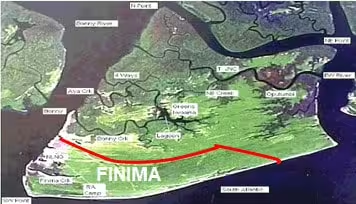
Nestled along the southeastern coast of Bonny Island, Finima stands as one of the most ancient and historically significant communities in the Niger Delta region of Nigeria. Positioned strategically by the mouth of the Bonny River, which flows into the Atlantic Ocean, Finima’s geography has long made it a vital hub for marine trade and export activities. Over centuries, Finima has evolved from a modest fishing and farming settlement into a fast-growing community, deeply intertwined with Nigeria’s hydrocarbon industry. This comprehensive overview delves into Finima’s history, demographics, economic landscape, cultural fabric, and its continuing development trajectory.
Geographical Location and Strategic Significance
Finima is strategically situated on the southeastern coast of Bonny Island, at the mouth of the Bonny River where it empties into the Atlantic Ocean. This prime location has historically provided the community with access to rich marine resources and navigable waterways, making it an ideal point for trade and export activities. The North-Eastward deepened channel of the Bonny River further enhances its suitability for shipping and marine transport, accommodating large vessels and facilitating economic activities.
The geographical positioning of Finima has attracted various trading activities since ancient times, especially during the era of Portuguese explorers and slave merchants who capitalized on its accessible river channels. Today, this advantageous location continues to serve as a critical gateway for Nigeria’s oil and gas exports, underpinning the community’s importance in the country’s economic landscape.
Moreover, Finima’s proximity to the Atlantic Ocean and its natural harbor makes it a magnet for hydrocarbon and allied industries. The community’s land hosts several multinational oil companies and related enterprises, leveraging its strategic maritime access to support Nigeria’s energy sector and contribute significantly to regional development.
Historical Background and Cultural Heritage
Finima is regarded as one of the most ancient communities on Bonny Island, with a rich cultural heritage that predates colonial times. Historically, it served as a key settlement for indigenous peoples engaged in subsistence fishing, farming, and trade. The community’s cultural identity is deeply rooted in traditional practices, local governance systems, and communal values that have been preserved across generations.
The arrival of Portuguese traders in the early centuries introduced new dynamics to Finima’s socio-economic structure. These interactions, while complex, positioned Finima as a critical node in the trans-Atlantic trade routes. Despite the challenges of the slave trade era, the community maintained its cultural cohesion and evolved resiliently into the modern age.
Today, Finima’s cultural landscape reflects a blend of indigenous traditions and contemporary influences. Festivals, local arts, and community rituals continue to thrive, fostering a strong sense of identity among the indigenous Finima people. This cultural vibrancy plays a vital role in community cohesion and social stability.
Demographics and Population Dynamics
As of March 2016, Finima’s population was estimated at approximately 45,000 residents according to data from the National Population Commission (NPC) and the National Bureau of Statistics (NBS). The population is a mix of indigenous Finima people and a significant number of non-indigenous residents drawn by employment opportunities in the thriving oil and gas sector.
Indigenous inhabitants constitute about 40% of the total population, with the remainder comprising workers and their families from various parts of Nigeria and beyond. This demographic diversity has enriched the community’s social fabric, fostering cultural exchange and economic collaboration.
The ongoing Train 7 project by Nigeria Liquefied Natural Gas Limited (NLNG) is expected to further increase the population by engaging an additional estimated 12,000 workers. This influx will likely stimulate local economic activities, while also presenting challenges related to infrastructure, housing, and social services.
Economic Activities and Industry Presence
Finima’s economy is heavily influenced by its strategic location and the presence of major hydrocarbon companies. Historically reliant on subsistence fishing and farming, the community has diversified its economic base to include significant employment in the oil and gas sector, civil service, and small to medium-sized enterprises (SMEs).
Several multinational corporations have established operations on Finima land, including Shell Petroleum Development Company of Nigeria Limited (SPDC), Mobil Producing Nigeria Unlimited (MPN), ExxonMobil, Nigeria Liquefied Natural Gas Limited (NLNG), Chevron Nigeria Limited (CNL), and Total Elf. These companies contribute substantially to local employment and infrastructure development.
The presence of these companies has transformed Finima into a commercial hub, attracting ancillary businesses and services that support the hydrocarbon industry. This industrial ecosystem provides opportunities for local entrepreneurship, skill development, and community investment, reinforcing Finima’s role as an economic powerhouse within Bonny Island.
Infrastructure and Community Development
Finima has witnessed significant infrastructural development over the years, driven largely by the requirements of the oil and gas industry and the growing population. Key infrastructure includes residential areas such as the NLNG workers’ housing estates, road networks, healthcare facilities, and educational institutions.
The community benefits from ongoing investments aimed at improving living standards and supporting industrial operations. These include upgrades to transportation links, water supply systems, and electricity distribution, which are critical for sustaining both residential life and business activities.
However, rapid development also poses challenges, such as pressure on existing infrastructure and environmental concerns. Addressing these issues requires coordinated efforts between community leaders, government agencies, and corporate stakeholders to ensure sustainable growth and equitable resource distribution.
Social Structure and Indigenous Livelihoods
The indigenous Finima people primarily engage in subsistence fishing and farming, activities that have sustained the community for centuries. These traditional livelihoods remain important, even as many residents find employment in the oil and gas sector or civil service roles.
Community life in Finima is characterized by strong social ties and cooperative practices. Indigenous governance structures, including traditional councils and community leaders, play a significant role in maintaining order, resolving disputes, and preserving cultural values.
Despite modernization, indigenous residents continue to uphold their customs and participate actively in communal events. Efforts to balance traditional lifestyles with the demands of modern economic development are ongoing, ensuring that the community’s heritage is respected amid rapid change.
Environmental Considerations and Challenges
Finima’s coastal location and dependence on natural resources make environmental sustainability a critical concern. Activities related to oil and gas extraction, maritime transport, and urban expansion pose risks to the local ecosystem, including water pollution and habitat disruption.
The community and corporate stakeholders have increasingly recognized the importance of environmental protection. Initiatives aimed at pollution control, waste management, and ecological restoration are being implemented to mitigate adverse impacts and promote sustainable resource use.
Balancing economic growth with environmental stewardship remains a priority for Finima. Continued collaboration between government agencies, industry players, and the community is essential to safeguard the natural environment while supporting development objectives.
Future Prospects and Development Outlook
Finima’s future is closely linked to the ongoing expansion of Nigeria’s hydrocarbon sector and the community’s capacity to manage growth sustainably. Projects like NLNG’s Train 7 are expected to generate significant employment and economic opportunities, further integrating Finima into global energy markets.
Urban planning and infrastructure development will be crucial to accommodate the projected population increase and industrial activities. Investments in education, healthcare, and social amenities will enhance quality of life and support human capital development.
Moreover, fostering inclusive development that respects indigenous rights and environmental sustainability will be vital. With strategic planning and stakeholder cooperation, Finima is poised to continue evolving as a vibrant, prosperous community at the heart of Bonny Island’s economic landscape.
Conclusion
Finima stands as a vital community within Bonny Island, blending a rich historical legacy with dynamic economic growth fueled by Nigeria’s hydrocarbon industry. Its strategic location, diverse population, and cultural heritage contribute to its unique identity and regional importance. While rapid development brings challenges related to infrastructure, environment, and social cohesion, Finima’s future remains promising given ongoing investments and collaborative efforts. Prioritizing sustainable growth and inclusive development will ensure that Finima continues to thrive as a peaceful, prosperous, and strategically significant community in the Niger Delta.
Discover more from FINIMA
Subscribe to get the latest posts sent to your email.
0 Comments