NGX Rebounds On Increased Buying Sentiments, Impressive Corporate Earnings Amid Sector Rotation
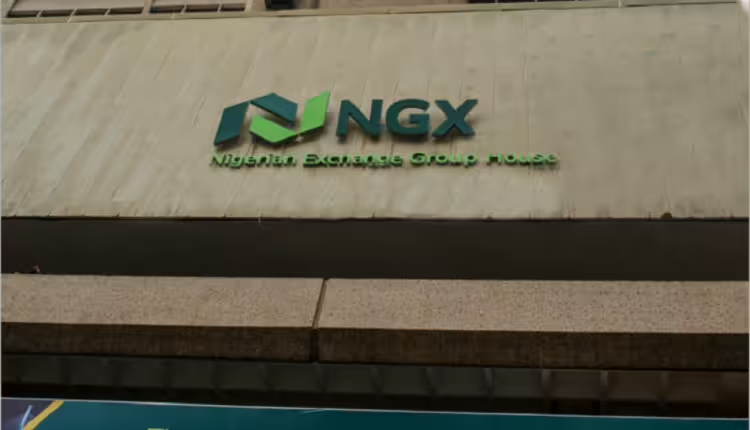
The Nigerian Exchange (NGX) recently experienced a notable rebound following a period of decline influenced by global market volatility and cautious investor behavior. The initial downturn, which saw significant losses, was swiftly countered by a surge in buying interest, underpinned by impressive corporate earnings reports and strategic sector rotation. This recovery highlights the resilience of the Nigerian capital market and the growing optimism among investors. In this comprehensive analysis, we explore the key drivers behind the NGX’s rebound, examining market trends, sectoral performance, and the implications for investors moving forward.
Market Overview: From Initial Decline to Recovery
The NGX opened the week on a subdued note, reflecting a 0.17% decline that wiped out over NGN 94 billion in market capitalization. This downturn was largely attributed to global market pressures, with major indices such as the S&P 500, Nikkei, Nasdaq, DAX, and STOXX experiencing sell-offs. The Federal Reserve’s decision to maintain its monetary policy stance heightened investor caution, impacting emerging markets including Nigeria.
However, the initial bearish sentiment was short-lived as local investors capitalized on attractive valuations and positive corporate earnings. This shift in market dynamics triggered a wave of buying activity, reversing earlier losses and setting the stage for a sustained rebound. The NGX’s ability to bounce back underscores the interplay between global economic factors and domestic market fundamentals.
Investor confidence was further bolstered by the resilience of key sectors and the strategic rotation of funds into emerging growth areas. This sector rotation played a pivotal role in reshaping market sentiment, as investors sought to optimize portfolio returns by reallocating assets to sectors demonstrating robust earnings and growth potential.
Corporate Earnings Propel Market Optimism
Strong corporate earnings reports served as a catalyst for the NGX’s recovery, with several blue-chip companies exceeding market expectations. These positive earnings outcomes reinforced investor confidence in the financial health and growth prospects of Nigerian companies, stimulating increased market participation.
Notably, sectors such as consumer goods, banking, and oil & gas reported impressive earnings, reflecting operational efficiencies and favorable market conditions. This earnings momentum attracted both institutional and retail investors, driving up stock prices and contributing to overall market gains.
The transparency and timeliness of corporate disclosures also played an essential role in restoring market trust. Companies that provided clear guidance and demonstrated resilience amid economic challenges helped to mitigate investor fears and encourage renewed buying interest.
Sector Rotation: A Strategic Shift in Investment Patterns
Sector rotation emerged as a significant driver of the NGX rebound, with investors reallocating capital from traditionally defensive sectors to those exhibiting higher growth potential. This strategic shift was motivated by changing economic indicators and evolving market conditions.
Investors moved away from sectors perceived as overvalued or vulnerable to external shocks, such as banking and telecommunications, redirecting funds to consumer goods, industrials, and energy sectors. These sectors demonstrated robust earnings growth and were well-positioned to benefit from Nigeria’s economic recovery.
This rotation reflects a broader trend of market maturation, where investors increasingly employ tactical asset allocation to optimize returns. By capitalizing on sector-specific opportunities, market participants contribute to enhanced liquidity and price discovery across the NGX.
Impact of Global Economic Trends on NGX Performance
Global economic trends continue to exert significant influence on the NGX, with external factors such as monetary policy decisions, commodity prices, and geopolitical developments shaping investor sentiment. The Federal Reserve’s recent policy stance, for example, initially dampened appetite for riskier assets, including Nigerian equities.
However, the NGX’s rebound demonstrates the market’s resilience and ability to decouple from adverse global trends over the medium term. Nigeria’s improving macroeconomic indicators and ongoing reforms have enhanced investor confidence, partially insulating the market from external shocks.
Moreover, rising commodity prices, particularly in the oil sector, have provided a tailwind for Nigeria’s resource-dependent economy. This has translated into improved corporate earnings and a more favorable investment climate, further supporting the NGX’s upward trajectory.
Investor Sentiment: Renewed Confidence and Market Participation
The resurgence in investor sentiment is a critical factor underpinning the NGX’s recovery. Market participants have demonstrated increased confidence, driven by positive earnings reports, sector rotation, and supportive macroeconomic developments.
Retail investors, in particular, have re-engaged with the market, attracted by opportunities for capital appreciation and dividend income. The accessibility of digital trading platforms and improved market infrastructure have also facilitated greater participation.
Institutional investors have played a complementary role, leveraging their analytical capabilities to identify undervalued stocks and sectors poised for growth. This balanced participation across investor classes enhances market depth and stability.
Key Sector Performances Driving the Rebound
The consumer goods sector emerged as a standout performer, benefiting from strong domestic demand and resilient supply chains. Companies in this sector reported robust sales growth, underpinning investor interest and stock price appreciation.
The banking sector, despite some rotation away from its stocks, posted solid earnings supported by improved asset quality and increased lending activity. This stability has reassured investors about the sector’s long-term prospects.
The oil and gas sector also contributed positively, buoyed by higher crude oil prices and operational efficiencies. The sector’s recovery is critical for Nigeria’s economy, given its significant contribution to government revenues and foreign exchange earnings.
Challenges and Risks Ahead for the NGX
Despite the positive momentum, the NGX faces several challenges that could impact its trajectory. Persistent inflationary pressures, currency volatility, and political uncertainties remain key risks that investors must monitor closely.
Global economic uncertainties, including potential shifts in monetary policies and geopolitical tensions, could also affect capital flows and investor sentiment. These external risks necessitate cautious optimism among market participants.
Additionally, structural issues such as market liquidity constraints and regulatory complexities continue to pose challenges. Addressing these concerns through policy reforms and enhanced market governance will be essential for sustaining long-term growth.
Future Outlook: Sustaining the NGX Momentum
Looking ahead, the NGX is well-positioned to sustain its positive momentum, provided that corporate earnings remain strong and sector rotation continues to favor growth-oriented industries. Continued economic reforms and infrastructure development will further enhance the investment climate.
Market participants should remain vigilant to emerging risks while capitalizing on opportunities presented by Nigeria’s expanding economy and demographic trends. Diversification strategies and active portfolio management will be critical in navigating market volatility.
Furthermore, increased investor education and market transparency will foster greater participation and confidence. As Nigeria’s capital market evolves, the NGX is expected to play a pivotal role in mobilizing capital for economic development and wealth creation.
Conclusion
The Nigerian Exchange’s recent rebound is a testament to the market’s resilience and the positive impact of strong corporate earnings and strategic sector rotation. While global economic uncertainties and domestic challenges persist, the NGX’s ability to attract investor confidence and adapt to evolving market dynamics bodes well for its future growth. Investors should approach the market with balanced optimism, leveraging emerging opportunities while remaining mindful of risks. Continued reforms and improved market infrastructure will be vital in sustaining this upward trajectory, positioning the NGX as a key driver of Nigeria’s economic development.
Discover more from FINIMA
Subscribe to get the latest posts sent to your email.
0 Comments