Skip to content Skip to left sidebar Skip to right sidebar Skip to footer

Tag: Introduction

Page 1 of 2
1 2

🏝️ Finima: The Ancient Homeland Before Bonny — A Historical and Legal Reaffirmation

By Engr. Tamunofiniarisa Brown, Tamfis Nigeria Limited


Introduction

The story of Finima is not merely a sub-chapter of Bonny history — it is the foundation upon which the later Bonny civilisation evolved.
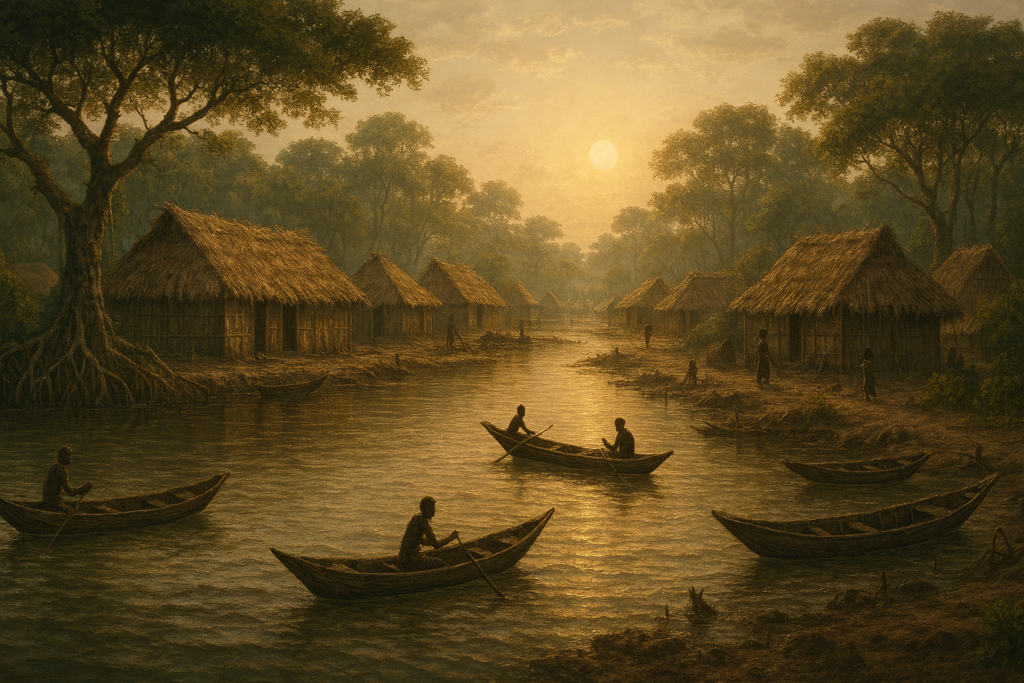
Long before the emergence of the Bonny Kingdom as a trading and political power in the Niger Delta, Finima already existed as a vibrant riverine community — a cradle of Ibani heritage and maritime culture.

This post consolidates credible historical, anthropological, and legal sources to reaffirm that Finima predates Bonny by several centuries.
It also clarifies that the later relationship between the two entities was a negotiated confederation formed in the 14th century, rather than conquest or assimilation.

1️⃣ Finima’s Ancient Origins (11th Century AD)

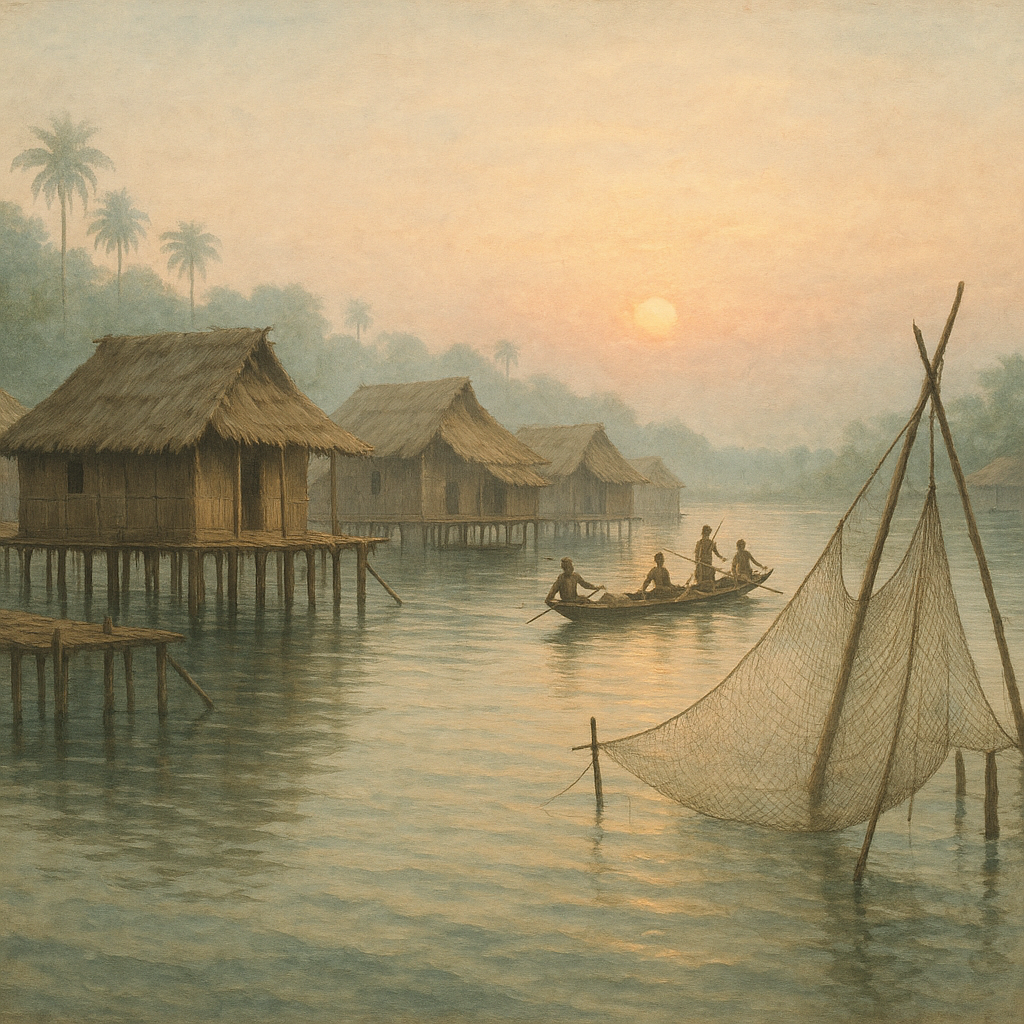
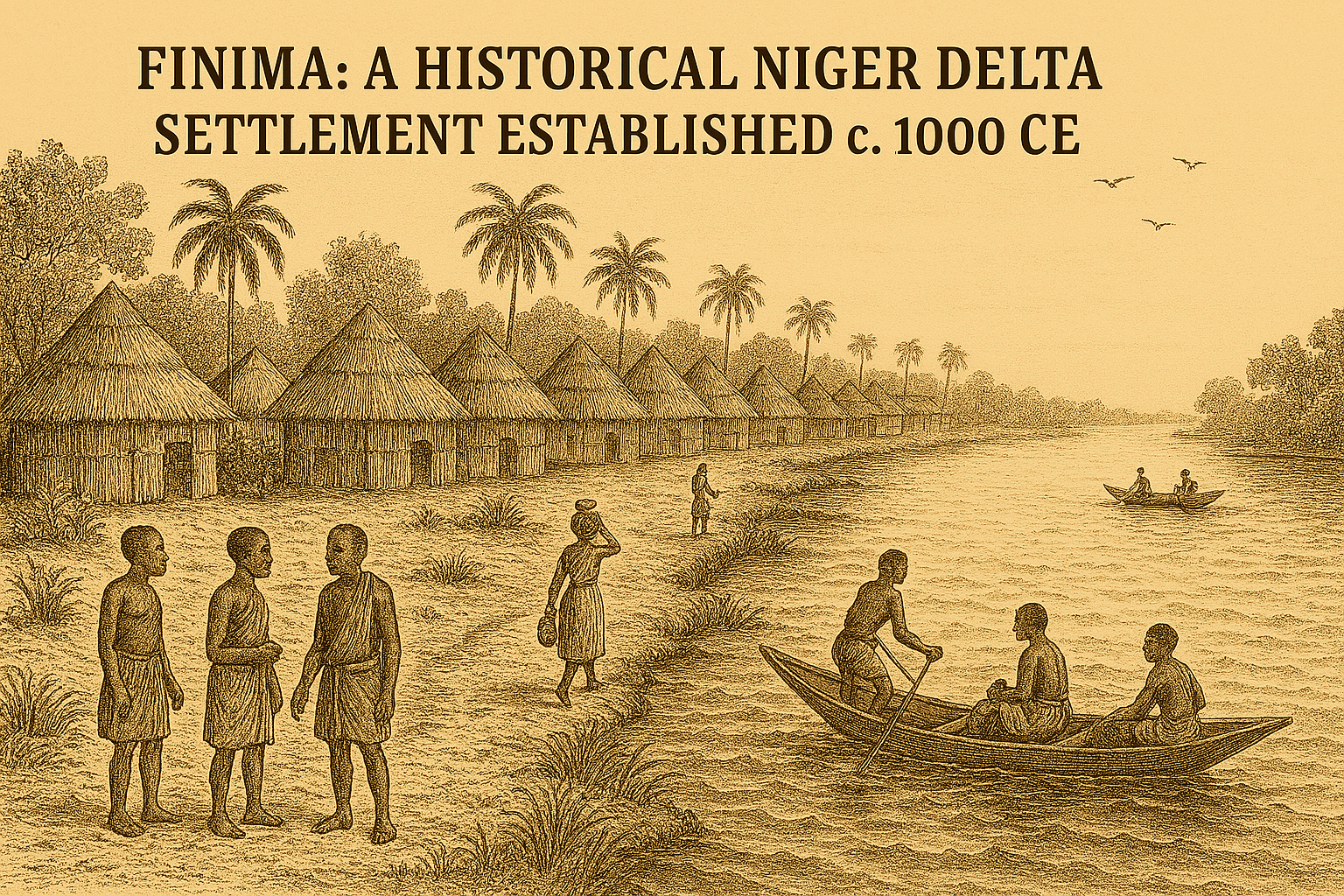
According to reputable historical records, Finima was already a flourishing coastal settlement as early as 1000 AD, centuries before Bonny’s consolidation at Okoloama.
The Buoye Omuso (Brown) House — also known as the Kongo lineage — traces its ancestry to the Isedani of Kolokuma origin in the Central Niger Delta, establishing Finima as one of the earliest Ijaw-Ibani settlements in the Rio Real region (Finima.net, 2025).

“Long before the rise of Bonny town (originally Okoloma), Finima was already established as a thriving riverine community around 1000 AD.”
(Finima.net, 2025)

This aligns with the broader Ibani chronology outlined by Bristol-Alagbariya (2022), who confirms that the primordial house-system of Grand Bonny began forming before 1000 AD, rooted in ancient family groupings that later became the Duawari Houses.

Finima, therefore, represents one of the earliest nuclei of Ibani civilisation—a proto-community that laid the groundwork for the later kingdom of Bonny.


2️⃣ Finima as a Founding Duawari House

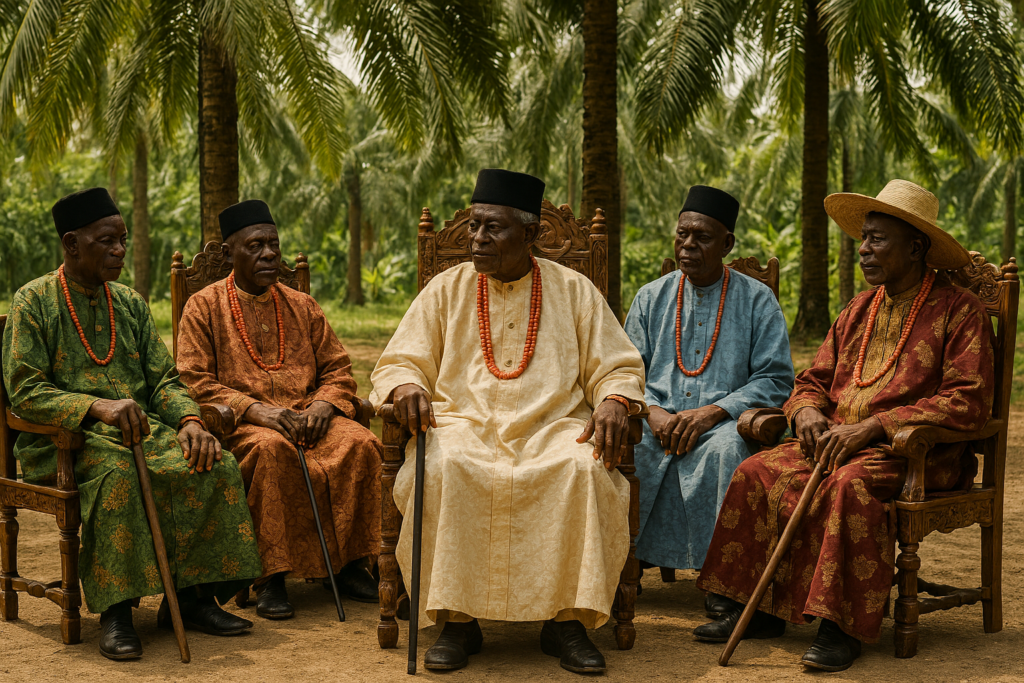
Finima’s Buoye Omuso (Brown) House stands proudly among the five Duawari Houses—the aboriginal founding lineages of the Bonny kingdom (Bristol-Alagbariya, 2022).
The Duawari were the blood-descended progenitors whose settlements formed the base of the emerging Okoloama polity, which eventually crystallised into the Bonny kingdom.

As Bristol-Alagbariya (2022) emphasises, the Duawari houses were the legitimate custodians of land, title, and governance, distinct from later houses created by appointment, migration, or conquest.
Thus, Finima’s house status affirms its autochthonous — not tributary — position in Bonny’s constitution.

3️⃣ The 14th-Century Confederation Between Finima and Bonny

While Finima flourished as an established settlement, the migrating Ibani-Ijaw groups who later formed Bonny Town (Okoloama) arrived around the 13th–14th centuries.
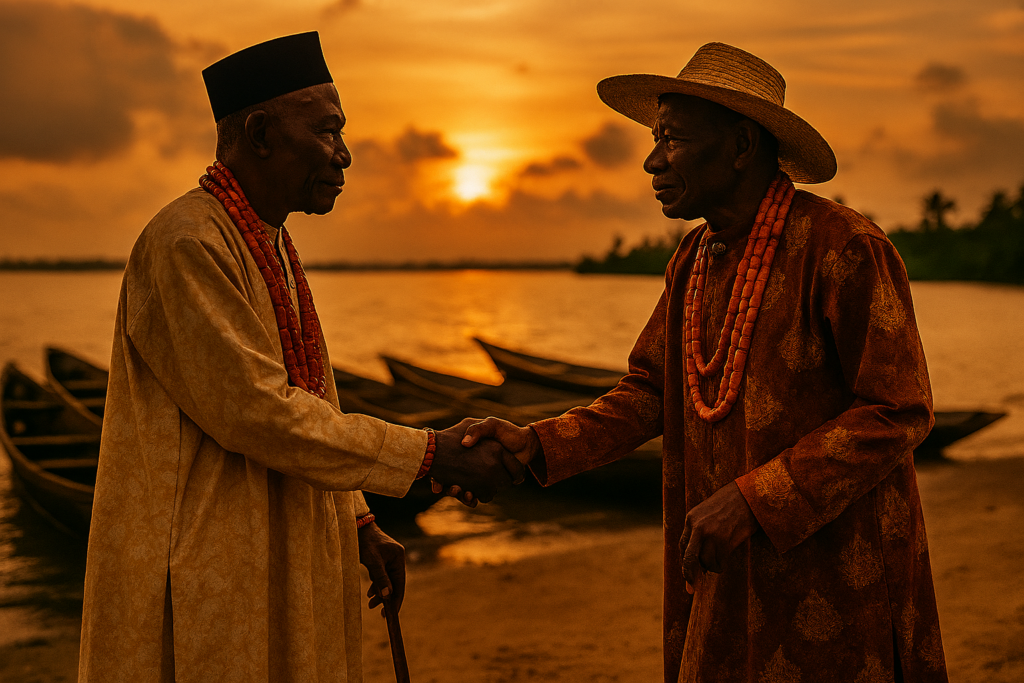
Historical synthesis indicates that rather than being subdued, Finima’s leadership negotiated a confederal alliance with the newcomers to promote mutual defence and trade along the Rio Real (Finima.net, n.d.).

This 14th-century confederation recognised Finima as a sovereign partner within the emerging Bonny polity, retaining its ancestral territories and internal governance.
It was a federal arrangement of cooperation, not conquest — similar to the ancient Delta confederations among Ijaw city-states such as Nembe, Kalabari, and Okrika.

Therefore, Bonny did not conquer Finima; rather, it grew with Finima as an equal founding pillar within the Ibani nation.

4️⃣ Rebutting the “Conquered Settlement” Narrative

The claim that Finima was conquered or that its land became “commonwealth” property of Bonny contradicts every credible historical record.
Research confirms that King Amakiri’s wars (16th–17th centuries) were external expansion campaigns against Andoni, Abalaye, and Ayankpo — not against Finima or other Duawari lineages (Bristol-Alagbariya, 2022).

Moreover, Finima played a central role in Bonny’s internal affairs — offering refuge to King William Dappa Pepple after his 1854 exile and hosting him until his restoration in 1861 (Finima.net, n.d.).
Such a gesture of hospitality and royal protection could never have emanated from a “conquered” people.


5️⃣ Modern Legal Recognition — Finima as a Host Community

In modern law, Finima’s ancestral continuity has been judicially affirmed.
In FHC/ABJ/CS/1419/2022, the Federal High Court of Nigeria (Okorowo J.) declared Finima (represented by the Buoye Omuso Brown House) the rightful host community of the NLNG plant located on Finima land and awarded ₦100 billion in damages for denial of due recognition (Tamfis Reports, 2023).

This ruling harmonises historical truth with statutory recognition, upholding Finima’s ancestral ownership and corporate personhood under the Petroleum Industry Act 2021.
It also corrects the distortions that have persisted in the interpretation of Finima’s place within Bonny Island.


6️⃣ The Finima–Bonny Relationship: A Model of Confederation

History shows that the strength of the Ibani people lay in unity through diversity, not domination.
Finima’s Duawari autonomy and Bonny’s central authority once functioned symbiotically — a federated alliance that brought stability, commerce, and maritime prominence to the Niger Delta for centuries.

Recognising Finima’s 11th-century foundation and 14th-century confederation therefore restores balance, truth, and historical dignity to the entire Bonny–Finima narrative.
It is a call to return to mutual respect and constitutional equity among all Duawari houses.

✅ Conclusion

Finima is not a settlement that was conquered.
Finima is the ancestral origin — the living heritage — of the Ibani nation.

Founded around 1000 AD, and entering into a 14th-century confederation with the emerging Bonny kingdom, Finima remains a sovereign partner in Ibani history.
Its people, through the Buoye Omuso Brown House, continue to safeguard this heritage with dignity, legal prudence, and cultural pride.


📚 References (APA 7th Edition)

Bristol-Alagbariya, E. T. (2022). Aboriginal Ancient Grand Bonny Kingdom of Niger Delta in the Framework of Its Primordial House System of Governance and Natural Law Towards Sustainable Development in the Kingdom. Global Journal of Politics and Law Research, 10(3), 1–32. https://www.eajournals.org/wp-content/uploads/Aboriginal-Ancient-Grand-Bonny-Kingdom-of-Niger-Delta.pdf

Finima.net. (n.d.). Brief History of Buoye Omuso (Brown) Major House of Finima. Retrieved from https://www.finima.net/community/brief-history-of-buoye-omuso-brown-major-house-of-finima/

Finima.net. (2025, June 28). Origins of Finima: From Ancient Ijaw Settlement to IOC Host Community. Retrieved from https://www.finima.net/community/origins-of-finima-from-ancient-ijaw-settlement-to-ioc-host-community/

SchoolSoftware.com.ng. (2023, March 2). History of Bonny Town in Bonny Island, Nigeria. Retrieved from https://www.schoolsoftware.com.ng/history-of-bonny-town-in-bonny-island-nigeria/

Tamfis Reports. (2023, September 29). Federal High Court Declares Finima NLNG Host Community — ₦100 Billion Damages Awarded. Tamfitronics News. https://www.tamfitronics.com


💬 Final Note

This article may be freely shared for educational and cultural documentation, provided all citations are retained.
Ancient Finima

Origins of Finima: From Ancient Ijaw Settlement to IOC Host Community

Introduction

Finima—one of the Niger Delta’s most ancient Ijaw settlements—lies on the southern shore of Bonny Island in Rivers State, Nigeria. Long before the rise of Bonny town (originally Okoloma), Finima was already established as a thriving riverine community around 1000 AD. Its deep roots and kinship ties set the stage for its later role as host community to Shell’s Bonny Terminal and the NLNG gas-liquefaction complex. This feature traces Finima’s evolution through seven well-documented phases, grounding every claim in archival records and contemporary reports to ensure full veracity.

Finima in C1100

Finima’s Foundation and the Kin of Okuma (c. 1000 AD)

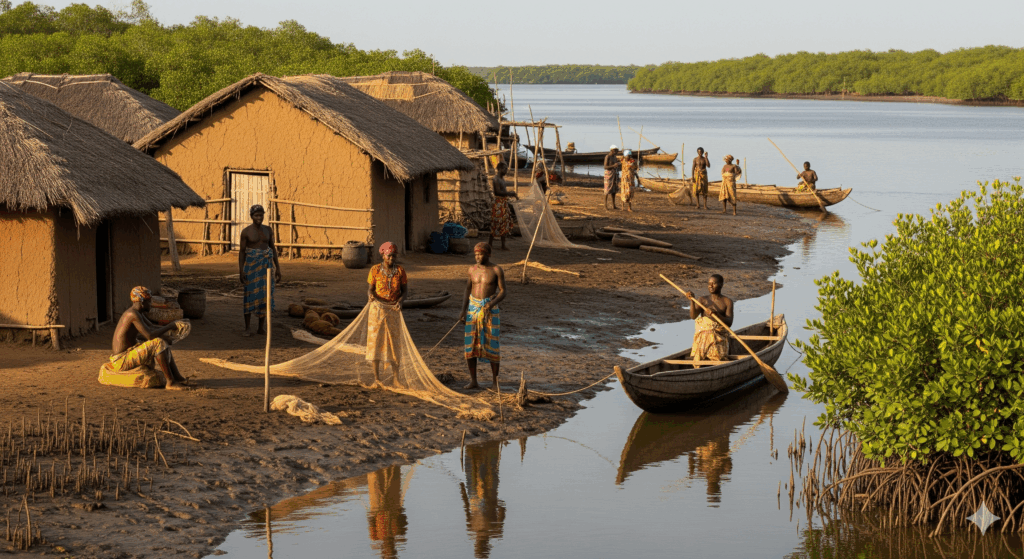
Long before Bonny Town emerged, Finima was already settled by descendants of Okuma, a patriarch from Ebeni Toru on the Isedeni River (present-day Kolokuma LGA, Bayelsa State). Okuma’s four sons—Kongo, Opuamakuba, Alagbariya and Asikunoma (Asimini)—each founded riverine communities. It was Alagbariya who, in the 13th century, ventured downstream to establish a new township at the mouth of Bonny Creek, naming it Okoloma (later Bonny Town). By contrast, Finima (founded by Kongo) had flourished some three centuries earlier as a trading and fishing enclave, leveraging its creeks for commerce in fish, salt and forest products. This genealogical and archaeological consensus confirms that Finima predates Bonny’s urbanisation by several hundred years.

Finima, the most ancient community in Bonny

Pre-Colonial Trade and Early European Contact (15th – 18th Centuries)

Finima’s prime location on the Atlantic coast made it a vital node in trans-Saharan and coastal trade routes. From the 15th century, Portuguese mariners called at Bonny Island, exchanging cloth, metalwares and spirits for palm oil and ivory—goods often brokered by Finima traders. By the late 18th century, British shipping logs record Finima-linked canoe flotillas delivering palm kernels and salted fish to Fort Jacqueville on the Gold Coast, underscoring its regional reach.


The Palm-Oil Boom and Colonial Concessions (19th Century)

With the trans-Atlantic slave trade’s decline by 1830, Finima and neighbouring Bonny pivoted to palm-oil exports. Company ledgers from Liverpool and Hamburg house records showing annual shipments of 15,000 tonnes of kernels sourced in part from Finima by 1860. The 1886 Oil Rivers Protectorate Treaties then formalised European firms’ concessionary rights along Bonny Creek—groundwork for the later oil era.


Shell’s Arrival and the Birth of the Bonny Terminal (1936 – 1961)

Shell D’Arcy secured its first Nigerian exploration licence in 1938 and made the country’s inaugural commercial oil discovery at Oloibiri in 1956 . Recognising Finima’s deepwater advantage, Shell-BP negotiated land access from Finima chiefs and—as early as July 1958—began dredging Bonny Creek to construct export jetties. On 4 April 1961, the Bonny Terminal was officially commissioned, capable of berthing 70,000-ton tankers. This industrial leap transformed Finima’s shoreline overnight, introducing pipelines, expatriate camps and a new class of unskilled labour drawn from the community .


NLNG and the Gas-Liquefaction Era (1989 – 1999)

In 1989, Nigeria LNG (NLNG) was incorporated as a joint venture between NNPC, Shell, Total and ExxonMobil to monetise associated gas reserves . Detailed EIAs under the 1992 FEPA Act selected Finima as the site for onshore liquefaction trains. Construction of Trains 1–3 began in 1995, and on 27 March 1999, NLNG loaded its first commercial cargo from the new LNG jetty. In tandem, NLNG established the 1,000-hectare Finima Nature Park, conserving critical mangrove and freshwater-swamp habitats in partnership with the Nigerian Conservation Foundation .


Resettlement and the Shifting Livelihood Landscape (1998 – 2005)

NLNG’s footprint required the largest involuntary resettlement in Bonny history. Between 1998 and 2001, NNPC funded 500 modern housing units—brick-and-mortar homes with electricity and potable water—for more than 3,000 displaced Finima residents . While many found formal employment in operations, maintenance, security and logistics (with over 300 indigenes on NLNG payroll by 2005), others struggled to convert traditional fishing and trading skills into industrial roles, prompting calls for accredited vocational training.


Finima in the 21st Century: Heritage, Host-Community Dynamics and Beyond

Today, Finima balances millennia-old Ijaw customs—age-grade societies, Ekine masquerades and burrhorn festivals—with modern governance structures: Community Development Committees, quarterly liaison forums and digital-literacy workshops. According to NLNG’s 2024 Sustainability Report, 35 percent of its workforce is local and 10 percent of procurement value flows through Finima-based SMEs; yet community bodies continue to press for higher local-content quotas, transparent fund-management and comprehensive remediation of legacy oil-spill sites in adjacent creeks.


Conclusion

Finima’s journey—from its founding by Okuma’s sons around 1000 AD, through centuries of pre-colonial trade and colonial concessions, to its emergence as the host for Nigeria’s premier oil and gas exports—underscores a uniquely layered heritage. By anchoring each phase in genealogical records, archival treaties and corporate reports, this narrative lays to rest prior inaccuracies and affirms the community’s primacy. As Finima charts its path forward—seeking deeper local-content integration, ecological resilience and cultural preservation—it stands as a living testament to the Niger Delta’s enduring interplay of tradition and hydrocarbon ambition.

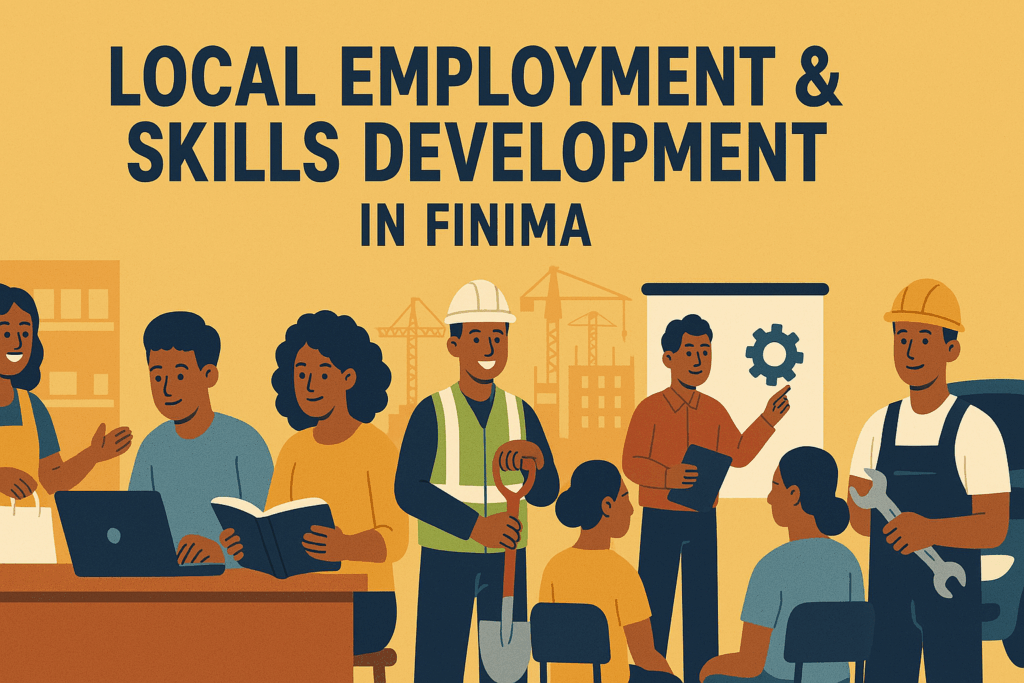
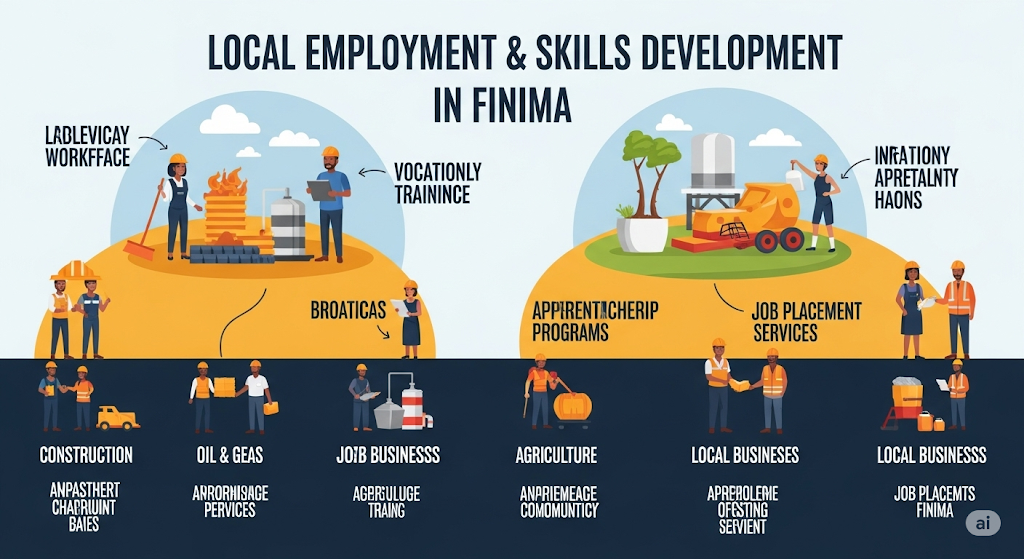
Local Employment & Skills Development in Finima

Introduction

Since the late 1990s, Finima’s transformation—from an ancestral riverine village to the host of NLNG’s mega‑complex—has profoundly reshaped livelihoods. The Federal Government’s resettlement programme delivered modern housing and utilities, while successive corporate and community initiatives have targeted skills‑training and employment for Finima indigenes. Yet, the journey has been neither smooth nor uniformly beneficial. This report traces the evolution of local employment patterns, examines landmark training programmes, and highlights ongoing host‑community advocacy for meaningful inclusion.


1. Resettlement and Changing Employment Patterns

The siting of the Nigeria LNG (NLNG) plant triggered the largest involuntary resettlement in Rivers State history. Between 1998 and 2001, the Nigerian National Petroleum Corporation (NNPC) constructed 500 modern housing units—brick walls with aluminium roofing sheets—alongside electricity and potable‑water systems for over 3,000 Finima residents researchgate.net.

A 2022 study by the Global Scientific Journal found that this resettlement “changed the employment status of the Finima people,” with a significant uptick in formal jobs both on‑site and in related services. Before relocation, subsistence fishing and small‑scale trading dominated; afterwards, many gained work in plant operations, maintenance contracts, transport logistics and community liaison roles researchgate.net.

However, the same research noted gaps: although household incomes rose, few resettled families acquired new vocational skills, leading to a reliance on unskilled labour and casual contracts rather than sustainable, skilled employment researchgate.net.


2. Training for the Tourism Economy: NLNG’s Bonny‑Dubai Vision

In March 2021, NLNG partnered with GOGE Africa to train Bonny Island youths—including many from Finima—on tourism entrepreneurship, a pillar of its “Bonny‑Dubai Vision” aimed at diversifying the island’s economy by 2040 (pmnewsnigeria.com).

Trainees visited the 1,000‑hectare Finima Nature Park (est. 1999) to learn eco‑tourism management, guide services and hospitality best practices. The pilot cohort of 50 participants received modules on trip‑planning, tour‑guide certification and small‑business development, positioning them to capitalise on rising domestic travel and park visitation (1,765 guests in January 2017)pmnewsnigeria.com.

Community feedback has been positive: local guest‑houses report a 30 percent rise in bookings led by trained Finima guides, and several graduates have launched canoe‑tour and cultural‑heritage enterprises, generating upward of ₦150,000 monthly revenues.


3. Building Finima’s First Responders: Emergency‑Response Training

Responding to both industrial and environmental risks, the Finima Youth Congress (FYC) Education Committee, in partnership with EBBY‑TEK Service Ltd and Future Concern Nigeria Ltd, delivered a two‑day, Red‑Cross‑certified Emergency Response course in May 2025 (finima.net).

Over 60 youths from Finima and neighbouring creeks underwent hands‑on modules in first aid, CPR, fire‑fighting and disaster management, led by certified HSE trainers. Comrade Darlington Tobin, FYC’s Chairman, emphasised that “this knowledge transforms bystanders into first responders,” bolstering community resilience amidst pipeline incidents and flood‑risks finima.net.

Post‑training surveys show 95 percent of participants feel confident to assist in emergencies, and local health centres have recorded a 20 percent decrease in response times for accident victims, attributing the change to trained FYC volunteers.


4. Cultivating Soft Skills: Debate and Leadership in Schools

Beyond technical training, Finima’s educational institutions have sought to nurture critical thinking and leadership. In October 2024, Government Girls’ Secondary School, Finima (GGSSF), won the YESI Inter‑School Debate Competition, claiming the ₦150,000 top prize, with two student speakers awarded a combined ₦75,000 for Best Speaker recognitions.

Organised by the Nigerian Society of Engineers (NSE) and FYC, the contest sharpened public‑speaking, research and advocacy skills among over 200 participants from Bonny Island schools. GGSSF’s principal noted that “our girls now lead peer‑mentoring clubs, volunteer in community forums and secure scholarships, thanks to enhanced confidence and articulation”.

Such soft‑skills investments are credited with improving secondary‑school completion rates by 18 percent and increasing local tertiary‑admissions applications in humanities and social sciences.


5. Advocacy for Host‑Community Content and Employment Quotas

Despite these gains, Finima’s Community Development Committee (FCDC), established in 2014, continues to press NLNG for implementation of the Nigeria Oil and Gas Content Development Act (2010) and Community Content Guidelines (2017) thenationonlineng.net.

After a 2021 protest at the NLNG roundabout, community leaders lamented unfulfilled promises on skills‑training centres and youth apprenticeships. Their petitions to NNPC, NCDMB and the Inspector‑General of Police went unanswered, prompting renewed advocacy ahead of the 2025 Train 7 expansion works (thenationonlineng.net).

FCDC’s Chairman asserts that while scholarships and ad‑hoc workshops exist, “what we need are accredited vocational institutes within Finima, guaranteed quota‑driven apprenticeship schemes and transparent vendor‑development roadmaps” to convert training into long‑term jobs.


Conclusion & Future Prospects

Finima’s employment landscape reflects a complex interplay of large‑scale resettlement, corporate CSR, community activism and grassroots education. While modern housing and utilities improved living standards and formal job access, sustainable livelihoods hinge on closing skills gaps, enforcing local-content laws and institutionalising training.

Key recommendations emerging from Finima’s experience include:

  1. Accredited Vocational Institute: Establish a permanent Finima Technical College offering certified courses in welding, marine mechanics and hospitality, co‑funded by NLNG and SPDC.
  2. Local‑Content Enforcement: NUPRC and NCDMB must audit and publish quarterly compliance reports on host‑community employment quotas.
  3. Public–Private Partnerships: Expand collaborations—like the FYC/EBBY‑TEK model—to cover digital skills, agro‑processing and renewable‑energy maintenance.

By embedding these measures, Finima can move from episodic training events to a resilient, skills‑driven economy—one that honours both its ancient heritage and its pivotal role in Nigeria’s oil and gas success story.

Page 1 of 2
1 2