World Must Prioritise Productivity Reforms To Revive Medium-Term Growth
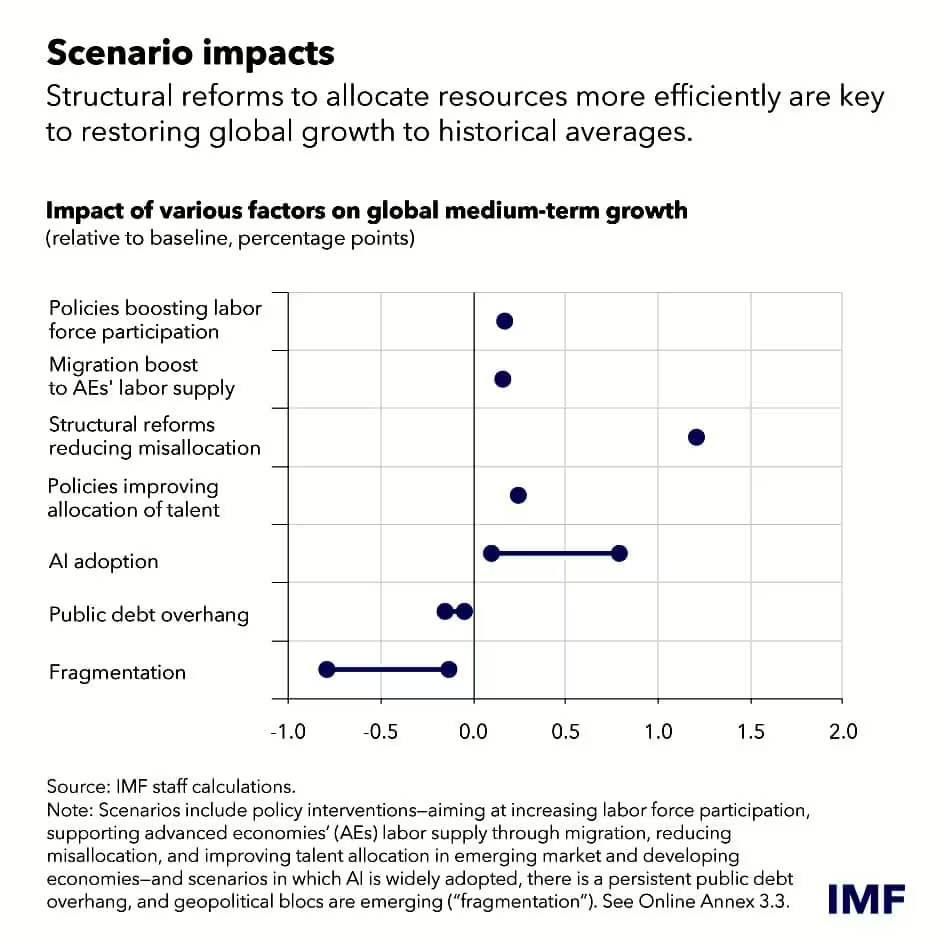
Since the global financial crisis of 2008-09, the world economy has confronted a persistent slowdown in productivity growth, which underpins medium-term economic expansion. Unlike transient cyclical fluctuations, this structural deceleration threatens to dampen living standards and fiscal stability worldwide. Without decisive policy interventions aimed at boosting productivity, the era of robust global growth is unlikely to return. This article explores why productivity reforms are essential to revive medium-term growth, examines the main obstacles, and highlights actionable strategies for governments and stakeholders to prioritize in the coming years.
Understanding the Productivity Slowdown and Its Implications
The productivity slowdown observed globally since the aftermath of the 2008-09 financial crisis represents a major structural challenge. Productivity measures output per unit of input, such as labor or capital, and is a key driver of economic growth and rising living standards. The consistent decline in productivity growth rates signals that economies are becoming less efficient at converting resources into goods and services.
This slowdown has broad implications. It constrains wage growth, limits fiscal revenues, and reduces the capacity of governments to invest in critical public services. Moreover, slower productivity growth makes it harder to improve global poverty rates and address social inequalities, as economic expansion becomes less inclusive and less dynamic.
The root causes of this trend are multifaceted, including diminishing returns from existing technologies, underinvestment in research and development, and structural rigidities in labor and product markets. Understanding these factors is crucial for designing reforms that can effectively reverse the trend.
The Role of Emerging Technologies in Revitalizing Growth
Emerging technologies such as artificial intelligence, automation, and digital platforms hold significant promise for boosting productivity across sectors. These technologies can enhance efficiency, reduce costs, and create new markets, thereby driving economic expansion. However, their potential is not automatically realized without supportive policies and widespread adoption.
To harness these benefits, countries must invest in digital infrastructure, skills training, and innovation ecosystems. This includes fostering collaboration between private enterprises, universities, and government agencies to accelerate technology diffusion and commercialization.
Additionally, managing the transition to a more technologically advanced economy requires addressing workforce displacement and ensuring inclusive access to new opportunities. Policies that support reskilling and lifelong learning are vital to avoid exacerbating inequality and to maximize productivity gains.
Labor Market Reforms as a Catalyst for Productivity
Rigid labor markets often hinder productivity improvements by limiting the efficient allocation of human capital. In many economies, outdated regulations restrict labor mobility, discourage entrepreneurship, and reduce incentives for skill development. Addressing these issues can unleash a more dynamic and adaptable workforce.
Reforms aimed at increasing labor market flexibility, such as easing hiring and firing regulations, improving labor contract frameworks, and promoting part-time and gig work, can enhance labor productivity. These measures enable businesses to better respond to changing economic conditions and technological shifts.
Furthermore, investing in education and vocational training ensures that workers possess the skills required in evolving industries. Emphasizing STEM education, digital literacy, and soft skills prepares the workforce for the demands of the future economy and supports sustained productivity growth.
Enhancing Innovation and Research & Development (R&D)
Innovation is a central pillar of productivity growth. Countries that prioritize research and development tend to experience faster technological progress and higher economic dynamism. However, many economies underinvest in R&D relative to their potential, limiting their capacity to generate breakthrough innovations.
Governments can stimulate innovation by increasing public funding for basic and applied research, providing tax incentives for private R&D, and creating favorable intellectual property regimes. These policies encourage firms to undertake risky but transformative projects that can yield long-term productivity dividends.
Equally important is cultivating a vibrant startup ecosystem that supports entrepreneurship and the commercialization of new ideas. Access to venture capital, streamlined regulatory environments, and supportive incubators and accelerators help translate innovation into marketable products and services.
Addressing Structural Inefficiencies and Market Distortions
Structural inefficiencies, such as monopolistic market practices, excessive bureaucracy, and inefficient public institutions, impede productivity growth by limiting competition and misallocating resources. Tackling these distortions can unlock substantial economic potential.
Promoting competitive markets through deregulation, antitrust enforcement, and transparent procurement processes encourages firms to innovate and improve efficiency. Reducing red tape and enhancing governance also lower transaction costs and facilitate business operations.
Moreover, improving infrastructure quality—ranging from transportation to energy and digital networks—reduces bottlenecks and supports seamless economic activity. Strategic investments in infrastructure enhance connectivity and productivity across industries and regions.
The Importance of Sustainable and Inclusive Growth
Productivity reforms must be aligned with sustainability goals to ensure long-term economic resilience. Environmental degradation and climate change pose risks that can undermine growth prospects if left unaddressed. Integrating green technologies and sustainable practices into productivity strategies is therefore essential.
Inclusive growth is equally critical. Productivity gains should translate into broader improvements in living standards and opportunities for all segments of society. Policies that promote social protection, equitable access to education, and healthcare contribute to a more productive and cohesive workforce.
Balancing economic efficiency with social and environmental objectives requires coordinated policy frameworks that prioritize sustainable development. This holistic approach enhances medium-term growth prospects while safeguarding future generations.
Global Coordination and Policy Collaboration
Given the interconnected nature of the global economy, productivity reforms benefit from international coordination. Cross-border collaboration can accelerate technology transfer, harmonize regulatory standards, and address shared challenges such as tax avoidance and labor standards.
Multilateral institutions play a vital role in facilitating dialogue, providing technical assistance, and supporting capacity building in developing countries. Ensuring that productivity-enhancing reforms are inclusive globally helps reduce economic disparities and fosters more stable growth.
Furthermore, coordinated efforts to manage global economic risks—such as trade tensions, geopolitical uncertainties, and pandemics—create a more predictable environment conducive to investment and innovation, ultimately supporting productivity growth.
Implementing Effective Policy Frameworks for Productivity
Successful productivity reforms require coherent and well-sequenced policy frameworks tailored to national circumstances. Policymakers should prioritize reforms that address binding constraints while ensuring social consensus and political feasibility.
Data-driven policymaking and regular impact assessments enhance the design and implementation of reforms. Transparent communication and stakeholder engagement build trust and facilitate adoption of necessary changes.
Finally, integrating productivity goals into broader economic strategies—such as fiscal policy, trade policy, and social protection—ensures alignment and maximizes the effectiveness of reforms in reviving medium-term growth.
Conclusion
Reviving medium-term global economic growth hinges on prioritizing comprehensive productivity reforms. The persistent slowdown in productivity growth since the 2008-09 financial crisis underscores the urgency of addressing structural challenges through innovation, labor market flexibility, and improved governance. By embracing emerging technologies, fostering inclusive and sustainable growth, and enhancing international collaboration, policymakers can restore robust and resilient economic expansion. Implementing well-designed, evidence-based reforms will not only boost productivity but also improve living standards, reduce inequalities, and secure a prosperous future for all.
Discover more from FINIMA
Subscribe to get the latest posts sent to your email.
0 Comments