Prime Minister Sheikh Hasina Resigns And Leaves Bangladesh
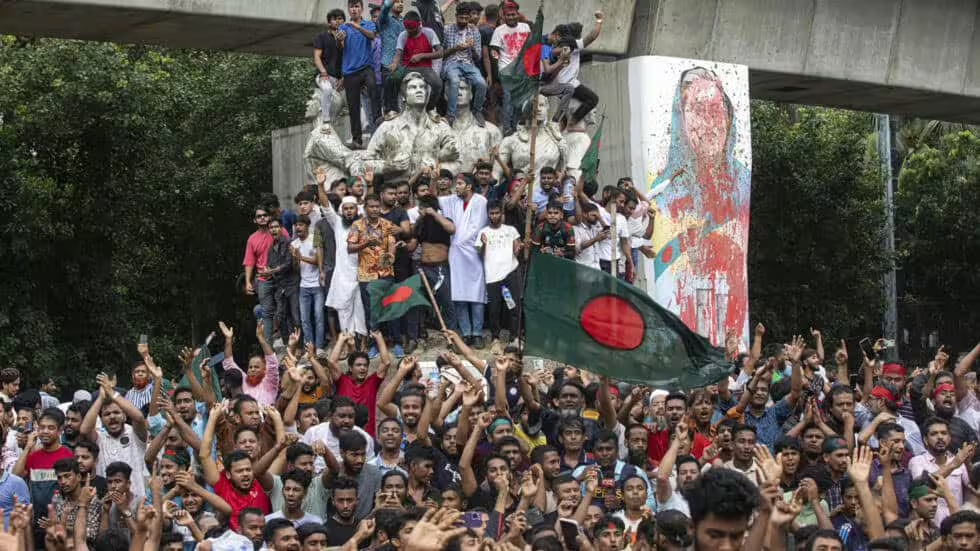
Sheikh Hasina, the Prime Minister of Bangladesh and one of the country’s most influential leaders, has abruptly resigned and left Bangladesh after 15 years in power. Her resignation marks a significant moment in Bangladesh’s political history, triggered by massive public unrest and confrontations with the military. This article delves into the details of this unprecedented development, examining the causes, the immediate aftermath, and what it means for Bangladesh’s political future.
Background: Sheikh Hasina’s Leadership and Political Legacy
Sheikh Hasina has been a central figure in Bangladesh’s politics for over three decades, serving multiple terms as Prime Minister. Her leadership has been characterized by efforts to modernize the economy, improve infrastructure, and maintain political stability. Under her administration, Bangladesh witnessed notable economic growth and social development, raising its profile on the global stage.
Despite these achievements, Hasina’s tenure was also marked by controversies, including accusations of authoritarianism, suppression of political opposition, and concerns over human rights. Her government faced criticism for limiting freedom of the press and cracking down on dissent, which fueled growing dissatisfaction among various segments of society.
The political environment in Bangladesh has long been polarized, with rivalry between Hasina’s Awami League and opposition parties such as the Bangladesh Nationalist Party (BNP). This polarization intensified over time, setting the stage for the unrest that ultimately led to her resignation.
The Catalyst: Protests and Military Curfew
In the weeks leading up to Sheikh Hasina’s resignation, Bangladesh experienced escalating protests triggered by economic hardships, allegations of corruption, and demands for political reform. Thousands of demonstrators defied a military-imposed curfew, signaling deep public frustration with the government’s policies and leadership style.
The protests reached a critical point when demonstrators stormed Sheikh Hasina’s official residence. This unprecedented breach of security underscored the severity of the political crisis and the loss of control by the ruling government. The military curfew, intended to restore order, was largely ineffective in quelling the unrest.
The military’s response to the crisis was swift and decisive. Gen. Waker-uz-Zaman, the military chief, announced plans to consult the president on forming a new government, indicating a possible shift in power dynamics and the military’s increased involvement in the nation’s governance.
Sheikh Hasina’s Resignation and Departure
On the day of her resignation, local media captured Sheikh Hasina boarding a military helicopter alongside her sister, leaving her official residence and the capital city. This dramatic exit was symbolic of the profound political change unfolding in Bangladesh.
Her resignation ended a 15-year tenure that shaped modern Bangladesh’s trajectory. It also left a leadership vacuum and raised immediate questions about succession and the stability of the government moving forward.
The circumstances of her departure suggest a complex interplay between civilian political leadership and military influence. While the official reasons for her resignation remain centered on the desire for political stability, analysts speculate about behind-the-scenes negotiations and pressures.
Military’s Role and Political Transition
Following Sheikh Hasina’s resignation, the military chief’s announcement about seeking presidential guidance to form a new government highlighted the military’s emerging role in Bangladesh’s political landscape. This development has sparked debates on the military’s influence over civilian governance.
Historically, Bangladesh has experienced periods of military involvement in politics, and this recent event appears to echo those patterns. The military’s engagement could either stabilize the country or deepen political uncertainties depending on how the transition is managed.
The president’s role in this transition is pivotal. As the constitutional head of state, the president’s decisions will shape the formation of the interim government and set the stage for future elections and political reforms.
Reactions from Domestic Political Parties and Public
The resignation elicited mixed reactions across the political spectrum. Opposition parties cautiously welcomed the change, viewing it as an opportunity to push for democratic reforms and greater political inclusivity after years of Awami League dominance.
Supporters of Sheikh Hasina expressed shock and concern about the country’s direction, fearing instability and potential setbacks to the development progress achieved during her administration. Many voiced hope for a peaceful transition and the continuation of policies that foster economic growth.
The general public’s response revealed deep divisions. While some celebrated the end of an era, others were anxious about potential unrest and the uncertainty ahead. Civil society organizations called for dialogue and reconciliation to ensure national unity.
International Community’s Perspective
Global reactions to Sheikh Hasina’s resignation were swift, with neighboring countries and international organizations monitoring the situation closely. Many expressed concern about the political stability of Bangladesh, a key player in South Asia’s economic and geopolitical landscape.
International partners urged all stakeholders to uphold democratic principles, ensure peaceful transitions, and protect human rights. There was also an emphasis on maintaining economic stability and encouraging dialogue between political factions.
The role of international observers and diplomatic missions in Bangladesh will likely increase, aiming to support transparent governance and assist in conflict resolution during this critical period of transition.
Implications for Bangladesh’s Future
Sheikh Hasina’s resignation has opened a new chapter in Bangladesh’s political history, presenting both challenges and opportunities. The immediate task is to establish a stable government that can address the root causes of unrest and restore public confidence.
Future political developments will depend on how effectively the military, president, and political parties collaborate to ensure a democratic process. There is potential for reforms that strengthen institutions, promote transparency, and enhance citizen participation in governance.
Economically, maintaining growth momentum amid political change will be crucial. Investors and international partners will watch closely for signs of stability and policy continuity, which are essential for Bangladesh’s ongoing development.
Looking Ahead: The Road to Stability and Reform
The path forward for Bangladesh involves careful navigation through political complexities to avoid further unrest. Dialogue among political factions, civil society, and the military will be essential in crafting a roadmap for peaceful governance and national reconciliation.
Elections are expected to be a focal point in the coming months. Ensuring free, fair, and transparent electoral processes will be critical for legitimizing new leadership and restoring faith in democratic institutions.
Ultimately, Bangladesh’s resilience and the commitment of its people to democratic ideals will determine how successfully the nation emerges from this crisis. The international community’s support and constructive engagement will also play a vital role in fostering long-term stability.
Conclusion
Sheikh Hasina’s resignation and departure from Bangladesh mark a watershed moment in the nation’s political history. The end of her 15-year leadership amid mass protests and military involvement underscores the complexities of governance in Bangladesh. Moving forward, the country stands at a crossroads, with the potential for either renewed democratic vigor or prolonged instability. The coming months will be decisive, as political actors, the military, and civil society work towards establishing a stable, inclusive government that can address the aspirations of Bangladesh’s diverse population and sustain its developmental progress.
Discover more from FINIMA
Subscribe to get the latest posts sent to your email.