Odidiomo Appeals To FG To Suspend Policies That Can Further Aggravate Agitations
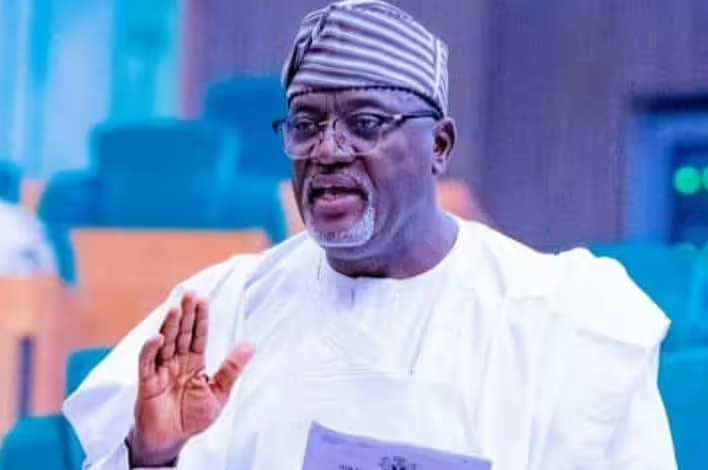
Nigeria is currently grappling with widespread agitations stemming from various socio-economic and political challenges. In light of the escalating tensions, Honourable Adedeji Dhikrullahi Olajide, a prominent legislator and chairman in the House of Representatives, has made a compelling appeal to the Federal Government. He urges the suspension of policies that potentially exacerbate the unrest, advocating for a peaceful approach centered on dialogue and understanding. This article delves into the context of these agitations, the specifics of Odidiomo's appeal, and the broader implications for Nigeria’s socio-political landscape.
Background of the Current Agitations in Nigeria
Nigeria has been experiencing a surge in public discontent manifested through protests, strikes, and other forms of civil unrest. These agitations arise from various issues, including economic hardships, perceived governance failures, and social injustices. The increasing cost of living, unemployment, and insecurity have further fueled the public's frustration, leading to heightened tensions across the country.
Several regions have witnessed particularly intense protests, with citizens demanding better governance, transparency, and policy reforms. The government's response to these protests has been a mix of conciliatory measures and enforcement actions, sometimes intensifying the situation. Understanding this background is crucial to appreciating the significance of Honourable Odidiomo’s recent appeal.
The complexity of the agitations is compounded by Nigeria's diverse ethnic and political landscape, where different groups have varying grievances and demands. This multiplicity of issues requires a nuanced and strategic approach from the government to prevent further escalation and promote national unity.
Who is Honourable Adedeji Dhikrullahi Olajide (Odidiomo)?
Honourable Adedeji Dhikrullahi Olajide, popularly known as Odidiomo, is a respected member of Nigeria’s House of Representatives. He holds the position of chairman of an influential committee, which places him at the forefront of legislative oversight and public policy advocacy. His role involves engaging with government policies and ensuring that they align with the public interest.
Odidiomo has built a reputation as a proactive legislator committed to peace, social justice, and effective governance. His interventions often focus on mitigating conflicts and promoting dialogue among conflicting parties. His recent appeal demonstrates his dedication to fostering harmony and preventing policy-driven escalations.
Beyond his legislative duties, Odidiomo is known for his community engagement and efforts to bridge gaps between the government and citizens. His understanding of grassroots issues informs his calls for policies that are inclusive and sensitive to the socio-economic realities of Nigerians.
Details of Odidiomo’s Appeal to the Federal Government
In a public statement, Honourable Odidiomo urged the Federal Government to suspend any policies that could worsen the ongoing agitations. He emphasized the need for restraint and caution in policy implementation during this sensitive period. His appeal is grounded in the belief that certain government actions, if continued, might inflame public anger and deepen divisions.
Odidiomo specifically called for a pause on policies perceived as oppressive, economically burdensome, or politically insensitive. He highlighted that suspending such policies would create a conducive environment for dialogue and negotiation between aggrieved parties and the government.
The legislator also stressed the importance of involving all stakeholders in the resolution process to ensure lasting peace. He advocated for transparent communication and trust-building measures that would help restore confidence in government institutions and policies.
Potential Policies Under Scrutiny
Several government policies have come under criticism for their role in intensifying public unrest. These include economic reforms that increase the cost of essential goods and services, adjustments in fuel pricing, and regulatory measures perceived as restrictive to business activities. Such policies have been linked to rising inflation and unemployment.
Additionally, security-related policies and enforcement strategies have drawn scrutiny for allegedly exacerbating tensions, especially in regions with active protests. The use of force and restrictions on freedom of assembly have sometimes led to confrontations between security agencies and civilians.
Odidiomo’s appeal implicitly addresses these concerns, urging the government to review and temporarily halt policies that may be counterproductive. This pause would allow for reassessment and recalibration of approaches to better align with the needs and sentiments of the populace.
The Importance of Dialogue and Amicable Resolution
Central to Odidiomo’s appeal is the call for dialogue as the primary tool for resolving the ongoing agitations. He argues that sustainable peace can only be achieved through inclusive conversations that address the root causes of discontent. Dialogue fosters understanding and creates opportunities for compromise.
Amicable resolution mechanisms involve not just government officials but also civil society groups, community leaders, and representatives of aggrieved parties. Such multi-stakeholder engagement ensures that diverse perspectives are heard and integrated into policy solutions.
Odidiomo’s emphasis on dialogue aligns with democratic principles and conflict resolution best practices. It signals a shift from reactive measures to proactive engagement that prioritizes peace and social cohesion over confrontation.
Implications for Nigeria’s Socio-Political Stability
The suspension of contentious policies as advocated by Odidiomo could have significant positive effects on Nigeria's socio-political stability. It may reduce immediate tensions, prevent violence, and create a platform for constructive negotiations. Stability is essential for economic growth and national development.
Conversely, failure to heed such appeals risks deepening divisions and prolonging unrest. It could undermine public trust in government and institutions, leading to a cycle of protests and crackdowns that weaken the nation’s democratic fabric.
Odidiomo’s appeal thus serves as a critical reminder to policymakers about the delicate balance between governance and public sentiment. Prioritizing peace and inclusivity in policy decisions is vital for Nigeria’s long-term stability.
Reactions from Other Political and Civil Society Actors
Odidiomo’s call has garnered varied reactions from political figures and civil society organizations. Many have echoed his sentiments, advocating for the suspension of policies that may inflame tensions and supporting dialogue as the way forward. These endorsements strengthen the push for peaceful resolution.
Some opposition politicians have used the moment to criticize the government’s handling of the agitations, calling for more transparent and responsive governance. Civil society groups have also highlighted the need for human rights protections and socio-economic reforms.
However, there are voices cautioning against halting all government initiatives, arguing that some reforms are necessary despite short-term discomfort. This underscores the complexity of balancing reform imperatives with social peace.
Next Steps and Recommendations for the Federal Government
In response to Odidiomo’s appeal, the Federal Government is urged to conduct a comprehensive review of current policies and their impacts on public sentiment. Engaging independent experts and stakeholders can facilitate objective assessments and guide necessary adjustments.
The government should also prioritize establishing open channels for continuous dialogue with citizen groups and protest leaders. Institutionalizing such communication can preempt conflicts and foster mutual understanding.
Furthermore, implementing confidence-building measures, such as temporary policy suspensions, social welfare programs, and security sector reforms, can help alleviate immediate tensions. These steps would demonstrate the government’s commitment to peace and responsive governance.
Conclusion
Honourable Adedeji Dhikrullahi Olajide’s appeal to suspend policies that could further aggravate Nigeria’s ongoing agitations highlights a critical moment in the nation’s pursuit of peace and stability. By urging the Federal Government to prioritize dialogue, restraint, and inclusivity, Odidiomo underscores the importance of responsive governance that listens to the people. The path forward requires collaborative efforts, policy adjustments, and genuine engagement to address the root causes of unrest. Embracing these principles will not only quell current tensions but also lay the foundation for a more united and prosperous Nigeria.
Discover more from FINIMA
Subscribe to get the latest posts sent to your email.