BREAKING NEWS: Former Army Chief, Buratai takes On Nigeria’s Deadly Fire Outbreaks
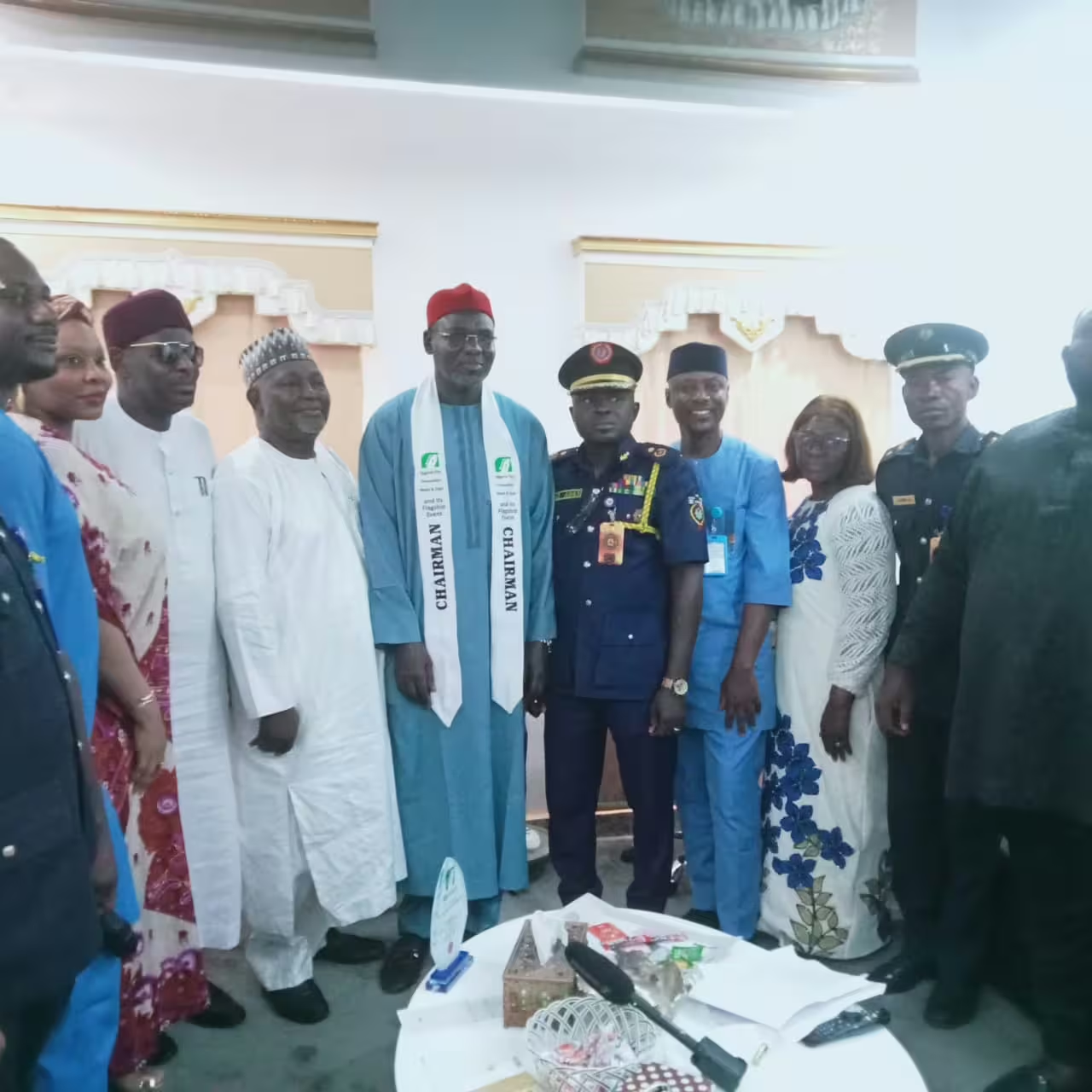
Nigeria has been grappling with a surge in deadly fire outbreaks that have led to significant loss of lives and property. Despite considerable budgetary provisions, the nation’s fire safety and response systems have struggled to keep pace with the frequency and severity of these incidents. In a groundbreaking development, the Nigerian Humanitarian Action (NIHA) has appointed Lieutenant General Yusuf Buratai, former Chief of Army Staff, as Chairman of the Fire Prevention Week and Expo and NIHA’s International Flagship Programme. Buratai’s military leadership, strategic acumen, and reputation for integrity offer fresh hope for transforming Nigeria’s fire safety landscape. This article delves deeply into the implications of his appointment, the challenges of fire outbreaks in Nigeria, and the multi-faceted approach needed to tackle this pressing crisis.
The Rising Menace of Fire Outbreaks in Nigeria
Nigeria has witnessed an alarming increase in fire incidents over recent years, with devastating consequences for communities, businesses, and critical infrastructure. The causes are multifactorial, ranging from electrical faults, gas explosions, and industrial hazards to human negligence and inadequate safety regulations. These fires often result in tragic loss of life and massive economic setbacks, especially in urban and industrial hubs.
Despite proactive measures and increased funding to fire services, response systems remain overstretched and under-resourced. Many fire stations lack modern equipment and trained personnel, leading to delayed reactions and ineffective containment of blazes. The problem is further compounded by poor urban planning and inadequate public awareness about fire prevention and safety protocols.
The consequences of these fire outbreaks extend beyond immediate damage. They disrupt economic activities, displace families, and strain emergency services. The repeated nature of these incidents underscores a critical need for systemic reforms and coordinated interventions to mitigate risk and enhance resilience.
Lieutenant General Yusuf Buratai: A Leader Poised for Change
Lieutenant General Yusuf Buratai, a distinguished military leader and former Chief of Army Staff, brings a wealth of leadership experience and strategic insight to the fire safety challenge. Renowned for his discipline, integrity, and operational expertise, Buratai’s military background equips him with unique skills to coordinate complex operations and mobilize diverse stakeholders.
Buratai’s appointment as Chairman of the Fire Prevention Week and Expo and NIHA’s International Flagship Programme signals a strategic shift in Nigeria’s approach to fire safety. His role involves spearheading initiatives to strengthen fire prevention policies, improve emergency response frameworks, and foster international collaboration to adopt best practices.
The Nigerian Humanitarian Action (NIHA) and its chairman, Dr. Kletsaint Akor, have hailed Buratai’s leadership as a potential game-changer. Buratai has accepted the challenge with a commitment to leverage his network and influence, promising to galvanize support from government agencies, private sector partners, and international allies to tackle fire outbreaks decisively.
Strengthening Fire Safety Measures Across Nigeria
Central to Buratai’s mandate is the enhancement of fire safety measures nationwide. This involves reviewing and updating existing fire prevention regulations, ensuring stringent enforcement, and promoting the adoption of modern fire safety technologies. Collaboration with the Federal Fire Service is critical to standardizing protocols and upgrading equipment.
Public awareness campaigns form a vital pillar of the safety strategy. Educating citizens about fire hazards, safe handling of electrical appliances, and emergency response actions can significantly reduce the incidence and impact of fires. The Fire Prevention Week and Expo will serve as platforms for disseminating vital information and engaging communities.
Moreover, Buratai aims to foster partnerships with industries, educational institutions, and civil society organizations to embed fire safety culture at every level. By integrating fire prevention into urban development and industrial safety standards, Nigeria can gradually build more resilient communities and workplaces.
Improving Emergency Response and Capacity Building
Effective firefighting depends heavily on rapid and well-coordinated emergency response. Under Buratai’s leadership, efforts are underway to enhance the operational capacity of fire services through training, recruitment, and modernization of firefighting equipment. This includes acquiring advanced fire trucks, protective gear, and communication systems.
Training programs will focus on upskilling firefighters and first responders to handle diverse fire scenarios, from residential to industrial fires. Cross-agency drills and simulations are planned to improve coordination between fire services, medical responders, and security agencies during emergencies.
Capacity building also involves strengthening local fire brigades, especially in rural and underserved areas, where fire incidents often go unreported or poorly managed. By decentralizing resources and empowering community-based response teams, Nigeria can achieve faster containment and reduce casualties.
Promoting International Collaboration and Best Practices
NIHA’s International Flagship Programme, under Buratai’s chairmanship, prioritizes adopting global best practices in fire prevention and response. Collaborations with international fire safety organizations and humanitarian agencies aim to transfer knowledge, technology, and practical solutions tailored to Nigeria’s context.
Engagement with countries that have successfully managed fire risks will enable Nigeria to benchmark its policies and operational frameworks. This includes learning from advanced fire detection systems, emergency communication networks, and community engagement models that have proven effective abroad.
Furthermore, international partnerships open avenues for funding and technical assistance, enhancing Nigeria’s capacity to implement large-scale fire safety initiatives. Buratai’s diplomatic skills and international exposure position him well to broker these strategic alliances.
Mobilizing Stakeholders and Enhancing Public-Private Partnerships
Tackling the fire outbreak crisis requires a multi-sectoral approach involving government agencies, private sector players, NGOs, and community groups. Buratai’s leadership focuses on mobilizing these stakeholders to create a unified front against fire disasters.
Public-private partnerships (PPPs) are emphasized to mobilize resources and expertise from industries, especially those in high-risk sectors such as oil and gas, manufacturing, and real estate development. These collaborations can fund fire safety infrastructure, training programs, and research initiatives.
Community involvement is also pivotal. Empowering local leaders and residents to participate in fire prevention activities fosters ownership and sustainability of safety programs. Buratai’s strategy promotes inclusive engagement to ensure no segment of society is left vulnerable.
Challenges Ahead and the Road to Sustainable Fire Safety
While Buratai’s appointment injects renewed hope, the path to sustainable fire safety in Nigeria remains fraught with challenges. Infrastructural deficits, bureaucratic bottlenecks, and limited public compliance could hinder rapid progress. Addressing these requires persistent advocacy and policy reforms.
Budgetary constraints and competing national priorities might limit funding availability for fire safety initiatives. Ensuring transparent and efficient utilization of allocated resources will be crucial to maintaining momentum and public trust.
Moreover, changing public attitudes and behaviors towards fire safety is a long-term endeavor. Continuous education, enforcement of regulations, and community resilience-building are necessary to embed a culture of safety that withstands political and economic fluctuations.
Conclusion
The appointment of Lieutenant General Yusuf Buratai as Chairman of the Fire Prevention Week and Expo and NIHA’s International Flagship Programme represents a pivotal moment in Nigeria’s fight against deadly fire outbreaks. His extensive leadership experience and commitment provide a fresh impetus to address systemic weaknesses in fire safety and emergency response. Through strengthened policies, capacity building, international cooperation, and inclusive stakeholder engagement, Nigeria stands poised to mitigate fire risks more effectively. While challenges persist, Buratai’s leadership could well be the catalyst for a safer, more resilient Nigeria. The nation and its citizens eagerly await the tangible impact of this bold initiative as the battle against the flames intensifies.
Discover more from FINIMA
Subscribe to get the latest posts sent to your email.
0 Comments