Amadabo of Finima Inspects Road Project, Assesses Flood Damage After Torrential Rains
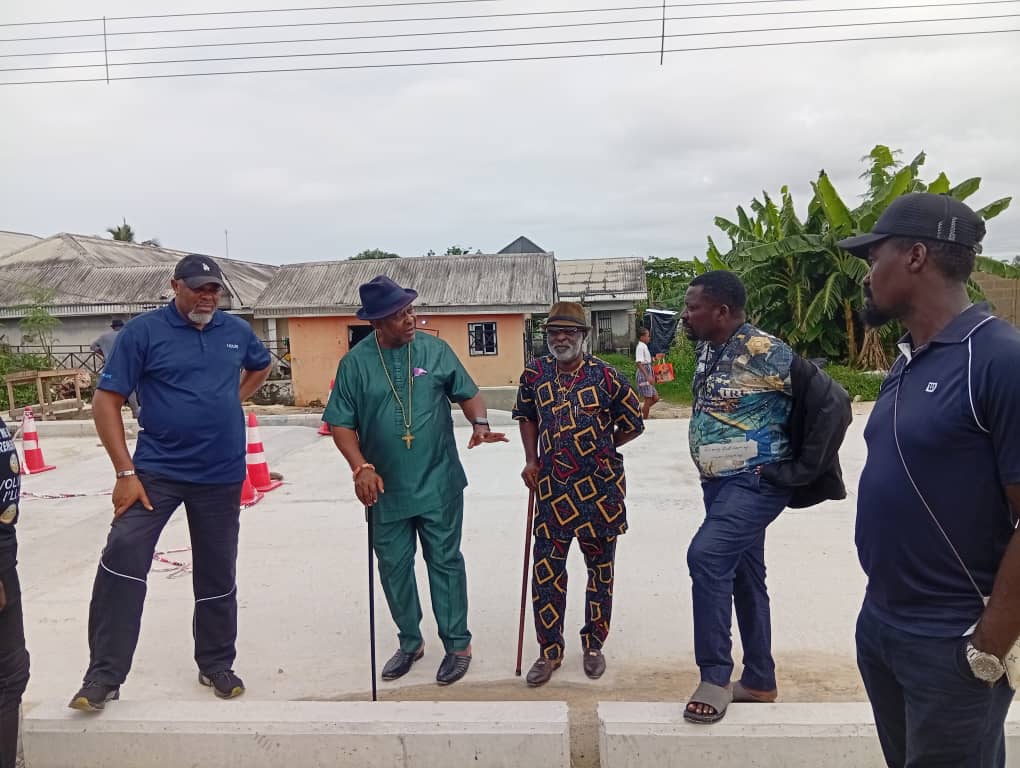
When heavy rain falls on Bonny Island, it tests not only the roads and drains but also community leadership. On 26 May 2025, the Amadabo of Finima, His Royal Highness Aseme Alabo Dr Engr Dagogo Lambert Brown, Kongo XVII, conducted an inspection tour in traditional regalia and a safety helmet to assess the Omuso Circle road project and flood damage from the previous night’s downpour. As both a traditional ruler and a qualified engineer, he combined cultural authority with technical expertise to evaluate infrastructure progress and environmental risks, signaling a commitment to informed, proactive leadership amid rising climate pressures.
Royal oversight on the construction site
Accompanied by senior traditional council members and representatives of the Buoye Omuso Brown Major House (Asaawo), the Amadabo toured the road construction zone along Omuso Circle en route to Pioneer Camp Road, being executed by MPI Construction Ltd. He frequently stopped to examine sub-base reinforcement and drainage alignment, engaging site engineers on material specifications, project milestones, and challenges posed by the rainy season. His engineering background enabled substantive dialogue beyond ceremonial observation.
“We must ensure that this road meets the standard expectations of the community and withstands the environmental demands of this region,” HRH Brown stated while reviewing drainage layouts. The project manager affirmed that quality assurance protocols were being maintained and that efforts would be intensified to accelerate work ahead of further heavy rains. This exchange underscored his dual role as cultural leader and technical stakeholder, reinforcing accountability at a critical project phase.
Flood damage in the neighbourhoods
The inspection extended into residential blocks where floodwater had inundated compounds and public spaces. Stagnant pools raised concerns about mosquito breeding and the risk of vector-borne diseases such as malaria and dengue, particularly given that standing water in tropical climates creates ideal breeding conditions for disease-carrying insects.
“The flooding witnessed last night highlights the need for a holistic approach to infrastructure — roads must be complemented with well-designed drainage systems that factor in climate variability,” the Amadabo told journalists after the tour. Residents expressed appreciation for his visible engagement. Mrs Tamunotonye Owei, a resident near Omuso Circle, remarked: “It’s a blessing to have a king who is both a traditional ruler and a qualified engineer. His understanding of our problems is both cultural and technical,” highlighting the value of leadership that bridges customary authority with practical problem-solving.
A call for shared responsibility
During a press briefing, HRH Brown called on all stakeholders with a presence on Bonny Island — the Bonny Local Government Council, Niger Delta Development Commission (NDDC), Nigeria LNG Ltd, and private contractors — to act more decisively on Finima’s environmental and infrastructural challenges. He stressed that fragmented efforts would not suffice amid intensifying weather patterns and aging drainage systems, urging coordinated planning and resource allocation.
He also appealed to residents: “It is our collective responsibility to preserve Finima’s livability. The government and contractors have roles, but so do we as residents. We must desist from habits that compromise the systems put in place to protect us,” specifically citing the practice of dumping refuse into drains, which he identified as a major cause of flash flooding after heavy rain. This appeal aimed to foster community ownership of infrastructure resilience, recognizing that lasting solutions require both institutional action and individual responsibility.
Finima’s wider transformation agenda
The Omuso Circle–Pioneer Camp Road project is part of a broader infrastructure rejuvenation plan aimed at improving mobility, supporting economic activity, and building climate resilience in Finima. As a host community to Nigeria LNG and other critical oil and gas assets, Finima’s development has long attracted national and international attention. Under HRH Brown’s leadership, the traditional institution has advocated for growth that respects heritage while embracing modern engineering standards, seeking to avoid unsustainable or culturally disconnected development.
Stakeholders have welcomed the Amadabo’s direct involvement in project monitoring and have urged deeper collaboration between traditional authorities and contemporary development actors. The consensus is that such partnership can deliver infrastructure that is both technically sound and culturally grounded, serving functional needs while reinforcing community identity and long-term stewardship of the land.
Looking ahead as the rains peak
With the rainy season approaching its peak, comprehensive drainage management and resilient road infrastructure are urgently needed. Meteorological forecasts indicate above-average rainfall for the region in the coming months, increasing pressure on existing drainage networks and raising the risk of recurrent flooding if interventions are delayed or inadequate.
The Amadabo’s tour sends a clear message: leadership must be present, responsive, and technically competent. The visit concluded with a moment of silence for the natural environment and a prayer for safety and prosperity for the people of Finima, reflecting the spiritual dimension of his leadership that complements his technical engagement.
HRH Brown pledged continued engagement until the road is completed and flood-prone areas are effectively addressed. For residents, the tour was more than an inspection — it was a reaffirmation that their monarch walks not only in tradition but also in the spirit of accountability, engineering precision, and environmental stewardship. This sustained commitment offers hope that Finima’s infrastructure evolution will be guided by vigilance, inclusivity, and a deep understanding of local realities.
What this means
Leadership that wears both the crown and the hard hat is a rare sight, but in Finima it has become a working reality. The Amadabo’s walk along Omuso Circle reminded the community that infrastructure is not just about asphalt and concrete — it is about the families who navigate those roads daily, the children who play beside the drains, and the elders who remember what the land used to be. When traditional authority speaks the language of engineering and environmental care, the community listens, and the path forward becomes a shared one. As the rains continue to fall, Finima will be watching, and its king has promised to keep walking the ground with them, ensuring that progress is measured not only in miles of road laid but in lives protected and livelihoods secured.
Prepared with AI assistance.
Discover more from FINIMA
Subscribe to get the latest posts sent to your email.
0 Comments