Gov Adeleke commits N8bn for procurement of tractors, clearing equipments
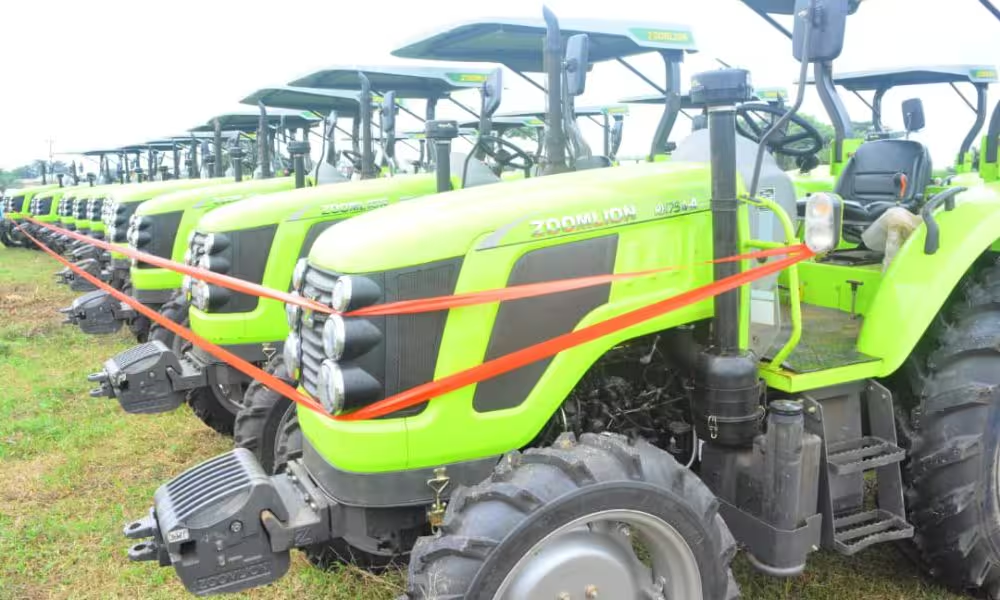
Agriculture remains a cornerstone of Osun State's economy, providing livelihoods and sustaining communities. Recognizing the sector's potential, Governor Ademola Adeleke has committed a substantial N8 billion towards procuring tractors and farm clearing equipment. This move is designed to mechanize farming practices, increase productivity, and empower farmers across the state. Alongside this, an additional N2 billion has been allocated for farm inputs, ensuring a holistic approach to agricultural development. This article explores the multifaceted impact of this initiative, its alignment with the governor's broader policy objectives, and the anticipated benefits for Osun State's farmers and economy.
Strategic Investment in Agricultural Mechanization
Governor Ademola Adeleke’s administration has taken a proactive step by investing N8 billion in tractors and farm clearing equipment. This significant financial commitment underscores the government's dedication to modernizing agriculture in Osun State. The mechanization of farming activities is expected to reduce manual labor, improve efficiency, and boost crop yields across the region.
The procurement process followed due administrative procedures to ensure transparency and accountability. The newly acquired machinery was unveiled at the Agric Input Settlement Unit (AISU) in Ede, showcasing the government’s readiness to deploy resources that will transform the agricultural landscape. This equipment will be instrumental in addressing challenges such as land preparation and farm maintenance.
By integrating mechanized tools into farming, the state aims to reduce the drudgery associated with traditional agricultural practices. This approach not only improves productivity but also attracts younger generations to agribusiness by making farming a more viable and profitable venture.
Alignment with the 5-Point Action Plan
The tractor procurement initiative is a key component of Governor Adeleke’s 5-Point Action Plan, which serves as the blueprint for his administration’s developmental agenda. This plan emphasizes worker welfare, financial inclusion, localization, infrastructure development, social sector upliftment, and agro-industrialization.
Within this framework, the focus on agro-industrialization reflects a commitment to transforming Osun’s agricultural sector into a robust economic driver. The mechanization of farming aligns with the goal of upgrading infrastructure and enhancing productivity, thereby fostering sustainable development.
The integration of these priorities demonstrates a holistic approach to governance, where agricultural advancement is interconnected with broader socio-economic objectives, including job creation, poverty reduction, and improved living standards for Osun citizens.
Distribution of Farm Inputs to Empower Farmers
In addition to procuring machinery, Governor Adeleke’s administration has earmarked N2 billion for distributing critical farm inputs. These include 6,000 herbicides, 80,000 cashew seedlings, 8,000 cassava cuttings, 8,000 assorted vegetable seeds, and 500 bags of lime. These inputs will be distributed to farmers, women’s associations, persons with disabilities, and government schools with large farmlands.
This comprehensive distribution strategy is designed to support various stakeholders within the agricultural value chain. By providing quality inputs, the government aims to enhance crop diversity, improve soil health, and increase overall agricultural output.
The inclusion of marginalized groups ensures equitable access to resources, promoting inclusivity and social empowerment. Encouraging responsible utilization of these inputs is expected to catalyze productivity and elevate Osun State’s position as a leading agricultural hub.
Empowering Youths and Farmers’ Cooperatives
The newly procured 31 tractors, equipped with full implements, represent the first phase of this ambitious project. These tractors will be allocated to farmers’ cooperative societies and associations after completion of necessary administrative procedures. This approach fosters collective ownership and efficient use of mechanized equipment.
Governor Adeleke highlighted that this initiative addresses concerns raised by the state’s youthful population during the End Bad Governance protests. By providing the infrastructure and resources necessary for agribusiness, the government aims to make farming an attractive and profitable career path for young people.
Empowering cooperatives encourages collaboration, knowledge sharing, and economies of scale, which are essential for sustainable agricultural development. This strategy enhances farmers’ capacity to increase production, access markets, and improve their livelihoods.
Agriculture as a Pillar of Osun State Economy
Osun State is predominantly an agrarian society, blessed with fertile land, favorable climate, and a hardworking population. Agriculture has historically been the backbone of the state’s economy, providing employment and food security.
The Commissioner for Agriculture and Food Security, Honorable Tola Faseru, emphasized that farming is a profitable venture globally and a vital means of empowerment locally. The state’s natural endowments position it well to leverage agriculture for sustainable development and economic growth.
By investing in mechanization and farm inputs, the government is tapping into Osun’s agricultural potential, aiming to elevate productivity and ensure food security. This commitment signals a renewed focus on agriculture as a strategic sector for state development.
Anticipated Impact on Food Security and Economic Growth
The introduction of tractors and farm clearing equipment is expected to significantly increase agricultural productivity, facilitating timely land preparation and efficient crop production. These improvements will contribute directly to food security in Osun State by boosting local food availability.
Mechanized farming reduces production costs and time, enabling farmers to cultivate larger areas and diversify crops. This, in turn, stimulates economic activities within rural communities and enhances income generation for farming households.
Furthermore, the project aligns with broader national goals of food self-sufficiency and reducing reliance on food imports. By strengthening the agricultural value chain, Osun State can contribute meaningfully to Nigeria’s overall economic stability and growth.
Government’s Commitment to Sustainable Agricultural Development
Governor Adeleke’s proactive approach to agricultural development demonstrates a strong commitment to sustainability. The government’s focus on mechanization, input distribution, and farmer empowerment reflects an understanding of the complexities involved in transforming the sector.
By ensuring that resources are allocated transparently and that farmers receive adequate support, the administration aims to create an enabling environment for long-term agricultural success. This includes continuous monitoring and the provision of extension services to maximize the benefits of the equipment and inputs.
The promise of additional tractors and implements arriving in the future highlights the administration’s ongoing dedication to scaling up agricultural mechanization. Such sustained efforts are crucial to maintaining momentum and achieving lasting improvements in the sector.
Encouraging Responsible Utilization and Future Prospects
Government officials urge beneficiaries to utilize the tractors, equipment, and farm inputs responsibly and efficiently. Proper management and maintenance of these resources are essential to maximize their lifespan and impact on productivity.
The collaborative involvement of farmers’ cooperatives and associations ensures shared responsibility and accountability, fostering a culture of good governance within the agricultural sector.
Looking ahead, Osun State’s agricultural transformation initiative sets a precedent for other states aiming to modernize farming. Continued investment, capacity building, and innovation will be key drivers in sustaining growth and achieving food security for the state and beyond.
Conclusion
Governor Ademola Adeleke’s commitment of N8 billion towards procuring tractors and farm clearing equipment marks a transformative milestone for Osun State’s agricultural sector. This strategic investment, coupled with the distribution of vital farm inputs, is poised to modernize farming practices, boost productivity, and enhance food security. By aligning this initiative with a comprehensive 5-Point Action Plan, the administration demonstrates a holistic approach to socio-economic development. Empowering farmers, especially youth and cooperative societies, ensures inclusivity and sustainability. As Osun State embraces mechanized agriculture, it sets a promising example for regional growth and national food sufficiency. The ongoing dedication to resource provision and responsible management will be crucial in sustaining this momentum and achieving long-term agricultural success.
Originally reported by hallmarknews.com. Adapted for our readers.
Discover more from FINIMA
Subscribe to get the latest posts sent to your email.
0 Comments