‘Brat’ Kamala or ‘dragon mother’ Pelosi? This meme machine is a risky strategy in a high-stakes election | Nesrine Malik
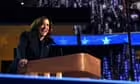
For those of us in Bonny Kingdom, whether we are walking the streets of Finima or following news from the diaspora, we understand that true leadership is built on stability, community trust, and a clear plan for the future. However, looking across the Atlantic at the current US election, we are witnessing a different kind of political theatre. The Democratic campaign has shifted away from traditional policy debate, instead embracing a 'meme machine' that blends celebrity culture with political ambition. From references to pop stars like Beyoncé and Charli xcx to cinematic nods to 'Game of Thrones', the strategy is clear: capture the cultural zeitgeist to win the vote. But as we observe this transformation, it raises a vital question for any community: can a leadership style based on fleeting trends and 'vibes' actually deliver lasting progress, or is it merely a fragile mask for a lack of substance?
The Rise of the 'Brat' and the 'Dragon Mother'
The recent Democratic National Convention felt less like a political gathering and more like a theatrical production, utilizing a cast drawn from celebrity, music, and drama. The language used to introduce candidates and leaders has moved entirely into the realm of popular culture. Nancy Pelosi, for example, was framed as the 'Mother of Dragons'—a reference to a main character in the hit series Game of Thrones—and described as 'brat before brat was brat'. This latter term is a buzzy reference to musician Charli xcx’s album of the same name, which denotes a confident, nonchalantly rebellious woman.
Kamala Harris herself was anointed as 'brat' the moment Joe Biden stepped down. The narrative has even extended to her mother—who raised Harris as a single parent and possesses Indian heritage—who has been declared the 'uberbrat', suggesting she is more brat than even her daughter. This is not accidental; it is a calculated attempt to align the campaign with the habits of younger voters and the fast-paced nature of internet content, where a catchy label often carries more weight than a detailed manifesto.
The 'Beyoncé Moment' and the Cult of Celebrity
The strategy extends beyond labels to full-scale celebrity alignment. New York Times columnist Charles M. Blow has suggested that Harris is experiencing her 'Renaissance', comparing her political surge to the spectacular pyrotechnic tour that elevated Beyoncé to pop icon status. The desire for a 'Beyoncé moment' was so strong that rumours of the singer appearing as a surprise guest at the convention sparked intense speculation, as if her presence alone would bless the campaign and ordain its political legitimacy.
Even the portrayal of men in the campaign has been filtered through a pop-culture lens. Commentators have suggested that vice-presidential candidate Tim Walz has much in common with NFL star Travis Kelce. This fits into a broader trend of 'wife guys'—men who, while confident in their masculinity, are not ashamed to talk up their partners and are comfortable taking a back seat. By fusing political identity with these feel-good cultural references, the campaign is attempting to create an emotional connection with the electorate that bypasses traditional scrutiny.
From Low Impact to Political Juggernaut
This sudden shift in image is a stark contrast to Harris's previous standing. Only a year after assuming the vice-presidential office, the prevailing question was 'where did it go wrong'. Reports indicated that she was 'hobbled in the public consciousness', with the New York Times reporting that even some Democrats, whom her own advisers referred reporters to for supportive quotes, confided privately that they had lost hope in her.
The rapid rehabilitation of her image into the 'Beyoncé of politics' is, in many ways, born of panic. For a moment, it appeared Joe Biden might refuse to step aside, which would have likely delivered a definite win to Donald Trump. Furthermore, the assassination attempt on Trump gave him his own narrative boost, which coalesced through music, memes, and online reactions to frame him as a potent winner against a frail incumbent. Harris emerged when it seemed all might be lost; the plot was forcefully twisted to offer her as a fusion of memeable content and cultural energy.
The Danger of 'Vibe Fare'
Analysis suggests that this reliance on sensation over substance is a high-risk gamble. By presenting Harris as the 'president of joy'—a term recently used by Bill Clinton—the campaign is betting that feelings alone can counter the right-wing movement whose power lies in nastiness and loathing. However, feelings are notoriously fickle. When a campaign feeds people emotions rather than material realities, it creates a fragile bond that lasts only as long as the energy can be maintained or until the opposition catches a 'good wind' that sends the story in another direction.
There is a worrying tendency among some supporters to avoid rigorous scrutiny of their candidate. This fevered rehabilitation feels like an urgent duty for opinion-makers who viewed the Trump era as a nightmare following the Obama presidency. This zeal leaves little space for scrutiny and leads to the infantilisation of a public that cannot be trusted in a cutthroat media market. Charles M. Blow noted that the 'survivalist' in him believes Harris should continue to avoid interviews, fearing that one bad answer could overshadow ten good ones.
This approach treats the public as 'dopamine-addicted consumers' rather than citizens capable of making decisions based on detail and vision. It assumes the safest denominator to bind a divided nation is a politics that neither draws on material realities nor articulates a clear vision for the future, but instead taps into the public's status as consumers of rousing spectacle.
What this means
As we watch these events unfold from Bonny Island, it serves as a reminder that while charisma and 'vibes' can capture attention, they cannot sustain a society. Whether in the halls of power in Washington or in the governance of our own local communities, the most durable leadership is that which speaks to the material realities of the people and offers a tangible vision for progress. A politics of spectacle may win a social media cycle, but it rarely builds a lasting movement. In the end, the voters—much like the 'brat' persona they are being sold—may prove to be unpredictable, capricious, and unswayed by mere performance.
Originally reported by theguardian.com. Adapted for our readers with AI assistance.
Discover more from FINIMA
Subscribe to get the latest posts sent to your email.
0 Comments