Fubara’s Infrastructural Dev. Transforming Rivers’ Landscape Amid Political Distractions
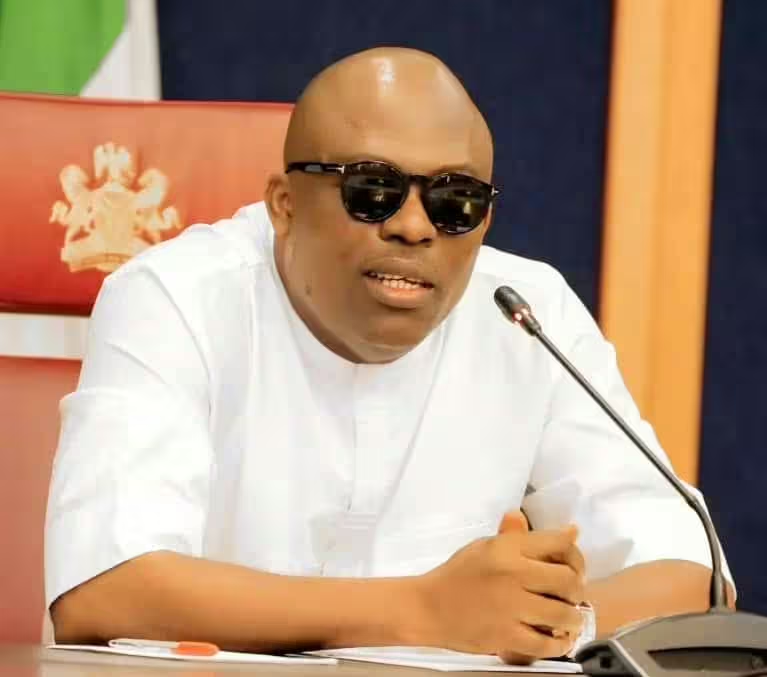
Since assuming office, Governor Siminalayi Fubara has embarked on an extensive infrastructural development agenda that is radically transforming Rivers State. His administration’s focus on rehabilitating critical infrastructure, enhancing urban planning, and boosting social amenities has started to yield visible improvements across the state. These reforms are unfolding despite persistent political distractions and opposition, highlighting the resilience and commitment of the government to deliver lasting development. This article explores the multifaceted infrastructural initiatives under Governor Fubara’s leadership and their impact on Rivers State’s socio-economic landscape.
Revitalizing Transportation Networks for Economic Growth
One of the most significant areas of Governor Fubara’s infrastructural focus has been the comprehensive rehabilitation and expansion of transportation networks across Rivers State. Roads previously marred by neglect and poor maintenance are being upgraded with modern engineering standards, improving connectivity between urban centers and rural communities. This enhances the movement of goods and people, which is vital for economic activities.
New road projects and the repair of existing highways have reduced travel time and transportation costs, encouraging business investments and expanding trade opportunities within the state. The government’s emphasis on constructing durable road surfaces and drainage systems also aims to mitigate seasonal flooding, which has historically disrupted transport and commerce.
Moreover, the introduction of strategic urban road designs and traffic management systems in Port Harcourt and other key cities is helping to alleviate congestion and improve safety. These transportation improvements are foundational to unlocking Rivers State’s economic potential and fostering inclusive growth.
Healthcare Infrastructure: Building Resilience and Accessibility
Governor Fubara’s administration has prioritized healthcare infrastructure development to enhance service delivery and improve public health outcomes. Several hospitals and primary health care centers across Rivers State have been refurbished or newly constructed, equipped with modern medical technologies and staffed with trained personnel.
These investments aim to increase healthcare accessibility for residents, especially in underserved rural areas where medical facilities have traditionally been inadequate. The government’s focus on maternal and child health programs, coupled with infrastructural upgrades, addresses critical health challenges and reduces mortality rates.
Additionally, efforts to improve water supply and sanitation infrastructures complement healthcare reforms by creating healthier living environments. By strengthening healthcare infrastructure, Governor Fubara’s government is building a more resilient health system capable of responding effectively to both everyday and emergency health needs.
Educational Infrastructure: Laying Foundations for Future Generations
Transforming educational infrastructure is a key pillar of Governor Fubara’s development agenda. The state has witnessed extensive renovations of existing schools and the construction of new classrooms, libraries, and laboratories. These improvements create conducive learning environments that foster academic excellence and skill acquisition.
The administration’s investments also include the provision of modern teaching aids, digital tools, and capacity-building programs for educators. This holistic approach aims to elevate the quality of education and prepare students for the challenges of the 21st century.
Emphasizing equitable access, infrastructural development in education targets both urban and rural communities, ensuring that children across Rivers State benefit from improved facilities. These efforts are critical to nurturing human capital, which underpins sustainable socio-economic development.
Urban Development and Housing: Shaping Livable Communities
Urban planning and housing development have received significant attention under Governor Fubara’s leadership. The government has initiated projects to upgrade residential areas, improve public spaces, and enhance utility services such as electricity and water supply. These initiatives aim to create livable, vibrant communities that attract residents and investors alike.
Affordable housing schemes have been launched to address the growing demand for quality homes, reducing overcrowding and informal settlements. These projects incorporate modern architectural designs and sustainable building practices to ensure durability and environmental friendliness.
Furthermore, beautification efforts, including landscaping and recreational facilities, contribute to the overall quality of life in urban centers. By focusing on urban infrastructure, the administration is fostering social cohesion and economic vitality within Rivers State’s cities.
Navigating Political Challenges Amidst Development
Governor Fubara’s infrastructural reforms have unfolded amid a complex political environment marked by opposition and distractions. Political rivals have often attempted to undermine the administration’s efforts through legal battles and public criticism, seeking to stall progress.
Despite these challenges, the government has demonstrated resilience and a commitment to transparency and accountability, ensuring that project implementation remains on track. Stakeholder engagement and community involvement have helped to build trust and mitigate political tensions.
The ability to sustain development momentum in the face of political headwinds underscores the administration’s strategic focus and leadership. It highlights the importance of prioritizing the welfare of the citizenry over partisan interests.
Economic Impacts of Infrastructural Reforms
The infrastructural developments spearheaded by Governor Fubara are catalyzing economic growth in Rivers State. Improved transportation networks facilitate trade and commerce, attracting both local and foreign investments. This creates jobs and boosts household incomes.
Enhanced healthcare and education infrastructures contribute to a healthier, more skilled workforce, which is essential for competitive industries and innovation. Urban development projects stimulate the real estate sector and related services, further expanding economic opportunities.
Collectively, these reforms are diversifying the state’s economy beyond traditional oil revenues, promoting sustainable development and resilience. The infrastructural foundation laid today is setting the stage for long-term prosperity.
Community Engagement and Social Inclusion
A hallmark of Governor Fubara’s infrastructural strategy is the emphasis on community engagement. Local populations are actively involved in planning and monitoring projects, ensuring that developments meet their needs and priorities.
Social inclusion is also a priority, with special attention given to marginalized groups, including women and youth. Training programs and employment opportunities linked to infrastructure projects empower these groups economically and socially.
This participatory approach not only enhances project effectiveness but also fosters a sense of ownership and pride among residents. It strengthens social cohesion and supports peaceful coexistence within Rivers State.
Sustainability and Future Outlook
Sustainability is embedded in Governor Fubara’s infrastructural agenda through the adoption of environmentally friendly practices and resilient designs. Projects incorporate green technologies, efficient resource management, and climate adaptation measures.
Looking ahead, continued investment in infrastructure is expected to maintain Rivers State’s development trajectory. Strategic partnerships with private sector entities and international organizations are being explored to enhance funding and expertise.
The government’s long-term vision embraces inclusive growth, technological innovation, and environmental stewardship, ensuring that infrastructural gains are preserved and expanded for future generations.
Conclusion
Governor Siminalayi Fubara’s infrastructural development initiatives are transforming Rivers State into a more connected, healthy, educated, and livable region. The ability to advance these reforms amid political distractions highlights the administration’s dedication to the welfare of its citizens. As Rivers State continues to build on these infrastructural foundations, it is poised to achieve sustainable economic growth and social progress. Through strategic investments, community involvement, and a focus on sustainability, Governor Fubara’s leadership is charting a promising future for Rivers State.
Discover more from FINIMA
Subscribe to get the latest posts sent to your email.
0 Comments