Tinubu Urges End to Protests, Calls for Dialogue with #EndBadGovernanceInNigeria Movement
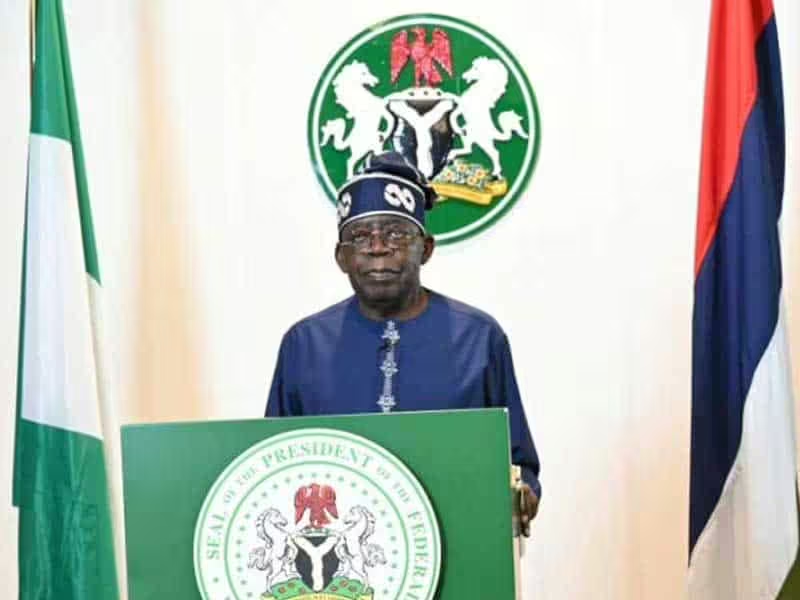
In recent weeks, Nigeria has been engulfed by widespread protests organized under the #EndBadGovernanceInNigeria movement. These demonstrations, driven by frustrations over rising living costs, hunger, and perceived governance failures, have drawn the attention of the entire nation and beyond. On August 4, 2024, President Bola Tinubu addressed the nation, calling for an immediate halt to the protests and urging all parties to engage in constructive dialogue. This article delves into the context of the protests, the president’s response, the socio-economic factors at play, and the prospects for peaceful resolution and national unity.
Background of the #EndBadGovernanceInNigeria Movement
The #EndBadGovernanceInNigeria movement emerged as a grassroots response to growing public discontent with the state of governance in Nigeria. Citizens from various walks of life, particularly youths, have expressed frustration over corruption, inadequate public services, and economic hardship. Social media platforms played a crucial role in mobilizing support and organizing nationwide protests scheduled over a ten-day period.
Central to the movement’s demands are calls for improved governance, transparency, and accountability from political leaders. Protesters highlight issues such as inflation, unemployment, poor infrastructure, and insufficient social welfare as evidence of systemic governance failures. The movement has attracted widespread attention domestically and internationally, shedding light on Nigeria’s complex political and socio-economic challenges.
While initially peaceful, the protests escalated in intensity over time, leading to clashes between demonstrators and security forces. The unrest resulted in significant property damage and tragic loss of life, with at least 17 fatalities reported. These developments intensified calls for urgent government intervention and dialogue to restore calm and address public grievances.
President Bola Tinubu’s Nationwide Address
On Sunday, August 4, 2024, President Bola Tinubu delivered a televised nationwide broadcast addressing the ongoing protests. Emphasizing his administration’s attentiveness to the concerns of Nigerians, Tinubu acknowledged that he has heard the protesters’ voices “loud and clear.” His speech aimed to de-escalate tensions by appealing for an immediate suspension of all protest activities.
In his address, the president urged protest organizers and participants to create space for dialogue, reaffirming his openness to discussions. He stressed that his administration has consistently been willing to engage with citizens at the earliest opportunity. Tinubu’s call for calm and conversation reflects a strategic approach to resolving the crisis without further violence or destruction.
Furthermore, Tinubu highlighted the importance of national unity, reminding Nigerians that the country’s progress depends on collective effort across divides of age, tribe, party, and religion. His message underscored the need for collaboration to overcome challenges and build a prosperous future for all.
Socio-Economic Factors Fueling the Protests
At the heart of the #EndBadGovernanceInNigeria protests lie deep-rooted socio-economic issues that have severely impacted the daily lives of millions. Rising inflation has dramatically increased the cost of essential goods and services, making it difficult for ordinary Nigerians to meet basic needs. Many families face food insecurity and hunger, exacerbating public frustration.
Unemployment, particularly among the youth, remains a persistent challenge contributing to widespread dissatisfaction. The lack of adequate job opportunities, coupled with limited access to quality education and healthcare, has created a sense of hopelessness and alienation. These factors have galvanized citizens to demand urgent reforms and better governance.
Additionally, perceptions of corruption and mismanagement within government institutions have eroded public trust. Citizens accuse political leaders of prioritizing personal gain over national development. The protests thus represent not only economic grievances but also a broader call for ethical leadership and systemic change.
Impact of the Protests on Nigeria’s Stability
The nationwide protests have had significant consequences for Nigeria’s social and economic stability. Major cities experienced disruptions to daily activities, with businesses closing temporarily and transportation affected by roadblocks and demonstrations. These disturbances have further strained an already fragile economy.
Violent clashes between protesters and security forces resulted in injuries and fatalities, highlighting the risks of prolonged unrest. The destruction of public and private property has inflicted financial losses and heightened tensions between communities and authorities. Such volatility threatens to undermine investor confidence and international relations.
Moreover, the protests have exposed underlying divisions within Nigerian society, emphasizing the urgent need for inclusive governance. While the demonstrations reflect legitimate grievances, the escalation into violence underscores the importance of finding peaceful solutions and rebuilding trust between citizens and government.
The Call for Dialogue and Its Potential Benefits
President Tinubu’s call for dialogue represents a critical step towards resolving the crisis in Nigeria. By encouraging open communication between government representatives and protest leaders, dialogue can help clarify demands, address misunderstandings, and build mutual trust. Constructive engagement is essential to developing sustainable solutions.
Dialogue platforms provide opportunities for diverse voices to participate in shaping policy reforms, ensuring that outcomes reflect the needs of all stakeholders. This inclusive approach can foster national reconciliation and reduce the likelihood of future unrest. It also signals a commitment to democratic principles and respect for citizens’ rights.
Successful dialogue can pave the way for targeted interventions addressing the root causes of the protests, such as economic reforms, anti-corruption measures, and social welfare programs. By prioritizing negotiation over confrontation, Nigeria can strengthen its institutions and promote long-term stability.
Challenges to Achieving Lasting Peace and Reform
Despite the president’s appeal for dialogue, several challenges remain in achieving lasting peace and governance reforms. Distrust between protesters and government officials may hinder constructive engagement, especially if past promises have gone unfulfilled. Bridging this gap requires transparency and accountability from all parties.
The complexity of Nigeria’s political landscape, characterized by ethnic, religious, and regional diversity, adds layers of difficulty to consensus-building. Balancing competing interests while addressing systemic governance issues demands careful negotiation and compromise. Failure to manage these dynamics could exacerbate tensions.
Furthermore, external influences and misinformation campaigns can undermine peace efforts by fueling polarization. Ensuring accurate information dissemination and promoting civic education are crucial to creating an environment conducive to dialogue and cooperation.
The Role of Civil Society and International Partners
Civil society organizations (CSOs) play a vital role in facilitating dialogue and advocating for reforms in Nigeria. These groups often serve as intermediaries between the government and citizens, helping to amplify voices and monitor implementation of agreements. Their involvement enhances transparency and accountability.
International partners, including regional bodies and global institutions, can support Nigeria by providing technical assistance, mediation, and funding for development programs. Their engagement reinforces the importance of peaceful resolution and encourages adherence to democratic norms.
Collaborative efforts between the government, CSOs, and international stakeholders can create a robust framework for addressing Nigeria’s governance challenges. Such partnerships contribute to building resilient institutions capable of managing future crises effectively.
Path Forward: Building a United and Prosperous Nigeria
Moving forward, Nigeria faces the imperative of transforming the current unrest into an opportunity for positive change. Embracing dialogue, inclusive governance, and comprehensive reforms is essential to restoring public confidence and fostering national unity. Leaders at all levels must demonstrate commitment to these principles.
Economic revitalization, through job creation, inflation control, and social safety nets, should be prioritized to alleviate the hardships fueling discontent. Simultaneously, strengthening anti-corruption frameworks and improving service delivery will enhance government credibility and effectiveness.
Ultimately, the success of Nigeria’s journey depends on collective responsibility and active participation from citizens, government, civil society, and international partners. By working together, Nigeria can overcome its challenges and build a future characterized by peace, prosperity, and good governance.
Conclusion
The recent nationwide protests under the #EndBadGovernanceInNigeria movement have spotlighted critical governance and socio-economic challenges facing Nigeria. President Bola Tinubu’s call for an immediate halt to the demonstrations and a shift toward dialogue underscores the importance of peaceful engagement in resolving national crises. While the path to lasting peace and reform is fraught with challenges, embracing inclusive dialogue, transparent governance, and collaborative efforts offers the best hope for Nigeria’s future. By uniting across divisions and addressing root causes, Nigeria can pave the way for a more stable, prosperous, and equitable society for all its citizens.
Discover more from FINIMA
Subscribe to get the latest posts sent to your email.