🏝️ Finima: The Ancient Homeland Before Bonny — A Historical and Legal Reaffirmation
By Engr. Tamunofiniarisa Brown, Tamfis Nigeria Limited
Introduction
The story of Finima is not merely a sub-chapter of Bonny history — it is the foundation upon which the later Bonny civilisation evolved.
Long before the emergence of the Bonny Kingdom as a trading and political power in the Niger Delta, Finima already existed as a vibrant riverine community — a cradle of Ibani heritage and maritime culture.
This post consolidates credible historical, anthropological, and legal sources to reaffirm that Finima predates Bonny by several centuries.
It also clarifies that the later relationship between the two entities was a negotiated confederation formed in the 14th century, rather than conquest or assimilation.
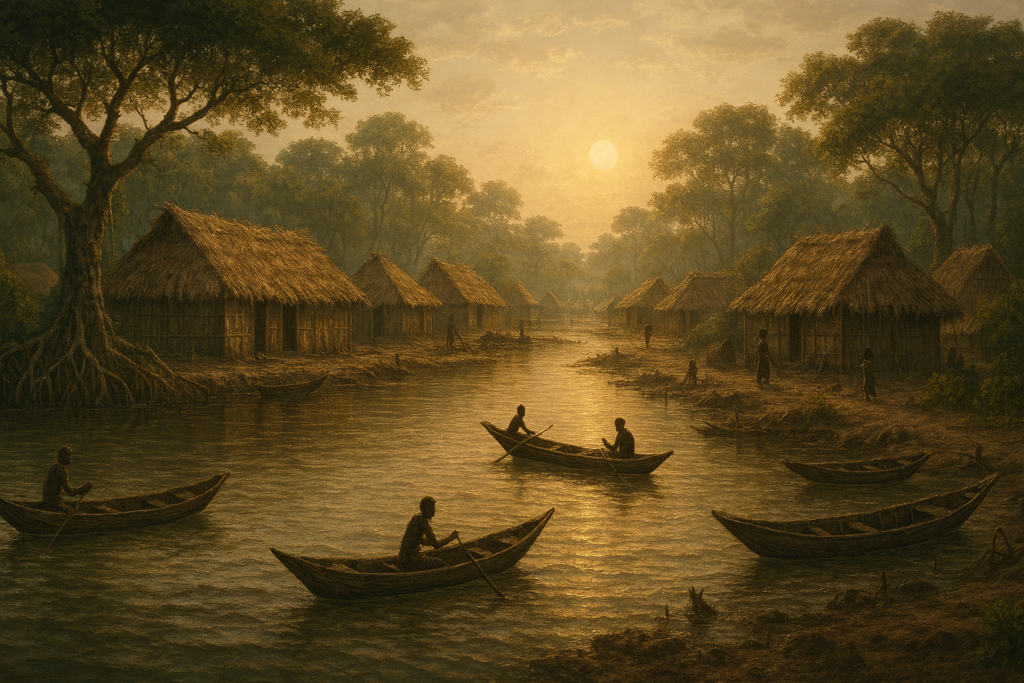
1️⃣ Finima’s Ancient Origins (11th Century AD)
According to reputable historical records, Finima was already a flourishing coastal settlement as early as 1000 AD, centuries before Bonny’s consolidation at Okoloama.
The Buoye Omuso (Brown) House — also known as the Kongo lineage — traces its ancestry to the Isedani of Kolokuma origin in the Central Niger Delta, establishing Finima as one of the earliest Ijaw-Ibani settlements in the Rio Real region (Finima.net, 2025).
“Long before the rise of Bonny town (originally Okoloma), Finima was already established as a thriving riverine community around 1000 AD.”
(Finima.net, 2025)
This aligns with the broader Ibani chronology outlined by Bristol-Alagbariya (2022), who confirms that the primordial house-system of Grand Bonny began forming before 1000 AD, rooted in ancient family groupings that later became the Duawari Houses.
Finima, therefore, represents one of the earliest nuclei of Ibani civilisation—a proto-community that laid the groundwork for the later kingdom of Bonny.
2️⃣ Finima as a Founding Duawari House
Finima’s Buoye Omuso (Brown) House stands proudly among the five Duawari Houses—the aboriginal founding lineages of the Bonny kingdom (Bristol-Alagbariya, 2022).
The Duawari were the blood-descended progenitors whose settlements formed the base of the emerging Okoloama polity, which eventually crystallised into the Bonny kingdom.
As Bristol-Alagbariya (2022) emphasises, the Duawari houses were the legitimate custodians of land, title, and governance, distinct from later houses created by appointment, migration, or conquest.
Thus, Finima’s house status affirms its autochthonous — not tributary — position in Bonny’s constitution.
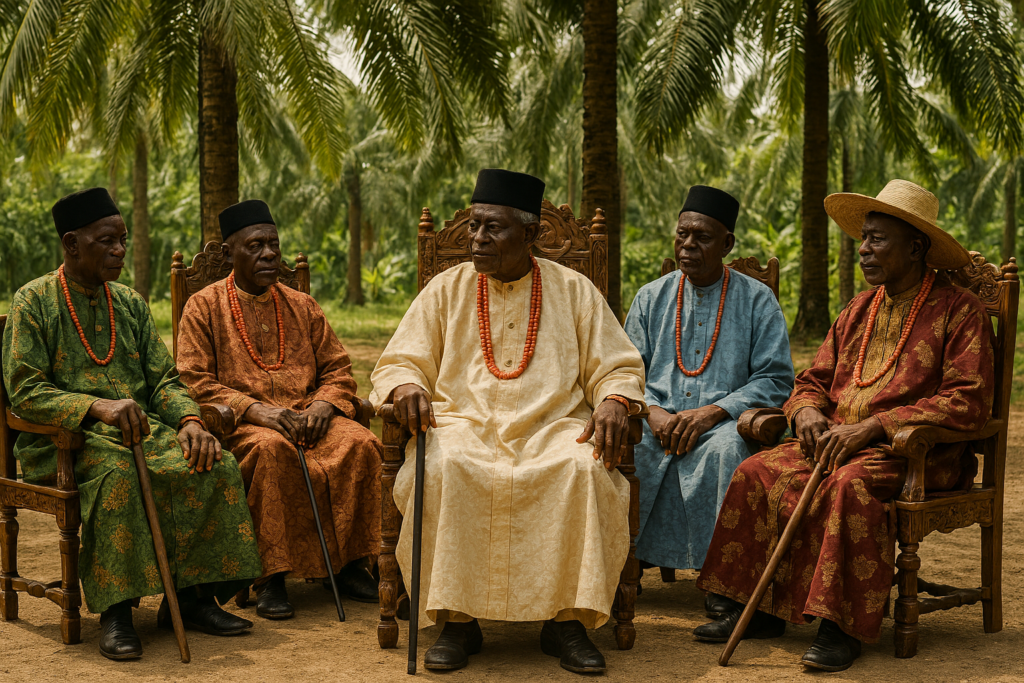
3️⃣ The 14th-Century Confederation Between Finima and Bonny
While Finima flourished as an established settlement, the migrating Ibani-Ijaw groups who later formed Bonny Town (Okoloama) arrived around the 13th–14th centuries.
Historical synthesis indicates that rather than being subdued, Finima’s leadership negotiated a confederal alliance with the newcomers to promote mutual defence and trade along the Rio Real (Finima.net, n.d.).
This 14th-century confederation recognised Finima as a sovereign partner within the emerging Bonny polity, retaining its ancestral territories and internal governance.
It was a federal arrangement of cooperation, not conquest — similar to the ancient Delta confederations among Ijaw city-states such as Nembe, Kalabari, and Okrika.
Therefore, Bonny did not conquer Finima; rather, it grew with Finima as an equal founding pillar within the Ibani nation.
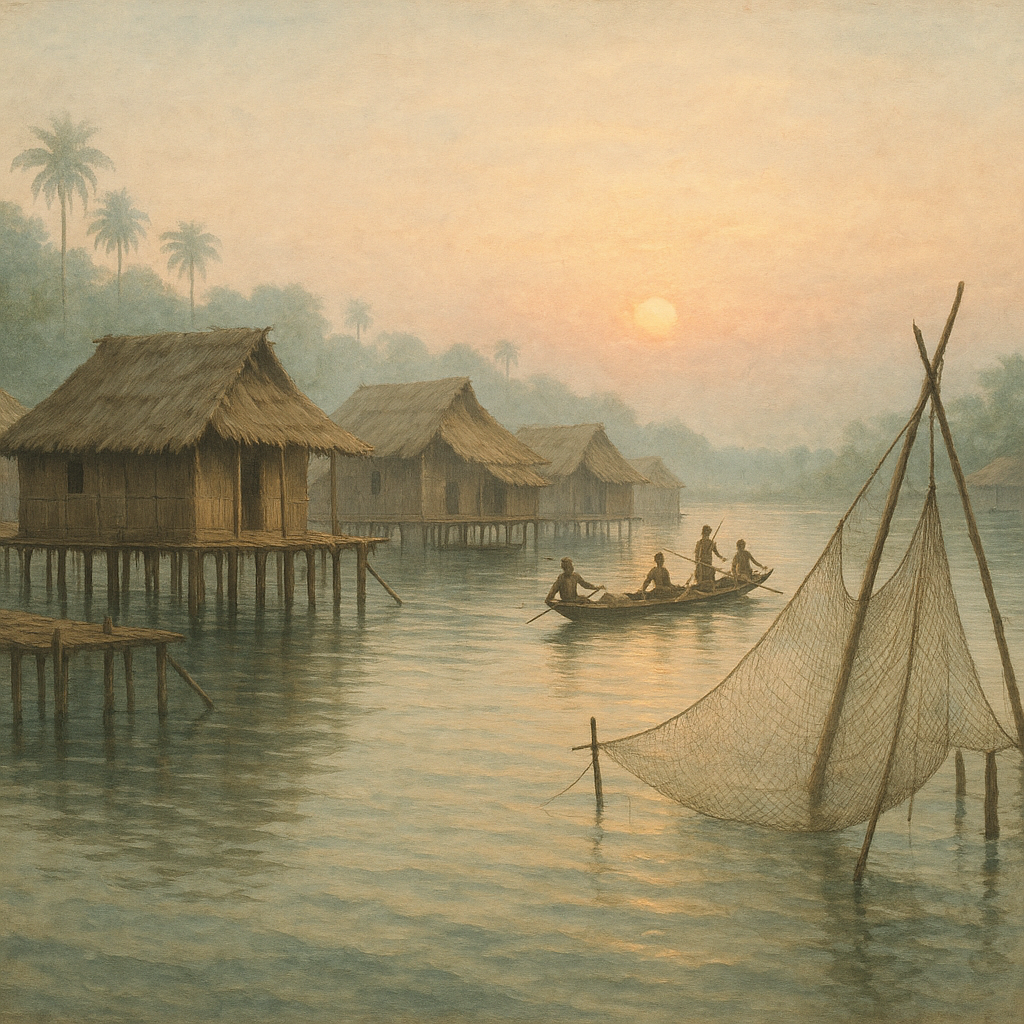
4️⃣ Rebutting the “Conquered Settlement” Narrative
The claim that Finima was conquered or that its land became “commonwealth” property of Bonny contradicts every credible historical record.
Research confirms that King Amakiri’s wars (16th–17th centuries) were external expansion campaigns against Andoni, Abalaye, and Ayankpo — not against Finima or other Duawari lineages (Bristol-Alagbariya, 2022).
Moreover, Finima played a central role in Bonny’s internal affairs — offering refuge to King William Dappa Pepple after his 1854 exile and hosting him until his restoration in 1861 (Finima.net, n.d.).
Such a gesture of hospitality and royal protection could never have emanated from a “conquered” people.
5️⃣ Modern Legal Recognition — Finima as a Host Community
In modern law, Finima’s ancestral continuity has been judicially affirmed.
In FHC/ABJ/CS/1419/2022, the Federal High Court of Nigeria (Okorowo J.) declared Finima (represented by the Buoye Omuso Brown House) the rightful host community of the NLNG plant located on Finima land and awarded ₦100 billion in damages for denial of due recognition (Tamfis Reports, 2023).
This ruling harmonises historical truth with statutory recognition, upholding Finima’s ancestral ownership and corporate personhood under the Petroleum Industry Act 2021.
It also corrects the distortions that have persisted in the interpretation of Finima’s place within Bonny Island.
6️⃣ The Finima–Bonny Relationship: A Model of Confederation
History shows that the strength of the Ibani people lay in unity through diversity, not domination.
Finima’s Duawari autonomy and Bonny’s central authority once functioned symbiotically — a federated alliance that brought stability, commerce, and maritime prominence to the Niger Delta for centuries.
Recognising Finima’s 11th-century foundation and 14th-century confederation therefore restores balance, truth, and historical dignity to the entire Bonny–Finima narrative.
It is a call to return to mutual respect and constitutional equity among all Duawari houses.
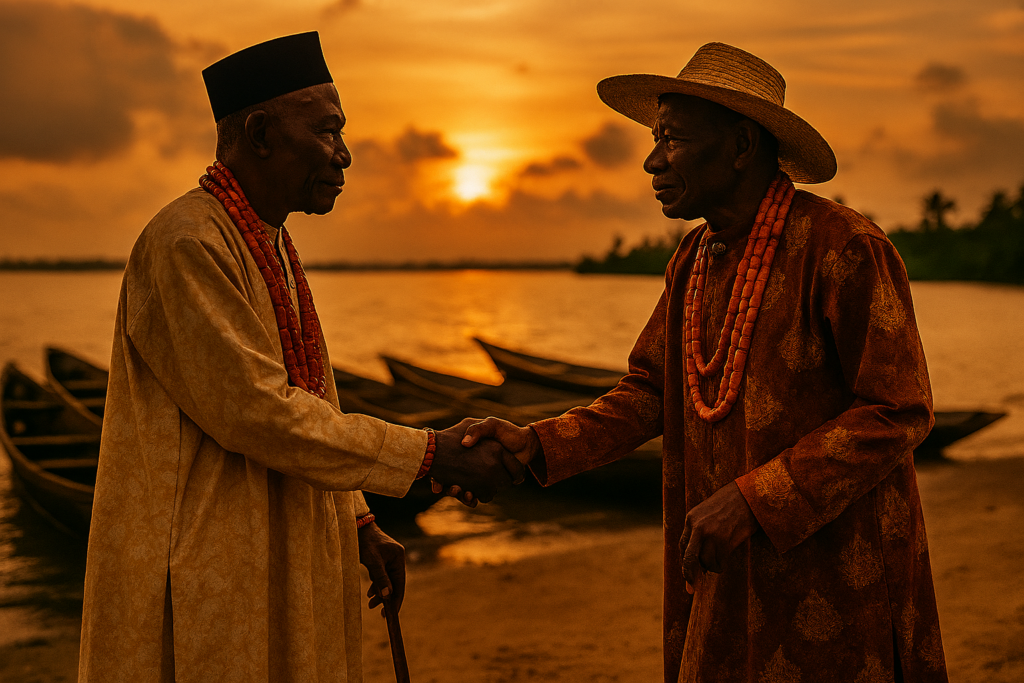
✅ Conclusion
Finima is not a settlement that was conquered.
Finima is the ancestral origin — the living heritage — of the Ibani nation.
Founded around 1000 AD, and entering into a 14th-century confederation with the emerging Bonny kingdom, Finima remains a sovereign partner in Ibani history.
Its people, through the Buoye Omuso Brown House, continue to safeguard this heritage with dignity, legal prudence, and cultural pride.
📚 References (APA 7th Edition)
Bristol-Alagbariya, E. T. (2022). Aboriginal Ancient Grand Bonny Kingdom of Niger Delta in the Framework of Its Primordial House System of Governance and Natural Law Towards Sustainable Development in the Kingdom. Global Journal of Politics and Law Research, 10(3), 1–32. https://www.eajournals.org/wp-content/uploads/Aboriginal-Ancient-Grand-Bonny-Kingdom-of-Niger-Delta.pdf
Finima.net. (n.d.). Brief History of Buoye Omuso (Brown) Major House of Finima. Retrieved from https://www.finima.net/community/brief-history-of-buoye-omuso-brown-major-house-of-finima/
Finima.net. (2025, June 28). Origins of Finima: From Ancient Ijaw Settlement to IOC Host Community. Retrieved from https://www.finima.net/community/origins-of-finima-from-ancient-ijaw-settlement-to-ioc-host-community/
SchoolSoftware.com.ng. (2023, March 2). History of Bonny Town in Bonny Island, Nigeria. Retrieved from https://www.schoolsoftware.com.ng/history-of-bonny-town-in-bonny-island-nigeria/
Tamfis Reports. (2023, September 29). Federal High Court Declares Finima NLNG Host Community — ₦100 Billion Damages Awarded. Tamfitronics News. https://www.tamfitronics.com
💬 Final Note
This article may be freely shared for educational and cultural documentation, provided all citations are retained.
You must be logged in to post a comment.