The Untold Story of Finima’s Cultural Heritage
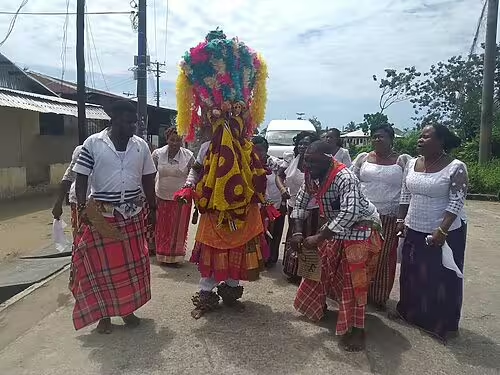
While Bonny Island is widely recognized as a vital hub for Nigeria’s oil exports and energy sector, its southern coast shelters the lesser-known community of Finima. This community, steeped in centuries of history, cultural richness, and environmental stewardship, holds an untold story that intertwines tradition with resilience. Finima’s narrative, anchored by the Buoye Omuso Brown House (BOBH), reveals a legacy of indigenous governance, trade prominence, and ecological conservation. This article delves deep into Finima’s past, its vibrant cultural expressions, and the ongoing efforts to preserve its heritage amidst modern challenges.
Ancient Roots: The Early History of Finima
Finima’s origins date back approximately a millennium, tracing its lineage to the founding ancestors of the Ibani people. As the earliest settlers on Bonny Island, the Buoye Omuso Brown lineage migrated from Okoloba in the Isedeni Area of Central Ijaw, located in present-day Bayelsa State. Their settlement marked the establishment of Finima as a significant coastal trading post, strategically positioned along the Atlantic seaboard.
Historical narratives and oral traditions highlight Finima’s prominence in regional commerce long before colonial interference. Early European explorers and traders, arriving between the 14th and 16th centuries, documented Finima’s sophisticated indigenous political systems and its crucial maritime role. These accounts affirm Finima’s influence extending beyond Bonny Island into the wider Niger Delta hinterlands.
Despite the disruptions brought by colonial rule and the introduction of foreign governance models, Finima maintained its distinct identity. Central to this preservation was the strength of family structures and local institutions, particularly the Buoye Omuso Brown House, which ensured continuity of governance, land rights, and cultural values.
The Buoye Omuso Brown House: Guardians of Heritage
At the heart of Finima’s cultural and political life lies the Buoye Omuso Brown House (BOBH), a family institution that embodies the community’s traditions and governance. Over generations, the BOBH has produced revered leaders who have championed Finima’s interests, such as Aseme Alabo Dr. Engr. Dagogo Lambert Brown (Kongo XVII), who is celebrated for his visionary leadership.
The BOBH has played a pivotal role in safeguarding Finima’s land rights and customary laws, especially during critical periods of oil exploration in the 1950s and later during the development of the Nigeria LNG project in the 1990s. Their advocacy ensured that Finima’s voice was heard in negotiations over resource control and environmental protection.
Beyond political advocacy, the BOBH serves as the custodian of oral histories, cultural ceremonies, and ancestral traditions. Through their stewardship, the community’s identity remains vibrant, fostering unity and resilience in the face of external pressures and rapid modernization.
Finima’s Environmental Legacy: Nature and Nurture
Finima is not only culturally rich but also environmentally significant. It is home to the Finima Nature Park, a protected area that conserves the region’s unique mangrove forests and rainforest ecosystems. This sanctuary supports endangered plant and animal species, reflecting the community’s longstanding commitment to environmental stewardship.
The partnership between Finima’s local authorities and Nigeria LNG has been instrumental in managing the nature park, balancing industrial development with ecological preservation. This model of community-based conservation demonstrates how indigenous knowledge and modern environmental management can coexist effectively.
Finima’s environment is intertwined with its cultural practices. Many traditional ceremonies and festivals are held in natural settings, underscoring the community’s reverence for their land and its resources. This connection to nature reinforces a sustainable approach to living that has endured through centuries.
Cultural Expressions: Festivals and Traditions
The Finima Cultural Festival stands as a vibrant testament to the community’s rich heritage. Held annually, it showcases traditional dances, masquerades, and the distinctive Ibani regalia that celebrate the community’s identity and history. The festival attracts visitors from across Nigeria and the diaspora, fostering cultural pride and unity.
Key events during the festival include the Amadabo’s inspection tours, which serve as both spiritual and social ceremonies. These tours, alongside ancestral shrine visits and age-grade celebrations, reinforce social cohesion and the transmission of cultural knowledge to younger generations.
Through these cultural expressions, Finima asserts its resilience and continuity. The festival not only honors ancestors but also educates participants and spectators about the community’s values, history, and vision for the future.
The Impact of Colonialism and Industrialization
Colonialism introduced profound changes to Finima’s social and political landscape. British colonial administration sought to impose new governance structures, often undermining traditional authority. However, Finima’s leadership, particularly the BOBH, navigated these challenges by advocating for the community’s autonomy and rights.
The discovery of oil in the Niger Delta region brought industrialization that reshaped Finima’s economy and environment. While oil exploration and LNG projects created economic opportunities, they also posed environmental risks and social disruptions. Finima’s leaders played critical roles in negotiating terms that aimed to protect the community’s interests.
Despite these pressures, Finima’s cultural institutions adapted without losing their core identity. The community’s ability to blend tradition with modern realities exemplifies its resilience and strategic vision in safeguarding its heritage amid rapid change.
Diaspora Connections: Preserving Identity Beyond Borders
Finima’s cultural influence extends globally through its diaspora, with many community members residing in Europe, the Americas, and the Middle East. These individuals act as cultural ambassadors, sharing and preserving Ibani traditions abroad while maintaining strong ties to their homeland.
Digital platforms such as finima.net have become vital tools in connecting the diaspora, preserving oral histories, and mobilizing support for local development projects. These online networks foster a sense of belonging and cultural continuity for Finima descendants born outside Nigeria.
Heritage tours and cultural reorientation programmes have gained popularity among the diaspora youth, rekindling interest in their roots. Such initiatives ensure that Finima’s traditions are passed on, even as community members navigate multicultural environments far from home.
Education and Preservation: The Path Forward
Preserving Finima’s cultural heritage requires dedicated educational efforts that integrate indigenous knowledge into formal and informal learning. Local schools and cultural centres play a critical role in teaching Ibani language, history, and customs to younger generations.
Investment in heritage conservation, including the maintenance of historical sites like the Buoye Omuso Brown House and ancestral shrines, is essential. These sites serve as physical anchors for community identity and provide spaces for cultural engagement and tourism.
Collaborations between government, NGOs, and community leaders can enhance preservation initiatives. Emphasizing environmental sustainability alongside cultural education will ensure that Finima’s traditions and natural heritage endure amidst ongoing social and ecological changes.
Conclusion
Finima’s story is a powerful narrative of endurance, identity, and harmony between tradition and progress. From its ancient origins to its role in modern environmental stewardship, Finima exemplifies how a community can maintain cultural pride while navigating the complexities of colonial legacies and industrial development. The Buoye Omuso Brown House continues to lead efforts in preserving Finima’s heritage, ensuring that ancestral values remain a guiding force. As Bonny Island faces environmental and social transformations, preserving Finima’s cultural heritage is vital—not only as a celebration of the past but as a foundation for a vibrant, sustainable future. Upholding this legacy calls for continued education, investment, and respect for the traditions that have sustained Finima for centuries.
Discover more from FINIMA
Subscribe to get the latest posts sent to your email.
0 Comments