Cross River Initiates Schemes To Engage 100,000 Youths In Farming, Others
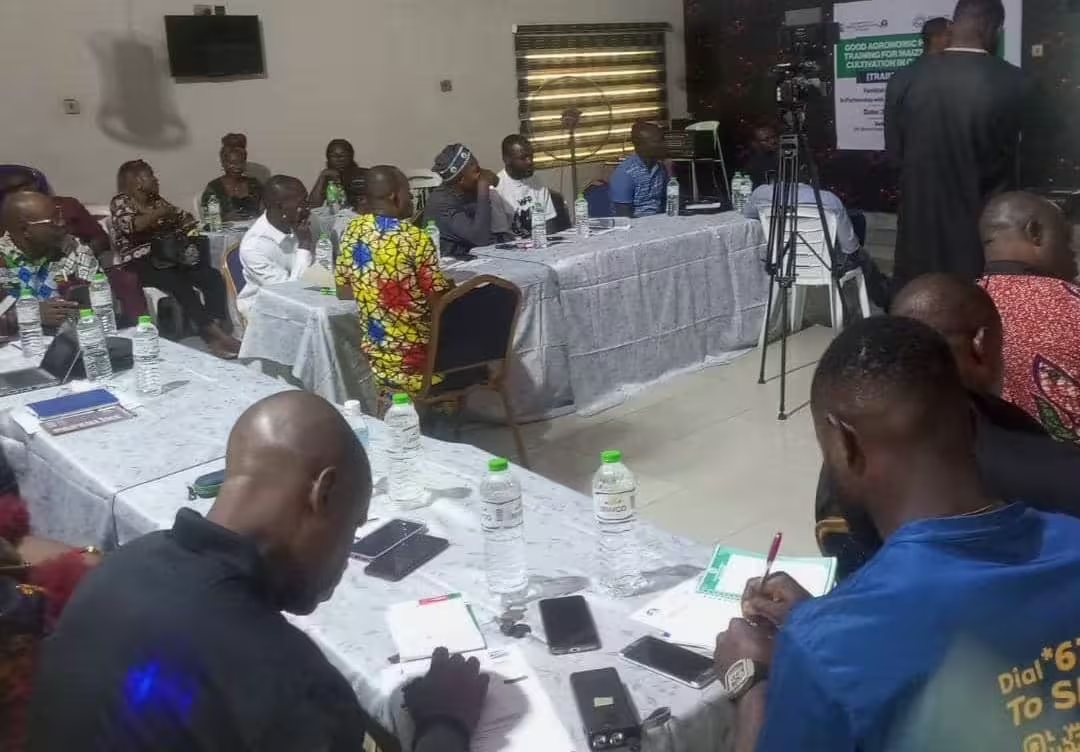
In a bold move to transform its agricultural sector and empower the youth, Cross River State has rolled out innovative schemes targeting the engagement of 100,000 young people in farming and allied agricultural ventures. Recognizing the abundant arable land and untapped potential within the state, the government aims to equip youths with relevant skills, promote food security, and create sustainable economic opportunities. This initiative, dubbed Project Grow, is designed to address longstanding challenges in agriculture, reduce unemployment, and stimulate rural development, marking a significant step toward economic diversification and poverty alleviation.
Background and Rationale for Youth Engagement in Agriculture
Cross River State, despite its vast agricultural resources, has struggled over the past three decades to significantly increase food production or fully harness its farming potential. The lack of adequate youth involvement in agriculture has contributed to rising unemployment and persistent multidimensional poverty. With many young people seeking elusive white-collar jobs, the agricultural sector has remained underdeveloped and fragmented.
The state government recognized that engaging youth in agriculture is critical to reversing this trend. By providing skills and opportunities, youths can become self-reliant entrepreneurs rather than job seekers. This approach aligns with global trends emphasizing youth empowerment in agribusiness as a pathway to economic growth and food security.
Project Grow was conceptualized to bridge this gap by creating a structured platform that integrates youth into the agriculture value chain. This will not only boost food production but also generate income and employment, fostering a vibrant rural economy.
Overview of Project Grow: Objectives and Scope
Project Grow is the flagship agricultural scheme initiated by the Cross River State government to engage approximately 100,000 youths across the state in farming and allied ventures. The project aims to equip them with practical skills, knowledge, and resources necessary for successful agribusiness.
The scheme focuses on five key agricultural value chains: rice, cassava, maize, aquatic culture, and cattle fodder. These crops and activities were selected based on the state's ecological suitability and market demand, ensuring both sustainability and profitability.
A core objective of Project Grow is to prepare 20,000 hectares of land for smallholder farmers, with 2,000 hectares already under cultivation. By facilitating access to land, inputs, and technical support, the project seeks to maximize food production and improve farmers’ income levels.
Skills Development and Capacity Building for Youths
At the heart of Project Grow is the commitment to empower youths through comprehensive skills acquisition programs. These initiatives cover modern farming techniques, post-harvest management, value addition, and agribusiness entrepreneurship.
The state government collaborates with agricultural extension officers and stakeholders to deliver hands-on training workshops, ensuring that young farmers are well-equipped to operate efficiently and sustainably. This approach also addresses knowledge gaps related to chemical application, pest management, and crop diversification.
By fostering a culture of continuous learning and innovation, Project Grow aims to create a new generation of agripreneurs who can drive the sector’s growth and contribute to the state’s economic transformation.
Financial Support and Credit Facilities for Farmers
One of the major hurdles facing farmers in Cross River State has been limited access to credit. Financial institutions often perceive agriculture as a high-risk sector, demanding collateral that many smallholder farmers cannot provide.
To mitigate this challenge, the government has established a credit scheme worth 30 billion naira dedicated to supporting genuine farmers under Project Grow. This fund acts as a guarantee to encourage banks to extend loans to farmers without traditional collateral requirements.
It is important to note that the credit provided is not a grant but a loan, emphasizing the importance of financial responsibility and sustainability. This initiative is designed to enable farmers to acquire quality inputs, improve productivity, and scale their operations effectively.
Strategic Partnerships and Multilateral Collaboration
Project Grow is not an isolated effort; it is strengthened through strategic collaborations with multilateral agencies and development partners. These partnerships provide technical expertise, funding, and global best practices to enhance the program’s impact.
Such synergy allows the state to leverage international frameworks and innovations in agriculture, facilitating technology transfer and capacity building. It also ensures that Project Grow aligns with broader national and global agricultural development goals.
By fostering public-private partnerships, the scheme aims to build an agro-economy that can generate wealth and lift thousands out of multidimensional poverty, positioning Cross River State as a leader in agricultural transformation.
Adoption of the Michael Okpara Model for Agricultural Development
To maximize the impact of its agricultural initiatives, Cross River State has adopted the Michael Okpara model, a renowned approach emphasizing integrated farming, value chain development, and waste elimination.
This model promotes efficient resource utilization, mechanization, and diversification of agricultural activities, which can substantially increase production and profitability. By applying these principles, Project Grow aims to put the state on the map of prosperity and food security.
The model also encourages the development of infrastructure and market linkages, crucial for sustaining agricultural growth and ensuring that farmers receive fair value for their produce.
Expected Impact on Food Security and Economic Growth
With the successful implementation of Project Grow, Cross River State is poised to become one of the largest producers of sorghum, maize, rice, and cattle fodder in Nigeria. This will significantly enhance food availability and reduce dependence on imports.
The increased agricultural output will stimulate ancillary industries such as processing, storage, and distribution, creating a ripple effect of job opportunities and economic activities across the state.
Moreover, by transforming agriculture into a viable and lucrative career for youths, the initiative will reduce urban migration and contribute to balanced regional development, ultimately improving the overall quality of life in rural communities.
Challenges and the Road Ahead for Project Grow
Despite its promising outlook, Project Grow faces challenges such as infrastructural deficits, climate variability, and the need for sustained political will. Addressing these issues will require continuous investment and adaptive management strategies.
Ensuring that youths remain engaged and motivated in agriculture will depend on the availability of markets, fair pricing, and access to modern technology. The government must also prioritize extension services to provide ongoing support.
Looking forward, the success of Project Grow will hinge on inclusive policies, transparency in fund management, and strengthening partnerships with private sector actors to scale innovations and expand reach.
Conclusion
The launch of Project Grow marks a transformative milestone for Cross River State’s agricultural sector and youth empowerment agenda. By integrating skill development, financial support, and strategic partnerships, the state government is laying a solid foundation for sustainable agribusiness growth. Engaging 100,000 youths in farming and allied ventures not only addresses unemployment but also leverages the state’s agricultural potential to enhance food security and economic prosperity. While challenges remain, the comprehensive and innovative approach embodied in Project Grow offers a replicable model for other regions seeking to harness agriculture as a catalyst for development. With continued dedication and collaborative efforts, Cross River State is on course to becoming a beacon of agricultural success and youth-driven economic transformation.
Discover more from FINIMA
Subscribe to get the latest posts sent to your email.
0 Comments