Police beef up security in Plateau after 24-hour curfew
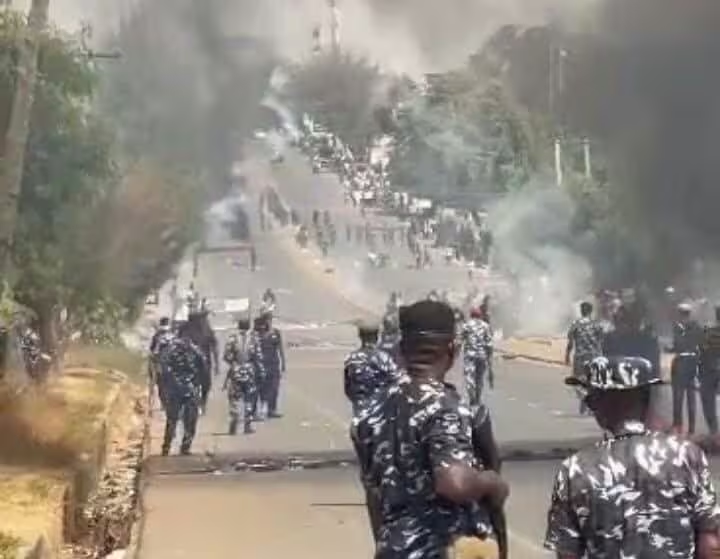
The Plateau State government recently enforced a 24-hour curfew in Jos, the state capital, following credible intelligence about imminent threats to public safety. The Plateau State Commissioner of Police, Olugbemiga Adesina, spearheaded a robust security operation to prevent violence and maintain order during the #EndBadGovernanceInNigeria protests. This comprehensive article examines the circumstances prompting the curfew, the police response, and the broader socio-political context affecting Plateau State. We will also analyze how these measures impact residents and what the future holds for security in the region.
Background to the 24-Hour Curfew in Jos
The decision to impose a 24-hour curfew in Jos, Plateau State’s capital, was a direct response to escalating security concerns. Authorities received intelligence reports indicating that certain groups intended to hijack peaceful protests under the #EndBadGovernanceInNigeria movement to incite violence and chaos. Given the history of ethno-religious tensions and sporadic violence in Plateau State, the government deemed it necessary to act swiftly to prevent any breakdown of law and order.
Jos and surrounding areas have experienced intermittent unrest over the years, often fueled by political, ethnic, and religious differences. The recent nationwide protests advocating for better governance presented a potential flashpoint, with fears that hoodlums could exploit the situation. The curfew was therefore a preemptive measure aimed at curtailing possible violent outbreaks and ensuring the safety of all residents.
The curfew restricts all movement within Jos for a full 24-hour period, effectively limiting gatherings and public activities. This move was met with mixed reactions from the public, with some residents appreciating the government's efforts to maintain peace, while others expressed concerns about the impact on daily life and economic activities.
Intelligence-Driven Police Deployment Strategy
Plateau State Commissioner of Police, Olugbemiga Adesina, emphasized that the enhanced police deployment was intelligence-led. Security agencies had credible information suggesting plans by hoodlums to hijack peaceful protests and instigate violence across Jos. This intelligence formed the basis for the proactive security measures, ensuring that law enforcement personnel were strategically positioned to deter and respond to any disturbances.
The police deployment involved a significant increase in personnel on the streets, checkpoints, and critical infrastructure points. Mobile patrols were intensified, and rapid response teams were put on high alert to quickly address any security breaches. This tactical approach aimed to create a visible security presence to deter criminal activities and reassure residents.
In addition to uniformed officers, plainclothes operatives were deployed to gather real-time intelligence and monitor suspicious activities. The combination of overt and covert operations enhanced the overall effectiveness of the security strategy, enabling the police to act swiftly and decisively if threats materialized.
Impact of the Curfew on Residents and Businesses
The 24-hour curfew significantly affected the daily routines of Jos residents. Movement restrictions meant that individuals could not leave their homes except for emergencies, affecting work, education, and access to essential services. Many residents found themselves confined indoors, leading to disruptions in livelihoods, especially for those dependent on daily commerce and informal sector activities.
Local businesses faced operational challenges during the curfew, with many shops and markets forced to close temporarily. This pause affected traders’ incomes and the supply chain of goods, particularly perishables. However, some businesses adapted by focusing on delivery services or online sales where possible, although such options are limited in the region.
Despite these challenges, many residents acknowledged the necessity of the curfew as a means to preserve peace and security. Community leaders called for calm and cooperation with security agencies, emphasizing that the temporary inconvenience was a small price to pay for long-term stability.
The Role of the #EndBadGovernanceInNigeria Protests
The #EndBadGovernanceInNigeria protests have gained momentum nationwide, with citizens demanding improved governance, accountability, and security. While the movement is largely peaceful, some elements have sought to exploit the protests for disruptive purposes. In Plateau State, authorities were particularly concerned about hoodlums hijacking the demonstrations to incite violence and unrest.
The protests in Jos initially attracted genuine activists and concerned citizens. However, intelligence reports indicated plans by criminal elements to use the protests as cover for violent activities, including vandalism, looting, and attacks on security forces. This threat prompted the government to impose the curfew and reinforce security measures.
It is important to distinguish between peaceful protesters advocating for legitimate change and those aiming to destabilize the region. The police have reiterated their commitment to protecting the rights of peaceful demonstrators while preventing criminal acts. This balancing act remains a critical challenge for security agencies in Plateau State.
Challenges Facing Security Agencies in Plateau State
Security agencies in Plateau State face multiple challenges in maintaining peace and order. The region’s complex ethno-religious dynamics often complicate security operations, requiring nuanced approaches to avoid escalating tensions. Additionally, limited resources and manpower constrain the ability of police and other security forces to cover all hotspots effectively.
The proliferation of small arms and the presence of armed groups further exacerbate the security situation. These groups exploit local grievances and political instability to fuel violence, making it difficult for law enforcement to establish lasting peace. Intelligence gathering and community engagement are vital tools in countering these threats.
Moreover, mistrust between some communities and security agencies hinders cooperation. Building trust through transparent communication and inclusive security strategies is essential for effective policing. Authorities have increasingly prioritized community policing initiatives to foster collaboration and enhance intelligence flow.
Government and Community Response to the Security Measures
The Plateau State government has publicly supported the police’s decision to impose the curfew and enhance security presence. Officials stress that these measures are temporary and necessary to prevent violence and protect lives and property. The government has also called on residents to remain calm, cooperate with security forces, and report suspicious activities.
Community leaders and religious figures have played a pivotal role in mediating tensions and encouraging peace. Through dialogue and advocacy, they have urged their followers to desist from violence and support efforts to restore normalcy. Such grassroots initiatives complement the work of security agencies and contribute to social cohesion.
Civil society organizations have also weighed in, emphasizing the importance of respecting human rights during security operations. They advocate for proportional responses to protests and urge authorities to address the underlying causes of unrest, including governance deficits and socio-economic challenges.
Looking Ahead: Prospects for Stability in Plateau State
The current heightened security posture in Plateau State represents a critical juncture for the region’s stability. While the curfew and police deployment have temporarily quelled immediate threats, sustainable peace requires addressing root causes such as governance failures, economic disparities, and intercommunal tensions.
Long-term strategies must include inclusive governance reforms, community dialogue, and development initiatives aimed at reducing vulnerability to violence. Strengthening security sector capacity and fostering trust between citizens and law enforcement are equally important for durable peace.
As Plateau State navigates these challenges, continued vigilance and collaboration among government, security agencies, and communities will be essential. The lessons learned from this period can inform future responses to crises and contribute to building a more resilient and peaceful society.
Conclusion
The 24-hour curfew in Plateau State and the enhanced police presence underscore the delicate security situation in the region. While these measures have helped to prevent immediate violence and maintain order during a period of potential unrest, they also highlight deeper socio-political challenges that must be addressed. Through intelligence-led policing, community engagement, and government commitment to reform, Plateau State can move towards greater stability and security. Ultimately, sustainable peace will require a comprehensive approach that balances security imperatives with the protection of citizens’ rights and the promotion of inclusive governance.
Discover more from FINIMA
Subscribe to get the latest posts sent to your email.